
By Hassen Lorgat

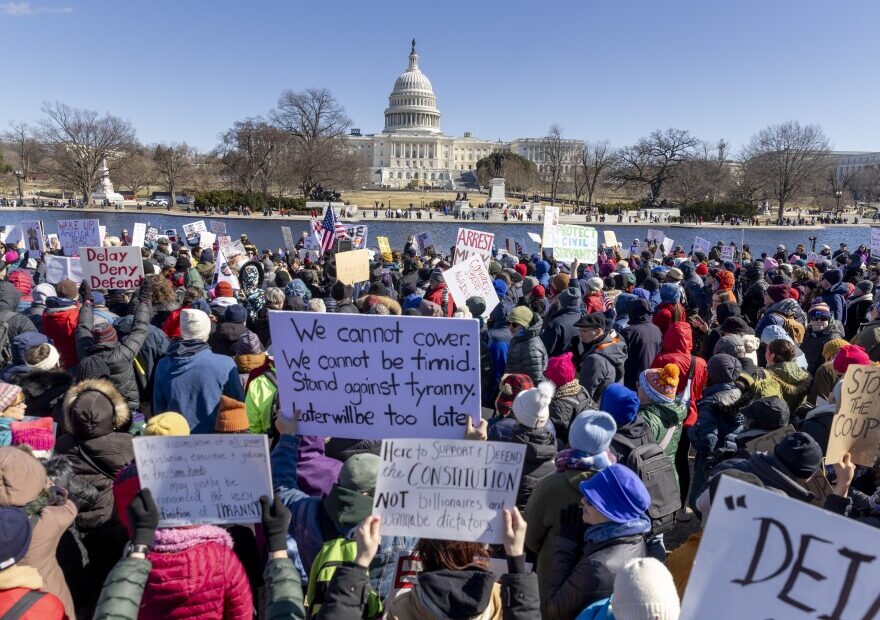
The recent protests in the US have sparked conversation. While they are clearly anti–Trump administration, there appears to be no consensus on the Left—or what protests in the West truly signify in the struggle against imperialism.
The Left is not a monolithic movement. Here are two views on the recent protests in the USA.
The first, from Jacobin, strikes a hopeful tone, as the title suggests: “The No Kings Protests Are Cause for Hope,” by Ben Burgis.
The opening paragraph reads:
The No Kings rallies have evolved beyond basic anti-Trump liberalism. Their messaging is sharply antiwar, anti-oligarchy, and far more substantive than the “resistance” politics of Donald Trump’s first term. The Left should be proud to participate.

The second, from BettBeat, takes a sharply different stance. Its title reads: “No Kings Protests Confirm Westerners Irrelevant in Fight Against Imperialism: Why the Global South is right: Western public opinion is meaningless.”
This piece dismisses the protests as frivolous, using the word “silliness” repeatedly. I quote:
Do you know what was happening while Bruce Springsteen played his new single in Minnesota? Do you know what was happening while a woman in Los Angeles wore a blow-up flamingo and told a reporter that the protest was an “opportunity to make a statement and respond with silliness to the silliness the administration is doing?”
Silliness.
One hundred and seventy-five schoolgirls in Minab were dying. Thousands of Iranians were dying. Hundreds of thousands of Palestinian innocents were dying. That is what was happening.
Silliness.
My view? Let’s discuss it. If we are serious about movement building, we must consider the terrain. I believe protests are a form of resistance and have a role to play in preventing Trumpian leaders from shutting down democratic space. Democratic space cannot be secured through legal actions, court cases, or fine speeches alone. Demonstrations and strikes open up debate and legitimize dissent.
It was precisely this kind of movement—organized on campuses, using media smartly—that radicalized young people. It came from active, daily organizing: starting with small, winnable goals and building toward more radical demands. That is how movements grow.
Of course, differences and tensions exist. Ask the Anti-Apartheid Movement, or the United Democratic Front (UDF), and others. But these contestations must be grounded in organizing on the ground. Without such movements, repression and fascism take root.
That said, full praise and leadership belong to frontline communities: workers, the poor, and ordinary people defending their right to exist. This struggle for autonomy is liberation.
I think this is what the indefatigable African Nationalist and radical Oliver Tambo did when he crisscrossed the world, trying to isolate apartheid South Africa.
In a speech, 1983, Statement by Oliver Tambo at the International Conference in solidarity with the frontline states and Lesotho, Lisbon, 25 March 1983 he concluded that as delegates left Lisbon in the historic conference, we take with us “a clear, practical programme of action which will enable us to mobilise the fullest support for the heroic people and governments of southern Africa who are making tremendous sacrifices in the cause of peace and justice for all humanity…
We honour the nation States of the frontline of southern Africa who have very recently through struggle emerged from centuries of colonial barbarism, deprivation and de=humanisation for your undaunted steadfastness in the cause of African liberation and the redemption of humanity. The decades of sacrifice and heroism by your peoples have not deterred you in your firm resolve not to succumb to racist blackmail, bribery, terror and aggression.”
I think the comrades in the West are trying but must continue to take their Q from those in the Global South or as they now say The Global Majority.
Finally, I want to add that for a lasting and durable movement, it must expand the rights and freedoms of those defending their countries’ sovereignty and their peoples’ liberty.
This is the hour.
Hassen Lorgat