
By Iqbal Suleiman
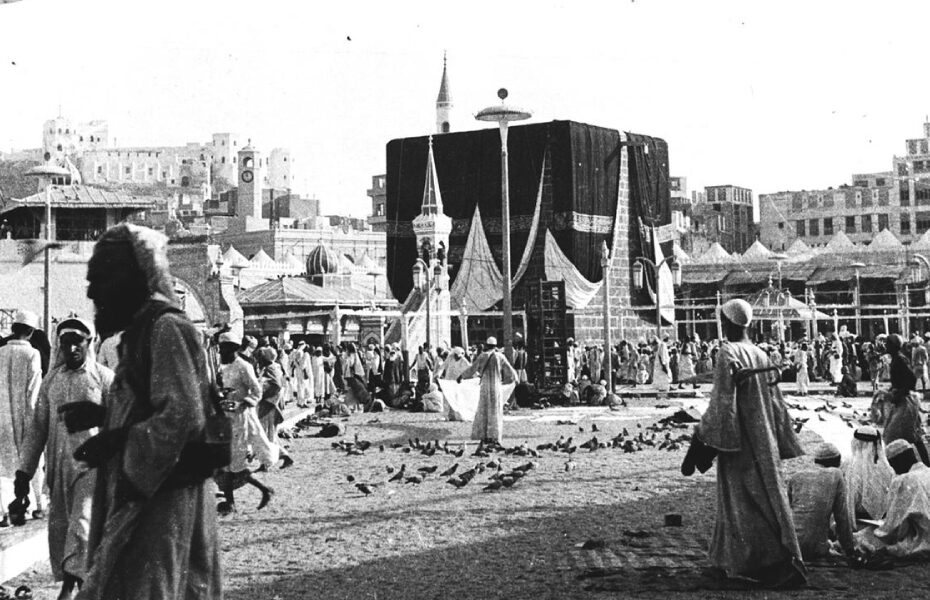
It is the time of the Haj. One of the five pillars of Islam. During the Haj, every pilgrim is obliged to perform the Sa’ee which is a walk between hills of Safa and Marwa in Makkah seven times. This is in emulation Hajar, Prophet Abraham’s wife who was alone in Makka with her infant child Ismail, hungry and dehydrated, running between the hills of Safa and Marwa searching for water for her infant child until God caused the well of Zam Zam to spring forth with water.
“Indeed Safa and Marwa are among the symbols of Allah”. Quran 2:158.
When Hagar saw her infant child Ismail (A.S) thirsty and there was no water, she pleads with her Creator and runs between the pillars of Safa and Marwa whereupon God instructs Gabriel to use his wing to clip the ground and water from the well of Zamzam flowed and flows to this day. God commands the believers to remember Haajar and emulate her running between Safa and Marwa. As millions of Muslims are currently performing the Haj and re-enact the actions of Hagar, we must seek out the meaning of this auspicious act and its relevance in our living world.
The hero of Haj, Hagar, the mother of Ismail (A.S) and wife of Abraham (A.S). A woman, a black person, a poor person and a refugee. The representation of the most oppressed person on earth both then and now. The poor black female refugee. The world rejected her but God choses her. And it is from her bloodline that the Prophet of the people Muhammad (p.b.u.h) descends. When she is alone and helpless, hungry and a mother of a baby in the desert. Her Creator hears her call. “And when my obliging subjects ask you about Me, behold, I am near, I respond to the call of him who calls, whenever he calls upon me, let them then respond to me and commit themselves to Me, so that they might maturely follow the right way” Quran 2-185. As the descendants of Hagar and Ismail call upon their Creator while they are being deprived and oppressed, there is no doubt that he hears the cries of his oppressed servants and that he will come to their aid. But Haajar was active and took action, what about those who claim a spiritual affinity with her today?
As millions of Muslims from every part of the world run and quite literally walk in the footsteps of Haajar, we must ask ourselves questions that will pierce our conscience. How is it that we have a spiritual consciousness that forces us to be empathetic to a starving and dehydrated special servant of God and her Prophetic child starving, but we fail to take action in solidarity with the people who are the “Haajar’s” and “Ismails” in our living world today.
Approximately 2.1 billion people in the world today lack access to clean drinking water and according to UNICEF and UN reports, more than 1000 children under the age of five die every day from diseases that are linked too unsafe water, poor sanitation and insufficient hygiene. That’s 1000 little Ismail’s that die every day from waterborne diseases. Woman and girls spend 250 million hours daily collecting water. In South Africa, approximately 30% of the population, equating to about 19 million people do not have direct access to clean, safe drinking water.
According to recent UN reports, the entire population of Gaza do not have access to clean safe drinking water and 1.7 million children are at risk of waterborne diseases. That’s basically all of the children in Gaza. The Genocide has had a devastating impact on access to water for Palestinians. According to UNRWA, nearly 90% if water and sanitation systems in Gaza have been destroyed or severely damaged. UNICEF reports that nearly 2 million displaced people have to search for clean or potable water to meet their basic needs. This translates into 2 million Hajar’s and Ismail’s in real life, real time doing the sa’ee in search of water for survival.
How do we sip on zam zam and say prayers whilst poor women and children in Gaza have to boil sewer water? How can we not remember the 12 year old child Mustafa Hijazi and other children and women who died of dehydration and malnutrition? How can we be blind to the famine that was deliberately created by the Zionists to kill the people of Gaza?
In our own country with a resurgent Afrophobic Xenophobia, how can we claim affinity with Haajar, the mother of all refugees and not advocate in solidarity with refugees and migrant workers who suffer injustice?
How can a person do the Sa’ee but not march with the poor who have no access to water?
Women and children in Gaza, quite literally died of hunger and dehydration in Gaza during the Genocide, yet the Muslims collectively, more than 2 billion people and more than 50 majority Muslim countries were not able to break the siege of Gaza and deliver one bottle of water to their brothers and sister living under Israeli Occupation and Genocide. Haajar is not merely a symbol and the Haj is not merely a ritual. The essence of Haajar’s activism should inspire in every person with a conscience to take action, resist injustice and stand in solidarity with those who are oppressed and denied their fundamental human rights.