
By Iqbal Jassat
Treating kites flown by children as military threats represents a dangerous escalation in the normalization of asymmetric warfare.
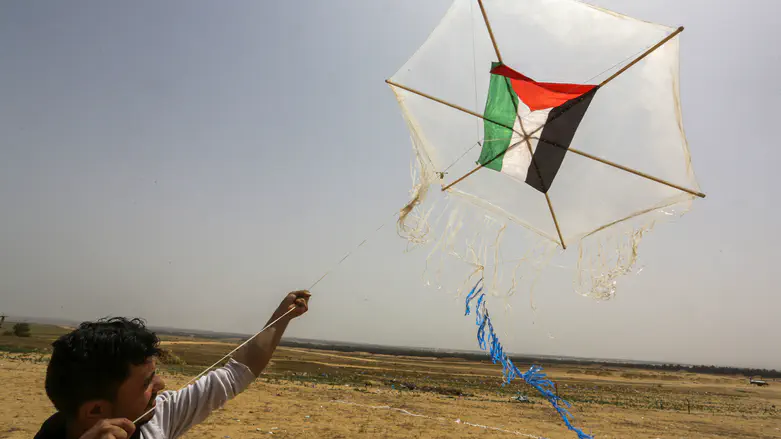
High above the concrete ruins of the Gaza Strip, the sky occasionally fills with color. In a place defined by Israel’s inhumane Occupation, blockades and airstrikes, children piece together paper, plastic, and sticks to build simple kites. Yet, even this universal symbol of childhood has been pulled into the arena of war.
When makeshift toys are classified as weapons and met with military airstrikes, the international community cannot remain silent. The world must urgently mobilize to protect Gaza’s children and defend their fundamental right to a childhood.
On Sunday, Israeli airstrikes targeting central Gaza struck a building in az-Zawayda, killing three people—including four-year-old Mohammad Abdel-Salam Taha. The justification offered by the occupying forces for these deadly operations? A security directive ordering that paper kites, balloons, and makeshift toys flown by children be treated with the same lethal force as military combat drones.
For South Africans, this language is chillingly familiar. It echoes the dark eras of our own past when the apartheid regime classified school children marching in Soweto as existential threats to the state. When the simple act of play is designated an act of war, the international community cannot look away.
Mainstream media houses, civil society, and ordinary citizens must urgently mobilize. We must defend the children of Gaza and protect their absolute right to a childhood.
The decision by Israeli authorities to elevate kites to the status of weapons of war represents a terrifying new threshold in the normalization of asymmetric warfare.
Israeli military sources themselves acknowledged that multiple recovered kites found near the border carried no explosives or suspicious materials, posing zero physical danger to the public.
Yet, the settler colonial regime’s war criminal leader Benjamin Netanyahu issued an ultimatum: halt the kites within three days or face intensified air assaults and mass civilian evacuation.
By treating a child’s toy under the same strategic doctrine as an advanced surveillance drone, the occupying military creates a legal loophole to justify dropping high-explosive munitions on civilian neighbourhoods.
The catastrophic result is what we witnessed on Sunday: shrapnel and flying concrete tearing through the makeshift refuge of a four-year-old toddler. Mohammad Taha had no understanding of geopolitics or border fences. He is merely the latest casualty of a system that views the mere presence of Palestinian children as a demographic threat.
As senior Hamas official Basem Naim noted, these children are not launching military operations; they are flying kites “in search of their innocent childhood amid the rubble.”
As South Africans, our history gives us a unique moral lens—and a profound responsibility—to call this what it is: systematic oppression disguised as state security.
We know what it meant when the apartheid regime’s administrative power controlled every exit, cut off water and electricity, and restricted the entry of basic humanitarian medical supplies. We understand the psychological toll of a system designed to make a population feel entirely disposable.
When even the sky is transformed into a designated free-fire zone, the final sanctuary for psychological escape is stripped away from Gaza’s youth.
The international community often speaks of international law in clinical, detached terms. But international humanitarian frameworks, including the UN Convention on the Rights of the Child, explicitly guarantee children the right to leisure, play, and a safe environment.
By remaining silent and continuing to support Israel’s war crimes as the Trump administration and many global powers do, makes them complicit in the systematic erasure of these fundamental rights. The supply of coal by South Africa falls in the same category and has to be halted as a matter of urgency.
Indeed, this crisis places a heavy burden on mainstream media, particularly within South Africa. For too long, global news networks have relied heavily on sanitized military press releases that obscure human suffering behind terms like “targeted operations” or “retaliatory measures”. Journalists have an ethical obligation to cut through the clinical rhetoric.
We must state clearly that a paper kite is not a drone, a child is not a combatant, and a warehouse in az-Zawayda is not a legitimate military fortress.
Our own local institutions must also shake off their inertia. From Cape Town to Johannesburg, South African journalists, artists, and activists have previously gathered to fly kites in the colours of the Palestinian flag at popular beaches like Muizenberg, sending a message of shared hope and resistance across the oceans.
But symbolic gestures alone will not stop the bombs.
Mainstream media platforms must serve as regular amplifiers for grassroots activism, ensuring that the stories of families like Mohammad Taha’s are front-page news, not buried footnotes.
The winds blowing through the ruins of Gaza carry more than just paper and string; they carry a universal cry for freedom, peace, and the basic right to exist without terror.
A child flying a kite is not an act of war. It is an act of survival. It is the human spirit refusing to be crushed by the weight of oppression. South Africa stood up to dismantle apartheid on its own soil; we must now stand firmly with the children of Gaza, ensuring that their voices—and their kites—are never permanently silenced.
Iqbal Jassat
Executive Member
Media Review Network
Johannesburg
South Africa