
By Hassen Lorgat
Judging complicity is not an easy task, as the case heard in the Western Cape High Court—Cape Union Mart International (Pty) Ltd and Another v Ockards and Others (2025/092980) [2026] ZAWCHC 477 (4 September 2026)—has revealed. While the case has generated considerable discussion, there is no consensus. I wish to address only one aspect, and even then, not fully about business and its commitment or adherence to human rights.
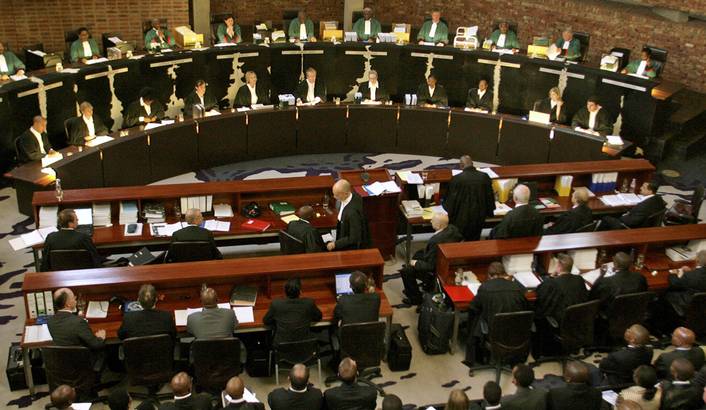
I was surprised when Justice J Cloete, Justice C N Nziweni and Justice R Barendse made their ruling. Justice Cloete delivered the judgment, with Justices Barendse and Nziweni agreeing.
The applicants told the court that since November 2023, Palestinian rights campaigners had protested outside Cape Union Mart, accusing the company of funding genocide, of Mr Krawitz funding the Israeli army, and of involvement in killing children. In the ruling, the court held that the respondents had not established their truth on the admissible evidence before it and ordered the protesters to stop. The protesters, Palestine Solidarity Campaign members and others, argued their statements were true or fair opinion; the court rejected both defences.
Put simply, as celebrated by the SA Zionist Federation, the ruling is interpreted as saying that there is no principle of complicity in this country. They believe that if the complicity charge stuck, its implications for “any Jewish South African in business could have been held responsible for the actions of the Israeli government.”
Ziyad Motala has argued that the court overstepped its role by entering into areas it ought not to have entered. Motala argues that while courts rightly reject unproven specific claims (like a direct R5 million payment), the Cloete-Nziweni-Barendse approach goes too far. Furthermore, by adopting a legal approach that focuses on narrow factual findings to police political speech, the court unlawfully prohibited protesters from using broader terms like “supports apartheid,” “associated with apartheid,” or “complicit.” Ultimately, his view is that a specific factual ruling is being improperly stretched into judicial censorship of political vocabulary and opinion—which has implications for activists fighting for social justice, although the right to protest was not formally harmed. I will not enter that aspect further, but as a person somewhat familiar with corporate conduct toward the poor and working people, this ruling may be troubling.
The social justice movement owes a debt to progressive activists—many Jewish—who pioneered the discourse on corporate complicity in the Holocaust, targeting firms like IG Farben and Krupp as well as everyday factories like Graetz, Ehrich & Graetz. This is not an accusation that Krawitz and others are complicit, but rather a reminder that this critical position has deep roots in international human rights law.
South Africa – Business and Human Rights
The UN Guiding Principles on Business and Human Rights (UNGPs), endorsed by the UN Human Rights Council in 2011, set the global standard for preventing and addressing adverse human rights impacts linked to business activity. The “Protect, Respect and Remedy” framework prescribes human rights due diligence as a core process—not a tick-box exercise—enabling a company to “know and show” that it respects human rights in practice.
Within this framework, complicity is critical: it widens corporate responsibility beyond direct actions, as a company may be implicated in abuse committed by another actor (a government, individual, or business). Complicity can arise through commission or omission—where a company helps, assists, facilitates, legitimizes, or encourages another actor to carry out an abuse.
However, the UNGPs are a global standard of conduct, not binding law. They do not automatically create domestic civil or criminal liability. Their value is educational and persuasive. While South African courts must consider international law, and the UNGPs help clarify due diligence and accountability standards, they do not automatically establish liability in a defamation case.
The challenge for activists like myself is to campaign for the practical and effective enforcement of, and access to, remedies for business-related human rights violations, but we are emboldened by struggles internationally that are pursuing this task. In 2025, UN Special Rapporteur Francesca Albanese’s report From Economy of Occupation to Economy of Genocide revealed that modern corporations are complicit in the genocide in Palestine and is worth including in public discussions as, like the UN Guiding Principles referred to here, it talks of corporate responsibility to wider society.
In the report, Albanese names, in the technology and AI sector, Google, Microsoft, Amazon, and Palantir. Google and Amazon are alleged to have provided cloud and AI infrastructure to Israel through the $1.2 billion Project Nimbus contract, while Microsoft is accused of supplying Azure cloud and AI support to the Israeli government, including critical infrastructure when Israel’s internal military cloud was overwhelmed. Palantir is cited for its strategic partnership with the IDF. In the weapons sector, Lockheed Martin, RTX (Raytheon), General Dynamics, BAE Systems, and Boeing are named for supplying arms and military platforms to Israel, including F-35 fighter jets. In heavy machinery, Caterpillar, Volvo, and HD Hyundai are alleged to have provided equipment used in the demolition of Palestinian homes and infrastructure.
In finance, the report names BNP Paribas, Barclays, BlackRock, Vanguard, Pimco, Bank of America, Citigroup, Wells Fargo, Goldman Sachs, Deutsche Bank, and JPMorgan Chase for underwriting or investing in Israeli bonds, which the report alleges helps finance the military campaign. In energy and mining, BP and Chevron are alleged to have provided roughly 8% of Israel’s crude oil imports between October 2023 and July 2024, while Petrobras is accused of contributing to Israeli oil imports (which the company denies). Glencore and Drummond are named for exporting Colombian coal to Israel, with Glencore rejecting the allegations and Drummond stating it acted under government authorization.
Post-Nuremberg values of corporate accountability persist today and inform. The UN Guiding Principles on Business and Human Rights (UNGPs) require companies to conduct due diligence and avoid contributing to gross human rights abuses—even when their conduct is legal under local law. The author believes the justices did not seriously consider this concept and expects it to resurface in future litigation.
In this case, I humbly submit that the court placed substantial weight on Mr Zomer’s affidavit. In his evidence, Zomer tried to distance Keren-Hayesod from being linked to the state and the IDF. Paragraph 41 of the judgment reads thus: “While it is regarded as a ‘national institution’ it is independent of the government of Israel. It does not provide any funding whatsoever to the Israeli government or the Israeli Defence Force.”
These points are aired in the appeal of PSC and others, where their lawyers argue that the court erred by not fully exploring Keren Hayesod’s national status—its official role or standing in Israel or the Jewish world—and its support for lone soldiers (soldiers serving without family in the country) during their military service. In addition, it failed by not exploring Zomer’s role as head of the SA institution and the impacts of his public statement. These needed to be assessed alongside each other, not in isolation or treated as separate statements of fact.
Take the case of Mr Shlomo Zomer, one of the international chief financial officers of Keren Hayesod, and his evidence. He stated Keren Hayesod is an independent Zionist fundraiser, entirely separate from the Israeli government and IDF, focusing only on humanitarian, social and philanthropic causes.
On programmes, he said that it funds initiatives like mechinot and lone soldier programmes—which provide zero military training and have no IDF connection—and holds a 20% stake in JAFI. Keren Hayesod-South Africa raises strictly ring-fenced funds designated by donors for specific projects, and that neither Keren Hayesod-South Africa nor Mr Krawitz has ever been involved with, or fundraised for, mechinot programmes.
This is the essence of paragraphs 41 and 42 of the judgment.
Thus, I can conclude that it appears the court accepted Mr Zomer as a credible, if not expert, witness. Based on this evidence, the judge concluded that the factual basis for the respondents’ statements was untrue, meaning an essential element of their defence was absent.
However, the evidence doesn’t prove the claim. The mechinot’s own material talks about preparing for army service, but that alone doesn’t show that Krawitz, Cape Union Mart or Keren Hayesod South Africa funded the IDF. This distinction is important for the court, but the reader must reflect on this and other facts below.
This distinction is important for the court but the reader must reflect on this and other facts below.
- Mechinot are legally recognised pre-military leadership academies (under a 2008 Knesset law and Ministry of Defense recognition) designed to prepare youth for meaningful military service. Their curriculum includes military preparedness, physical training and field skills aimed at producing future officers and commanders. Programs involve IDF base visits, and roughly 90% of graduates serve in significant IDF positions — primarily in combat, special units, officer courses and pilot training.
- Lone Soldier programs are not separate from the military — they provide vital support (housing, financial and social aid) to active-duty or prospective IDF soldiers lacking a family support system in Israel. Lone soldiers serve directly as full members of regular and combat IDF units.
- JAFI, Keren Hayesod and Masa: Keren Hayesod is the official global fundraising organisation (outside the US) and a strategic partner holding a 20% stake in JAFI. Masa Israel Journey is a separate initiative co-founded by JAFI and the Israeli government to provide immersive experiences for Diaspora Jews — not a stakeholder in JAFI.
Mr Zomer is not a disinterested observer working for a non-violent charity. He is the Chief Financial Officer of Keren Hayesod-UIA and a Director of Keren Hayesod-United Israel Appeal UK, with his correspondence address at Keren Hayesod’s Jerusalem headquarters.
But as we all know, the court ruled differently, and as I alluded to above; the SAZF celebrated, arguing that there is no such provision of complicity in our law. A more fuller quote lays out their view:
“The judgment also notes that the protesters themselves did not seriously dispute that the posters and chants were defamatory. The PSC’s case rested on the idea that because Mr Krawitz holds positions in Jewish communal and charitable organisations, the company he chairs is somehow complicit in the war in Gaza.
The court said this concept does not exist in our law, and the PSC’s own lawyers dropped it during argument. Had it succeeded, any Jewish South African in business could have been held responsible for the actions of the Israeli government.”
I have been surprised how many Israel supporters have tried to dissociate themselves, somewhat, from the actions of the Israeli government. The same organisations continue to defend Israel’s right to defend itself but that is the subject for another day.
The lawyers of the PSC and others are correct to appeal this case.
Hassen Lorgat