
By Iqbal Jassat
The year 2001 marked a profound mutation in global politics with devastating consequences in many parts of the Muslim world.
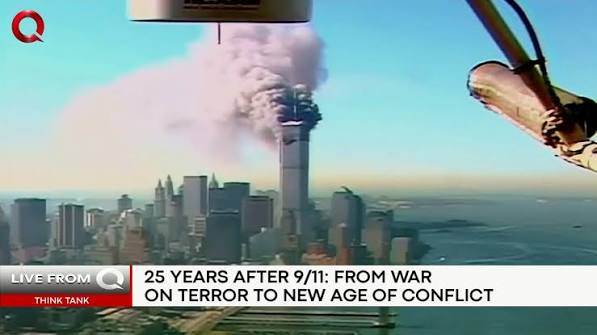
Following the catastrophic events of September 11, the United States unleashed its “War on Terror”—a geopolitical crusade that Media Review Network’s political analysts long dismantled as a “playbook of power, arrogance and greed.”
While this campaign was marketed as a noble defence of global liberty, its true architecture relied on institutionalised fear and the erosion of national sovereignty.
More tragic, however, than the overt aggression of the Global North was the quiet capitulation of the Global South.
Nowhere was this capitulation more disappointing than in South Africa, where an ANC-led government, still fresh from its own liberation struggle, fell victim to raw American manipulation.
In the immediate wake of 9/11, Washington made it clear that nations were either “with us or with the terrorists.” For South Africa, a country attempting to integrate into a unipolar economic order, the pressure was immense.
The U.S. weaponised its financial hegemony, intelligence-sharing networks, and diplomatic muscle to force foreign capitals to align with its new security architecture.
Succumbing to this intense pressure, Pretoria began drafting specialized anti-terror laws—most notably the Protection of Constitutional Democracy against Terrorism and Related Activities Act (POCDATARA).
This move represented a stark betrayal of the country’s hard-won human rights framework.
The post-apartheid Constitution was designed to shield citizens from the sweeping, draconian security powers that the apartheid regime had used to crush internal dissent. Yet, under American influence, the democratic government was pushed toward adopting definitions of “terrorism” so broad and ambiguous that they mirrored the very Internal Security Acts of the past.
It was during this critical juncture that the Media Review Network, stepped into the vanguard of civil resistance. The MRN recognized that the proposed anti-terror legislation was an unnecessary and dangerous import—a Trojan horse designed to institutionalize Islamophobia, stifle legitimate liberation movements, and criminalize dissent.
In its formal submissions to Parliament, the MRN argued forcefully that South Africa’s existing common law and criminal justice systems were entirely adequate to handle criminal conspiracies.
Passing specialized, sweeping anti-terror legislation was not an objective domestic necessity; it was an act of political appeasement to satisfy Washington’s paranoia.
The MRN warned that by adopting this framework, South Africa was effectively outsourcing its foreign policy and domestic legal standards to the Pentagon.
MRN’s critique highlighted the profound irony of this legislative shift. The specialized laws pushed by the U.S. were never intended to create a safer world; they were engineered to shield Western imperial interests and their preferred allies from accountability while simultaneously delegitimizing local resistance groups.
By caving to these demands, South Africa temporarily compromised its moral authority as a champion of the oppressed.
The domestic consequences of this manipulation were immediate. Specialized anti-terror frameworks inevitably generated a “culture of fear,” casting a shadow of suspicion over Muslim NGOs, faith-based charities, and human rights defenders who dared to critique Western or Israeli state violence.
By validating a heavily biased, Western-centric definition of security, Pretoria inadvertently gave local Islamophobic narratives political currency.
Ironically, a number of Muslim stalwarts within the ANC defended the introduction of US-imposed security architecture via the anti-terror legislation.
Today, as global dynamics fracture and a multipolar world begins to emerge, the stance taken by MRN stands as a vital warning. South Africa has made notable strides in reclaiming its independent foreign policy—particularly through its principled legal challenges against state-sponsored atrocities on the international stage.
However, the institutional remnants of the post-9/11 era serve as a reminder of how easily a nation’s sovereign legal framework can be manipulated by foreign powers.
The lesson of South Africa’s capitulation to the “War on Terror” legislation is clear: true sovereignty requires more than just a flag and an anthem; it demands an unwavering refusal to let domestic laws be written by imperial dictates.
Decades later, the MRN’s early and fierce opposition to those legislative overreaches reminds us that guarding constitutional freedoms requires constant vigilance against global bullies.
Iqbal Jassat
Executive Member
Media Review Network
Johannesburg
South Africa
See link to MRN’s submission to SA Parliament:
https://static.pmg.org.za/docs/2003/appendices/030623mrn.htm