
By Iqbal Jassat and Hassen Lorgat
“While concrete, ongoing violations by SA citizens deployed in the IDF in violation of the Foreign Military Assistance Act are quietly shelved, citizens are right to question whether justice is truly blind—or merely looking where it is politically convenient.”
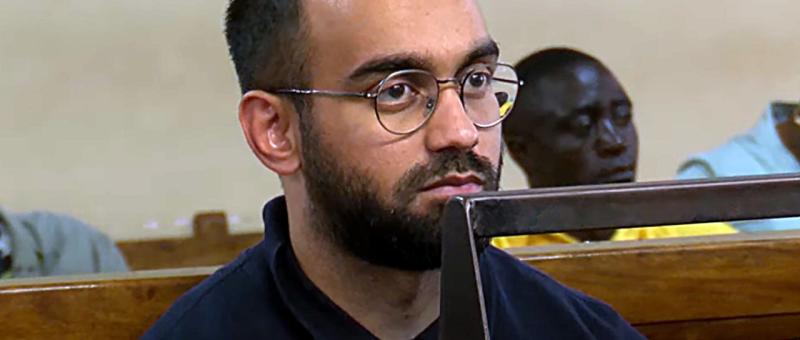
When South Africa’s National Prosecuting Authority (NPA) arrested Johannesburg resident Ziyadh Hoorzook in January 2025, the state framed the move as a landmark victory against international terror financing. Yet beneath the dramatic headlines of cryptocurrency trails and national security lies a troubling reality.
Rather than dismantling a genuine threat to the Republic, the prosecution of Hoorzook increasingly resembles an exercise in chasing shadows—a performative effort to appease international financial watchdogs while glaring, far more serious violations of the law go entirely unpunished.
At the heart of the state’s case is a single Bitcoin transfer worth R11,500, executed on 30 November 2017 via the Luno exchange. Prosecutors allege that Hoorzook violated the Protection of Constitutional Democracy Against Terrorist and Related Activities Act (POCDATARA) and the Regulation of Foreign Military Assistance Act (RFMAA) by sending those funds to an entity called Al-Sadaqah, which authorities claim acted as a front for armed militants in Syria.
However, scrutinising the timeline of the state’s own evidence exposes deep flaws in this narrative. As Hoorzook’s legal team, led by attorney Yousha Tayob, has pointed out in court, Al-Sadaqah—whose name translates simply to “charity” in Arabic—was not listed as a terrorist organisation by any international body when the transfer occurred in late 2017.
At the time, amid a devastating humanitarian crisis in Syria, countless donors viewed such channels as legitimate avenues for civilian relief. The group was only named in a United States federal court seizure application in 2020, nearly three years after Hoorzook clicked “send.”
The Prosecution’s Case
So let us summarise: the prosecutors allege that Hoorzook is guilty not because he saw weapons being bought, but because, in their view, his R11,500 donation was earmarked for arms or weaponry. As evidence of intent, the prosecutors are relying on circumstantial evidence: online ads and social media solicitations tying the recipient e-wallet to armed conflict. The state relies on the guilt of Hoorzook retrospectively.
The Defence
We will traverse some arguments used by defence attorney Yousha Tayob to obtain justice for his client, which we explain hereunder.
What started as a simple case is the state applying post-2020 intelligence to criminalise a simple act of humanitarian giving amid severe civilian suffering in Syria—giving to relief initiatives aligned with Hoorzook’s regular religious charitable obligations (Zakat and Lillah). This donation was of a small amount and was once-off. The defence contended that a single, traceable transfer of R11,500 via a regulated exchange is inconsistent with deliberate terror financing.
The lawyers argued that these advertisements surfaced in 2018 and 2019—months and years after the 2017 transaction took place. Holding a citizen criminally liable today for intelligence assessments and online posts that did not exist when a donation was made turns fundamental principles of legal certainty on their head. There can be no punishment for a law that did not exist.
The timing of the prosecution was suspect. The state attempts to boost a weak case by supplementing its core charge. During a raid on Hoorzook’s Sandton home, police discovered two licensed firearms stored improperly and seized electronic devices allegedly containing extremist articles and videos. While any breach of the Firearms Control Act warrants standard regulatory action, bundling a firearm storage infraction with Schedule 6 terror financing charges appears designed to manufacture gravity where the financial evidence is thin.
4.1 The lawyers asked: Why did the Hawks and the Financial Intelligence Centre (FIC) sit on a 2017 transaction—investigated as early as 2018—only to open a criminal docket in July 2023 and make an arrest in 2025? The answer lies in the geopolitical pressure of the Financial Action Task Force (FATF) greylist.
4.2 This point is confirmed when the Institute for Security Studies openly noted that South Africa’s removal from the greylist hinged on demonstrating “political willingness” to prosecute terror financing. In this light, Hoorzook’s prosecution looks less like an urgent counter-terrorism intervention and more like a convenient box-ticking exercise to satisfy FICA compliance metrics.
This aggressive pursuit of an eight-year-old, R11,500 crypto transfer becomes even more difficult to defend, as we have argued, given the NPA’s lacklustre efforts in tackling far more blatant breaches of South African law. This matter has been argued by a few civil society groups; in particular, the Media Review Network and human rights attorneys have handed law enforcement detailed dockets documenting hundreds of South African /citizens actively serving in the Israel Defence Forces (IDF).
In one such advocacy effort in 2024, MRN argued: “We therefore call upon the NPA to implement the Foreign Military Assistance Act (FMAA) against all these Zionists. Our laws are useless in the statute books if we cannot apply them without fear or favour.”
https://www.politicsweb.co.za/news/prosecute-sa-zios-for-violation-of-fmaa-mrn
Briefly, it is worth pointing out that under Section 198(b) of the Constitution and the very same Regulation of Foreign Military Assistance Act invoked against Hoorzook, South Africans are strictly prohibited from participating in foreign armed forces without explicit state authorisation—authorisation the government has confirmed was never granted.
Unlike Hoorzook’s contested 2017 charity transfer, the evidence regarding South African IDF recruits is neither ambiguous nor retrospective. Civil society organisations have submitted over 900 pages of prima facie evidence naming more than 100 individuals, many of whom have publicly boasted on social media about their deployment in active combat units in Gaza.
In fairness, there is some evidence that the authorities are using the RFMAA to track or prosecute those who signed up to fight for Russia in its war with Ukraine. The breaking news on this is that nine foreign nationals have been arrested for trying to leave South Africa to fight in Russia.
“The NPA reiterates its commitment to upholding the rule of law and ensuring that alleged contraventions of South African law are prosecuted without fear, favour or prejudice. The accused are presumed innocent until proven guilty in a court of law,” the statement concluded.
https://www.sanews.gov.za/south-africa/nine-court-alleged-contravention-regulation-foreign-military-assistance-act-15-1998
This stands in stark contrast to the seemingly non-existent progress regarding those who are fighting for Israel alongside the Israeli Defence Force.
Duplicity?
The disparity is stark and deeply corrosive to public trust. On one hand, a Muslim citizen is subjected to surveillance, a home raid, prolonged detention before bail, and the full weight of the state’s anti-terror apparatus over a modest 2017 donation to a then-unlisted charity. On the other hand, citizens openly bearing arms in a foreign military accused of war crimes—supported by local recruitment pipelines—enjoy complete impunity.
The rule of law, and justice, cannot survive if it is applied selectively. When prosecutorial discretion is stretched to criminalise tenuous historical transactions for international applause, while concrete, ongoing violations of the Foreign Military Assistance Act are quietly shelved, citizens are right to question whether justice is truly blind—or merely looking where it is politically convenient.
We will conclude by asserting that the charging of Hoorzook is a political prosecution and is not in the interest of justice. Perhaps earlier, South Africa had to pander to and fear the powerful global voices, even their irrationality, but after the mid-term US elections and the re-election of Lula in Brazil, South Africa can and must speak with courage again.
The Terrorist, Legitimated in Power in Syria
The former president of Syria, Bashar al-Assad, was ousted from power on December 8, 2024, ending a 53-year Ba’athist family regime. This followed a rapid offensive led by Hay’at Tahrir al-Sham (HTS) and allied opposition groups—most supported by Qatar, Turkey and the United States.
The global media in August announced that the Trump regime recently removed “Syria’s designation as a State Sponsor of Terrorism and Associated Sanctions List Updates” https://ofac.treasury.gov/recent-actions/20260824
Furthermore, they argued that “as a result, Syria General License (GL) 25, which authorized certain transactions that could otherwise have been prohibited due to the role of HTS in the Syrian government, is no longer necessary, and OFAC has revoked the general license. OFAC also updated FAQ 1220, FAQ 1221, and FAQ 1222, and removed FAQ 1223.”
Let this sink in. Hoorzook apparently supported, in a once-off gift, a charity which may or may not have been part of the alleged” terrorist” groups that are now in power, with the blessings of the world’s uni-power, the US.
In contrast, HTS was once a part of al-Qaeda and broke away in 2016/17. Under the leadership of Abu Mohammad al-Jolani, his group continued and then argued for a march to “Damascus, but, Allah permitting, Jerusalem will be awaiting our arrival,” but remained more focused on “toppling the criminal [Assad] regime and expelling the Iranian militias.” Now that he is in power, all the words and al-Jolani’s alleged crimes are forgiven, but it begs the question: why punish a lone citizen in South Africa through vilification and prosecution when the leader of the alleged” terrorist” group is now in government in Syria?
Syrian rebel leader Abu Mohammed al-Jolani has dropped that nom de guerre associated with his jihadist past and has been using his real name, Ahmed al-Sharaa, as president. It is not our place to argue about this transformation, but to point out that it appears that only Ziyadh Hoorzook seems to be carrying the can for fighting for change in Syria. When they charged Hoorzook in January 2025, President Ahmed al-Sharaa was already in office, but one thing is clear: whilst the SA state and its prosecutors framed the move as a landmark victory against international terror, its financing and so on—this is not. It is an exercise of sacrificing one of its citizens at the altar of global power, and that is a fundamentally unjust act.
Hassen Lorgat
(South African Media Activist & Trade Unionist)
Iqbal Jassat
(Executive Member of Johannesburg-based advocacy group Media Review Network)