
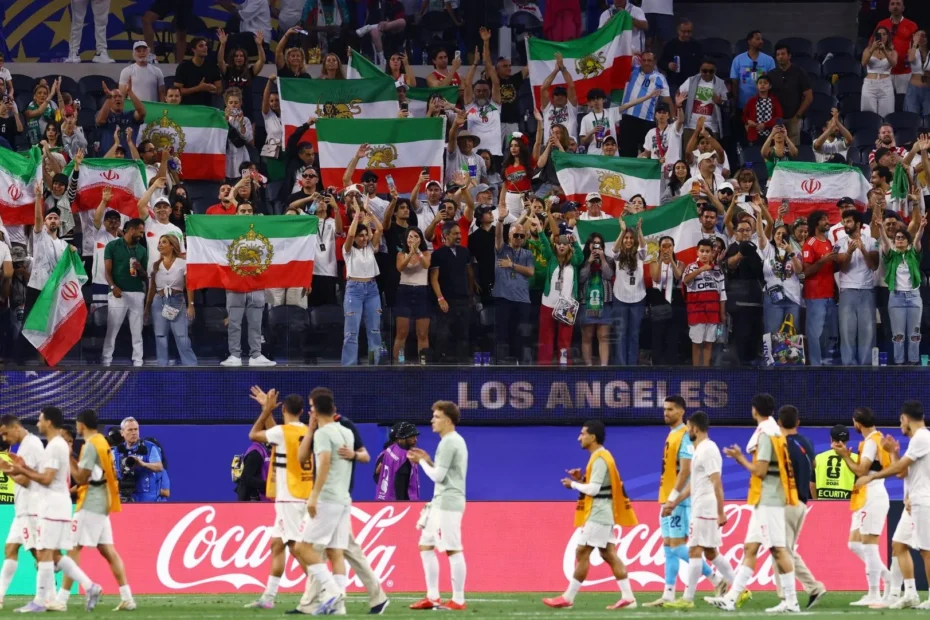
By Hassen Lorgat
After Sunday’s 0-0 draw at SoFi Stadium in California, Iran’s head coach Amir Ghalenoei expressed satisfaction with his team’s performance against Belgium, FIFA’s No. 10-ranked team. “We came into the World Cup under the worst possible conditions,” Ghalenoei told reporters after the Group G match left Iran on two points from two games. “And still we got a result against a great team and a great manager. We played a beautiful game.”
Yet Ghalenoei could not hide his frustration over the structural and systemic obstacles his team faced and will face against Egypt. Following Iran’s 2–2 draw against New Zealand, he described his side as “the most oppressed” team at the tournament. “After the game today, they told us we have to leave immediately, even though recovery is very important for us,” he said. “We’ve been asked to get on a plane and return to our camp in Tijuana, and we are really troubled by that. They are forcing us to go back early, making the situation more difficult with more hurdles—but we won’t let that stop us from doing our best.”
“We don’t know why they’re sending us back. It’s very strange. It seems like others are doing the planning for us. We were supposed to arrive two nights before the game, but they didn’t permit it. We were meant to stay here tonight to recover and return tomorrow lunchtime. Our team is the most oppressed one in the whole World Cup. Our federation isn’t here, our media isn’t here, our management isn’t here.”
I will use the remaining space to test these assertions.
Denied Support: Visa Restrictions and Forced Relocation
The Iranian team, popularly known as Team Melli, has been denied the full support of its backroom staff during matches. The reasons cited are visa requirements, with entry denied to a number of Iran’s support staff—some due to alleged ties to the Islamic Revolutionary Guard Corps (IRGC), which the federation denies. Those affected include:
- Mehdi Taj – President of the FFIRI: Among the senior officials whose visa application was denied, preventing him from entering the United States.
- Mehdi Mohammadnabi – Team Manager/Supervisor: Also denied a visa; reports indicate he was forced to set up a viewing location in Tijuana, Mexico, to follow the matches.
- Hedayat Mombeini – Federation Secretary General: Did not receive a US visa; his official role is confirmed by FIFA records.
- Department Heads (e.g., Mohsen Motamedkia): Heads of analysis, media, and international relations were reportedly among the 11 officials whose visas were not approved.
Iran had originally planned to use Tucson, Arizona, as its training base but was forced to relocate to Tijuana, Mexico, due to immigration restrictions. As a result, Team Melli are based in Mexico—where they play no games—while their matches are held in the United States. With the silent compliance of FIFA, Team Melli is required to fly into the US, play, and depart all on the same day. They are therefore unable to test pitch conditions in advance and are treated unfairly in what is supposed to be a tournament promoting anti-racism and equality.
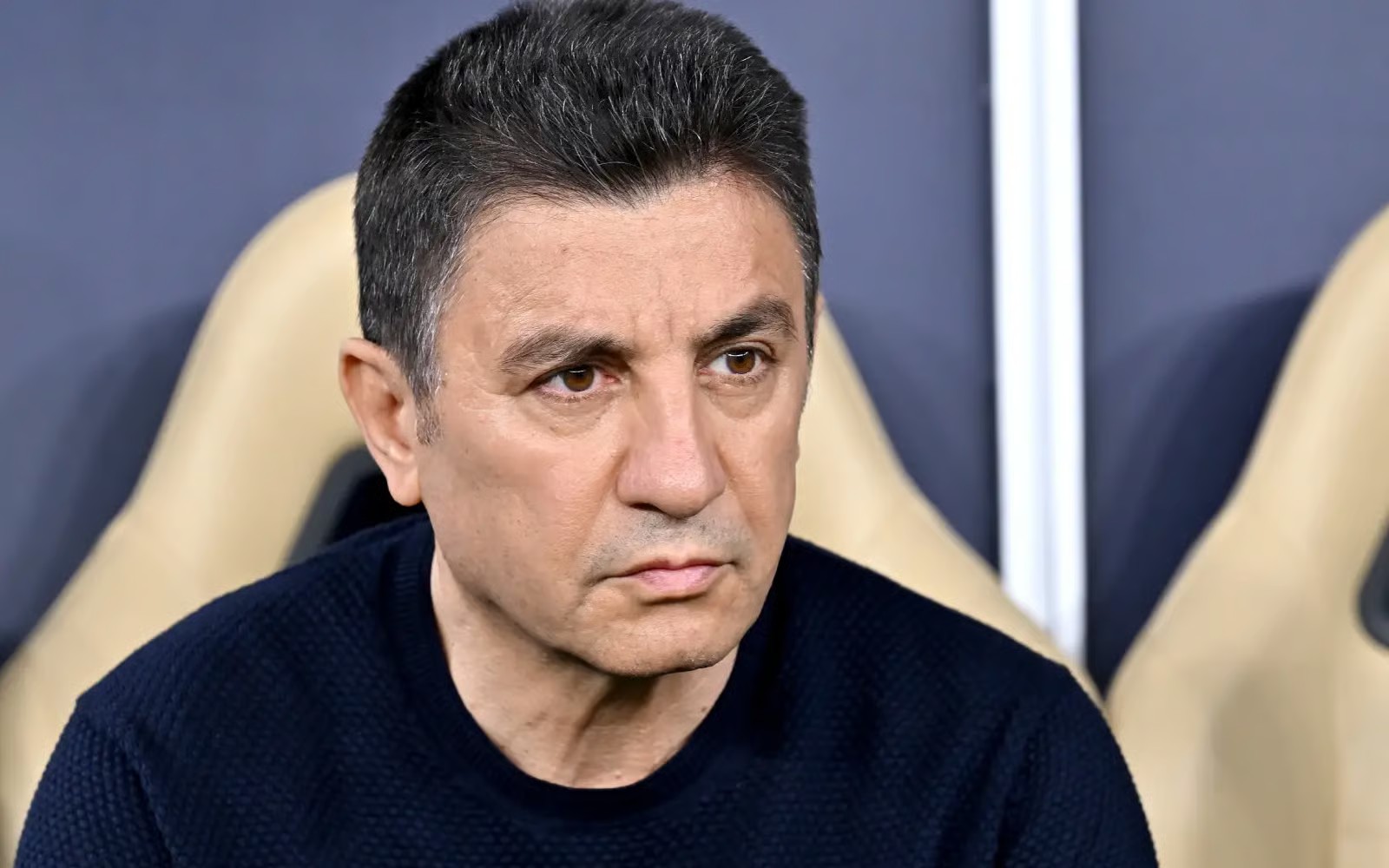
Iranian coach courtesy: Free Malaysia Today
Consider this: the team must take a three-hour flight on match day, step onto the pitch, and be expected to perform as equals against their more superior opponents. That they managed to draw against both New Zealand and Belgium, against all odds, speaks volumes. After the New Zealand game, captain Mehdi Taremi, midfielder Mohammad Mohebi, and Ghalenoei all criticised FIFA for the unfairness. “Yesterday we came, started the trip in the morning, and arrived in the afternoon. We went directly to training and got tired. This kind of deal is not fair,” one said. “We’re going to get fatigued—hamstring, lower back, glutes.” Despite these concerns, Ghalenoei praised co-host Mexico for its friendship and hospitality, noting that the people of Tijuana made Team Melli feel at home.
FIFA’s Unequal Power Structure
Despite FIFA’s growing influence across continents and regions, power remains fundamentally unequal. Some have called Gianni Infantino an authoritarian figure who acts more like an emperor than a sports administrator. With projected funds of $9 billion in 2026, he has the means to reward loyalty and punish dissent as he sees fit. This racist power structure and uneven treatment of member associations have been exposed for all to see.
When Russia invaded Ukraine on 24 February 2022, it took just four days for the FIFA Council Bureau to suspend Russia’s national teams from participation in FIFA competitions. On the same day, the UEFA Executive Committee suspended all Russian clubs, later removing them from the 2022/23 season onward. Yet Israel remains a fully active member of UEFA, despite the ongoing genocide of Palestinians. This is despite a March 2026 report from Amnesty International sharply criticising FIFA for refusing to sanction the Israeli Football Association (IFA) over its inclusion of clubs based in illegal settlements in the Occupied Palestinian Territory. Amnesty argued that FIFA is violating its own statutes, which prohibit matches on another association’s territory without permission. Moreover, despite the International Court of Justice ruling settlements illegal, FIFA claims the West Bank’s legal status remains “unresolved” to justify inaction. The report rightly condemned Israel’s complicity and noted that FIFA and UEFA continue to fund the IFA, making them complicit in facilitating the expansion of illegal settlements and associated human rights abuses.
The report also exposed FIFA’s selective accountability. It fined the IFA for anti-Palestinian racism but ignored the Palestinian Football Association’s request to address the six settlement-based clubs in the Israeli league.
Now, Iran—a supporter of the Palestinian cause—finds itself on the receiving end of FIFA’s lack of principles, decency, compassion, and solidarity.
FIFA, the US, and the Need for Global Reform
FIFA and the United States, through their vindictive and cowardly treatment of Iranian football, have reinforced that FIFA must change and look increasingly to the Global South. The Iranian football federation argued that these actions were “a clear violation of international sports regulations” and said Washington had created “a discriminatory and unequal environment” through what it called “targeted behaviour.” FIFA, like other multilateral bodies, must realise the world has changed.
A Lack of Solidarity from Coaches and the People
Iranian coach Ghalenoei has lamented the lack of solidarity from the other 47 World Cup coaches, who witnessed or were aware of his team’s obstacles yet chose to remain silent. All he sought was a fair chance, and their silence does not help.
Additionally, Somali referee Omar Artan—the 2025 CAF Men’s Referee of the Year—was denied entry to the United States, yet the Confederation of African Football (CAF) failed to support him. Such weak leadership is an insult to the continent.
Let me not even speak of FIFA, which defaults to so-called “immigration rules” of a host country—conveniently adhered to only when it involves the United States. Otherwise, when FIFA enters a country, it rules.
Furthermore, the Asian Football Confederation (AFC) held a Congress in Vancouver where Iranian representatives were notably absent. The AFC failed then, and subsequently, to speak up on behalf of its member nation. The Congress remained silent and did not even consider moving Iran’s games in response to what many see as Trumpian bullying tactics.
We all know that football—like all sports—is political. I would have welcomed action, or even a public comment, from the “Hague Group” condemning this treatment, or at least encouragement for the UN General Assembly to take up the matter. FIFA has clearly lost control of this tournament, and that failure presents an opportunity for nations to reassert their voices within an organization that is neither member-controlled, transparent, nor accountable. President Trump, too, must be held accountable for undermining the beautiful game. Many Western commentators were quick to criticise the Qatar World Cup for its use of the event, yet remain surprisingly silent when it comes to the USA—where the final will be held. Meanwhile, Canada and Mexico have been praised for being very different from their US co-host partner.
A New Narrative Forged by Struggles
Whereas football reporting on Iran once covered its origins during British colonial dominance—when British oil workers brought the game to Iran as they exploited its oil, especially after the coup against democratically elected Mossadeq—the story is now different. The context is the war waged by Israel and the US against Iran, and by all accounts Iran was holding its own.
Football-wise, the earlier narratives focused on the occasion and space the World Cup games gave for the expression of dissent in society. More recently, on the women’s team and the debacle exposing global interference in the country’s domestic affairs. This was before the 2026 U.S.–Israel war on Iran, which resulted in joint military strikes on February 28, 2026. Iran was still negotiating with the US but the war was a “surprise” and included demands for regime change and neutralizing Iran’s nuclear and ballistic programs, and much more. This escalation triggered retaliatory Iranian strikes across US bases in the Middle East and the eventual closing of the Strait of Hormuz.
Now, the narrative has shifted as Team Melli reflects the renewed national spirit of resistance and sumud—non-submission against great odds.
Team Melli, generally, is not part of the merchandising and corporatisation of the World Cup; you will not find them advertising Budweiser or Coca-Cola. The players are fully aware of the stage they are playing on—aware that their people have struck a major blow against unfettered US bullying in West Asia. They know that national solutions will be collectively achieved, as they have cast off the inferiority imposed by war, both on the ground and in the realm of ideas. What would Iran be like if the peace agreement being negotiated in Geneva bears its most modern fruits—no war on Iran and Lebanon for decades to come? The game is on…
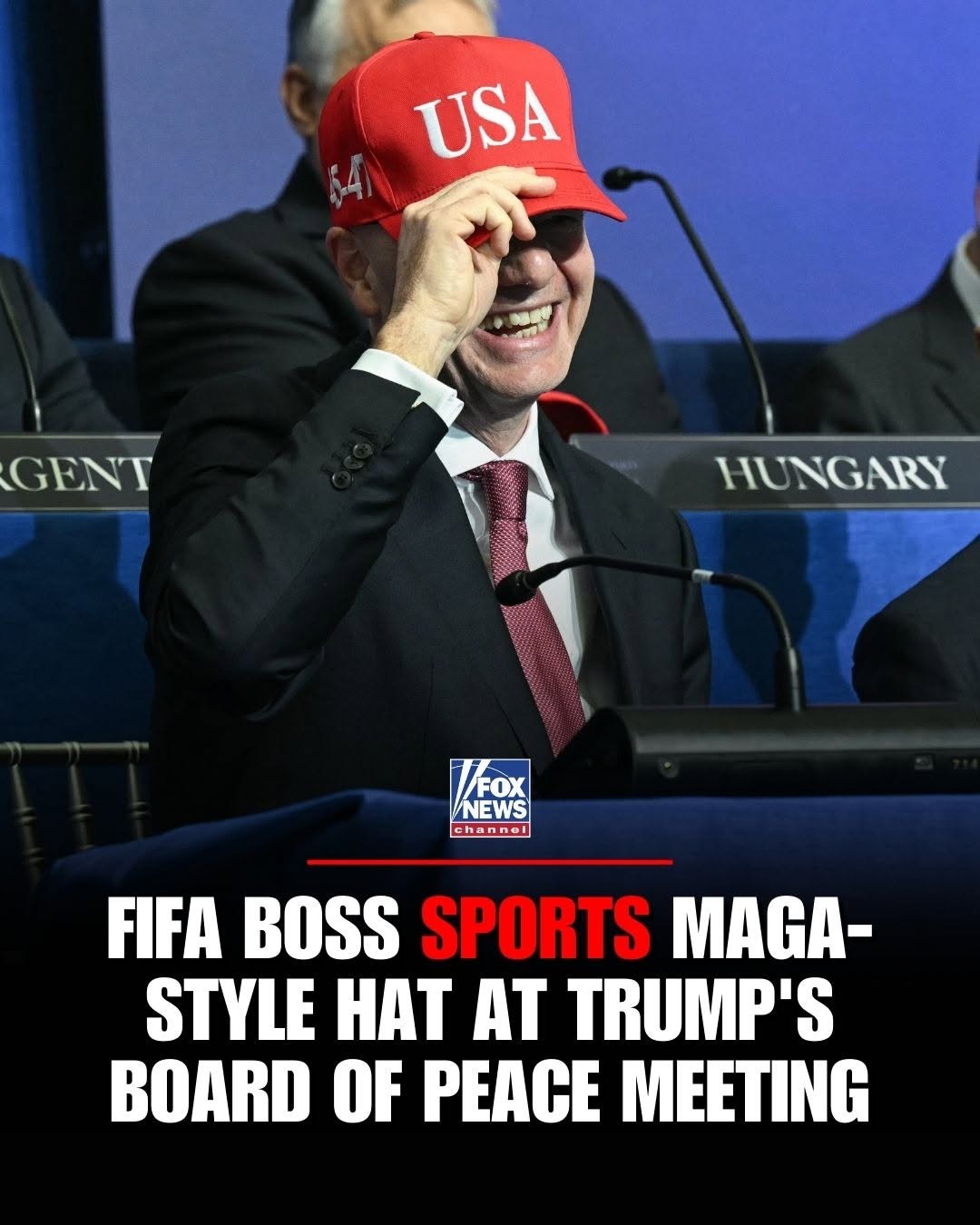
Praise from Infantino is generally speaking bad news, as he is an unprincipled, egotistical man who gave the war-monger Trump a FIFA Peace Prize, created out of the blue. He cosied up to the Trump administration, donned a MAGA hat, showing that FIFA’s neutrality rules did not apply to him and his buddy. So, when he recently entered the dressing room after the New Zealand game and spoke his empty words, offering not to remedy the situation of Team Melli, but to praise the players. He said:
“Let me say one more thing: this is just the beginning of the World Cup. You are writing history, the whole world is watching you. Continue to play with your heart, for your people, your families, for your fans, and for everyone in the world that is falling in love with Team Melli. You are stronger than everything.”
But if he did not say it, it would be true. The game of reforming FIFA has only just begun, and those in power have upset a community of people with long memories and resilience. There is much to do to democratise FIFA and demand even-handedness with a pro-justice perspective—and it must start by kicking out nations that perpetrate genocide. To end, I adapt a much-used slogan: can we have normal sports in an abnormal, or unjust world?