
By Iqbal Jassat
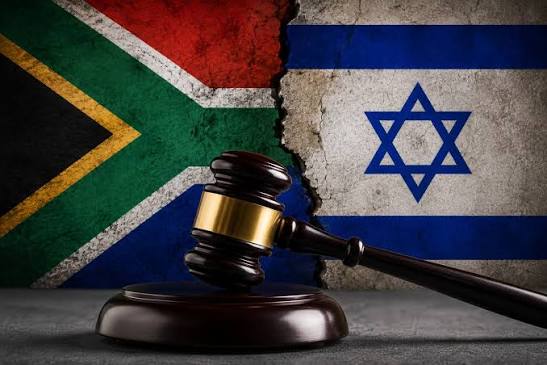
Ever since South Africa lodged one of the most significant legal cases against Israel’s genocide in Gaza at the International Court of Justice (ICJ), it has faced a torrent of abuse and threats by the settler colonial regime as well as by Zionist lobbyists.
The latest criticism of South Africa’s groundbreaking efforts by Prince Mashele, follows a pattern of arguments not any different from that of the Netanyahu regime.
By linking international pressure to domestic political tensions, he chooses to overlook how crucial it is to scrutinise the cost of inaction, impunity and silence.
Absent from much of his narrative is the fact that the ICJ case was not launched as a commercial investment expected to generate a financial return.
It was initiated under the Genocide Convention as a legal and moral intervention by a sovereign state (SA) in response to the horrific genocide in Gaza.
Reducing the matter to a balance sheet exercise strips away the legal obligations and humanitarian realities that gave rise to the case.
The focus on expenditure also ignores the broader international significance of the proceedings.
South Africa’s application has attracted support and intervention requests from numerous countries across Latin America, Africa, Europe and Asia, demonstrating that the case is not an isolated diplomatic venture but part of a wider global challenge to Israeli conduct in Gaza.
The beneficiaries of the cost narrative are easy to identify.
Attention shifts away from the substance of the allegations, away from the civilian death toll in Gaza, and away from the evidence before the Court.
Debate becomes centred on legal bills rather than accountability. This is a familiar mechanism of narrative management where procedural costs are amplified while the underlying allegations are marginalised.
The argument itself is not new. As South Africans we recall similar criticisms were directed at anti apartheid litigation, international boycott and sanctions campaigns and human rights cases throughout the period of the freedom struggle.
Financial costs were highlighted while the costs borne by victims of state violence were pushed to the margins of public discourse.
Public records show that South Africa has allocated substantial resources to the case, but the
real question, however, is not whether justice carries a cost. Every major legal challenge to power does.
The question is why the cost of seeking accountability receives greater scrutiny than the cost of allowing gruesome war crimes to proceed without challenge.
Having been confronted with Israel’s attempts to discredit and undermine South Africa’s ICJ case – including clumsy unproven allegations of Iranian funding – one is aware of Netanyahu’s playbook.
To therefore misread the legal and moral obligation that South Africa exercised in defence of Palestinian lives as a “rand and cents” issue is totally off the mark.
Iqbal Jassat
Executive Member
Media Review Network
Johannesburg
South Africa