
By Mr Mansour Shakib Mehr
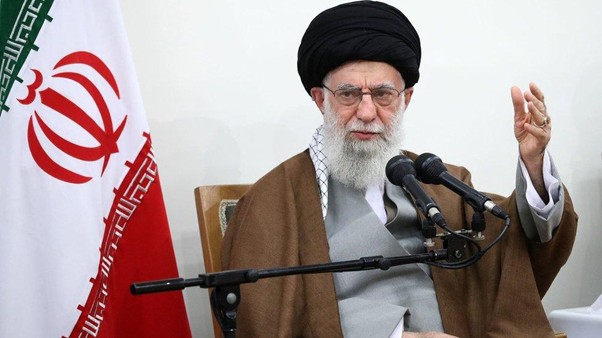
The Leader of the Islamic Revolution, Ayatollah Seyyed Ali Khamenei, was martyred in an illegal airstrike by the U.S. and Israel at his workplace. During his 37 years of leadership, he shaped the country’s major policies and the direction of the Islamic Republic.
It is impossible to fully capture the personality, thought, and legacy of Ayatollah Seyyed Ali Khamenei in a single article. He was an eminent Islamic scholar, jurist, Qur’anic commentator, profound statesman, courageous leader, and a steadfast defender of the oppressed. His influence extended far beyond politics, leaving a lasting impact on religious thought, culture, science, and the world.
In the late 1960s and early 1970s, Ayatollah Khamenei joined the struggle against the Pahlavi monarchy. Because of his revolutionary activities, he was repeatedly arrested, imprisoned, and eventually exiled.
Following the victory of the Islamic Revolution in 1979, Ayatollah Khamenei became one of the leading figures in the establishment of the Islamic Republic, holding several key political and revolutionary positions. On 27 June 1981, he survived an assassination attempt by the MEK while delivering a speech at Abuzar Mosque.
Following the assassination of President Mohammad-Ali Rajai in 1981, Ayatollah Khamenei was elected as Iran’s third president with overwhelming public support. Serving during the imposed Iran-Iraq War and a period of intense internal unrest, he led the country through some of the most challenging years of the Revolution with the support of Imam Khomeini and the Iranian people.
Following the passing of Imam Khomeini in 1989, Seyyed Ali Khamenei was unanimously chosen by the Assembly of Experts as the Supreme Leader of the Islamic Republic of Iran. Under his leadership, Iran entered a new phase of development while preserving the principles and ideals of the Islamic Revolution.
Ayatollah Khamenei believed that Iran’s path to development and progress depended on relying on domestic capabilities and achieving self-sufficiency. In many of his speeches, he stressed the importance of domestic investment and self-reliance in agriculture, industry, science, and technology, describing them as the essential foundations of the country’s advancement.
One of the defining pillars of Imam Khamenei’s leadership was his unwavering support for the Palestinian cause. Throughout his leadership, he stood firmly with the Palestinian people, consistently supporting their legitimate rights and condemning the crimes, occupation, and genocide committed by the Israeli regime against the Palestinians.
Ayatollah Khamenei was a resolute opponent of the USA hegemony, particularly in West Asia. He consistently maintained that the peoples of the region should determine their own destiny free from foreign domination and viewed resistance against the U.S. interference as essential to safeguarding the sovereignty and independence of regional nations.
Scientific and technological advancement occupied a special place in his vision for Iran’s future. He repeatedly emphasized that the country’s progress depended primarily on its own capabilities, especially the creativity and determination of Iranian youth, scientists, researchers, and intellectual elites. Under his leadership, Iran made remarkable advances in numerous scientific and technological fields, achievements that he regarded as the direct result of self-reliance, national confidence, and investment in domestic human capital.
He also attached great importance to cultural issues, emphasizing the Iranian values. Throughout his leadership, he frequently encouraged Iran’s youth to dedicate themselves to the country’s growth and prosperity while remaining faithful to the ideals of the Islamic Revolution of Iran.
Ayatollah Khamenei consistently championed the cause of oppressed nations across the world and regarded the struggle against injustice, colonialism, racism, and occupation as a universal responsibility.
He spoke with great admiration of the South African people’s historic struggle against apartheid and paid tribute to the leadership of Nelson Mandela in bringing an end to institutionalized racial discrimination. He viewed the anti-apartheid movement as one of the great victories of justice over oppression and welcomed Mandela to Tehran on two occasions, where the two leaders held cordial meetings reflecting the mutual respect between the Islamic Republic of Iran and democratic South Africa. During one of these meetings, Nelson Mandela addressed Ayatollah Khamenei as “my leader,” a gesture remembered as a reflection of Mandela’s deep respect for him and for the ideals of Iran.
Following his martyrdom, the funeral ceremonies for Ayatollah Seyyed Ali Khamenei became a testament to his profound influence and the depth of the public’s devotion. Millions of mourners from across Iran, converged to pay their final respects. The streets were filled with a sea of people mourning a leader who had stood as a symbol of resistance and dignity for decades. In Iraq his countless devoted followers pay tribute to him just like his home country, Iran.
This historic outpouring of grief transcended borders, uniting people from diverse backgrounds in a shared sense of loss. The presence of so many pilgrims and supporters from the Islamic world and beyond served as a final, powerful affirmation of his legacy, reflecting the deep impact his lifelong commitment to justice, independence, and the ideals of the Revolution had left on the hearts of millions of people worldwide.
Throughout his life, Ayatollah Khamenei remained committed to the ideals of justice, independence, dignity, and resistance. His intellectual, religious, political, and cultural legacy continues to inspire millions of people in Iran and the world.
Mr Mansour Shakib Mehr, Ambassador of the Islamic Republic of Iran