
By Iqbal Jassat
The University of the Western Cape (UWC) has always been far more than a mere institution of higher learning. Born in the crucible of struggle, it is historically recognized across South Africa and the world as the “intellectual home of the left” and a historic bastion of unyielding resistance against apartheid.
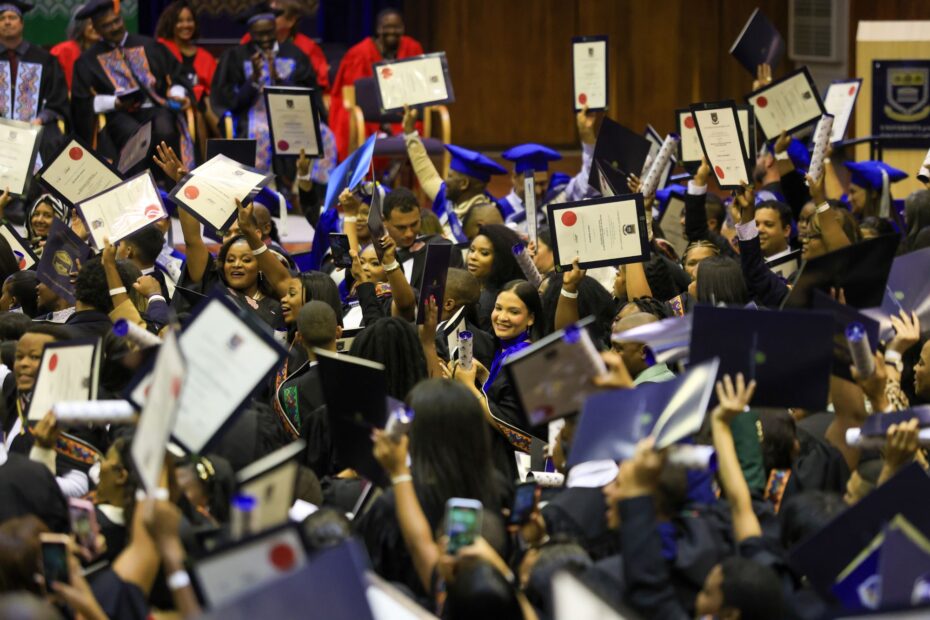
It is entirely fitting, then, that UWC chose to use its institutional voice on Friday, 28 August 2026, to confer honorary doctorates on seven extraordinary trailblazers.
These individuals have dedicated their lives, careers, and personal safety to the advancement of human rights, global accountability, and social justice.
We must warmly congratulate the full cohort of recipients. From the pioneering, foundational legacy of Charlotte Maxeke—celebrated posthumously for her historic defiance against intersecting racial and gender exclusions—to the fierce grassroots advocacy of the late anti-GBV activist Mandisa Monakali, UWC has elevated the very best of our shared humanity.
This academic and moral excellence extends to Professor Emeritus Loyiso Nongxa’s transformative leadership in the mathematical sciences, as well as the global contributions of Mary Robinson, Dr Naledi Pandor, Advocate Adila Hassim SC, and Francesca Albanese.
These are four remarkable women who have consistently, courageously refused to look away from state-sponsored atrocities and systemic oppression, choosing instead to confront the powerful.
At the absolute center of this global recognition is South Africa’s groundbreaking genocide case against the state of Israel at the International Court of Justice (ICJ).
When Pretoria stepped onto the global stage at The Hague, it did not merely file a routine legal dispute; it dismantled decades of geopolitical exceptionalism and Western double standards.
Driven by the unwavering diplomatic leadership of former International Relations Minister Dr Naledi Pandor and articulated through the brilliant, razor-sharp legal mind of Advocate Adila Hassim SC, South Africa did what the world’s major military superpowers utterly failed to do.
They weaponized the 1948 Genocide Convention to demand binding provisional measures, fundamentally shifting the international community’s framework on accountability.
By honoring Pandor and Hassim, UWC is directly celebrating the immense political courage it took to lead this charge—a commitment Pretoria reaffirmed just days ago by submitting a massive new evidence dossier detailing ongoing international law violations to the Peace Palace.
The profound historical weight of this achievement was beautifully captured by the honourees themselves during their acceptance speeches.
Reflecting on the revolutionary history of the institution, Advocate Adila Hassim SC expressed how deeply “overwhelmed” she felt by the recognition, highlighting the unique connection between her legal battles and the university’s radical heritage.
She noted: “It’s particularly special for me coming from UWC, the intellectual home of the left. A place of resistance.”
Sharing this indomitable, uncompromising spirit, Dr Naledi Pandor reminded the audience that the pursuit of human rights is not an optional foreign policy choice but an unyielding moral duty.
She powerfully declared to a roaring congregation: “There can never be peace if the Palestinian people are not free… I want to say to the people of Palestine, you will see freedom in your lifetime.”
Inevitably, this courageous institutional stand has drawn the predictable ire of right-wing critics and apologists for state violence. Local and international pro-Israel lobby groups, along with conservative commentators, immediately expressed outrage.
They accused UWC of using its academic standing to endorse what they labeled “unilateral, biased anti-Israel positions,” attempting to cast a dark cloud over an otherwise historic day of celebration.
This synthetic, manufactured outrage deserves nothing less than our absolute and unmitigated disdain. It is profoundly disgusting to witness bad-faith actors weaponize political complaints against women who are simply upholding the foundational tenets of international humanitarian law.
Advocate Hassim and Dr Pandor did not target a nation out of malice or prejudice; they advanced South Africa’s proudest post-apartheid legacy by dragging illegal military aggression, collective punishment, and forced starvation before the world’s highest court.
Similarly, Francesca Albanese, as UN Special Rapporteur, and Mary Robinson, as a former UN High Commissioner, have merely insisted on keeping the global spotlight fixed firmly on human rights and universal, non-negotiable accountability.
To object to their recognition is to argue that international law should apply to everyone except Israel. The hysterical complaints of these pro-Israel advocates reveal a deeply fragile bigotry—one that seeks to bully, defund, and intimidate academic institutions into silence while Palestinian civilians continue to endure unprecedented, televised horrors in Gaza and the West Bank.
UWC’s guiding motto, Respice Prospice (“Look back, look forward”), reminds us of the true power of ethical, fearless leadership. By honoring these courageous figures, UWC has refused to succumb to censorship, academic policing, or the financial and political pressures of colonial apologists.
We celebrate these seven remarkable souls for their contributions to justice, and we applaud UWC for standing firmly, proudly, and unreservedly on the right side of human history.
Iqbal Jassat
Executive Member
Media Review Network
Johannesburg
South Africa