
By Iqbal Jassat
The furious backlash from the South African Zionist Federation (SAZF) and Tali Feinberg of the SA Jewish Report regarding Navi Pillay’s 2026 Nobel Peace Prize is as predictable as it is telling. In their rush to condemn the Norwegian Nobel Committee, these critics have put on a masterclass in deflection, perfectly mirroring the official rhetoric of the Benjamin Netanyahu regime.
By attempting to reduce Pillay’s monumental, decades-long career to a single geopolitical grievance, they reveal a profound discomfort with the very concept of international accountability.
To understand their opposition is to recognize it as a direct extension of Tel Aviv’s foreign policy strategy.
For years, the Netanyahu government has operated on a simple premise: any international body, jurist, or legal framework that dares to scrutinize Israeli state actions is automatically branded as biased, illegitimate, or worse.
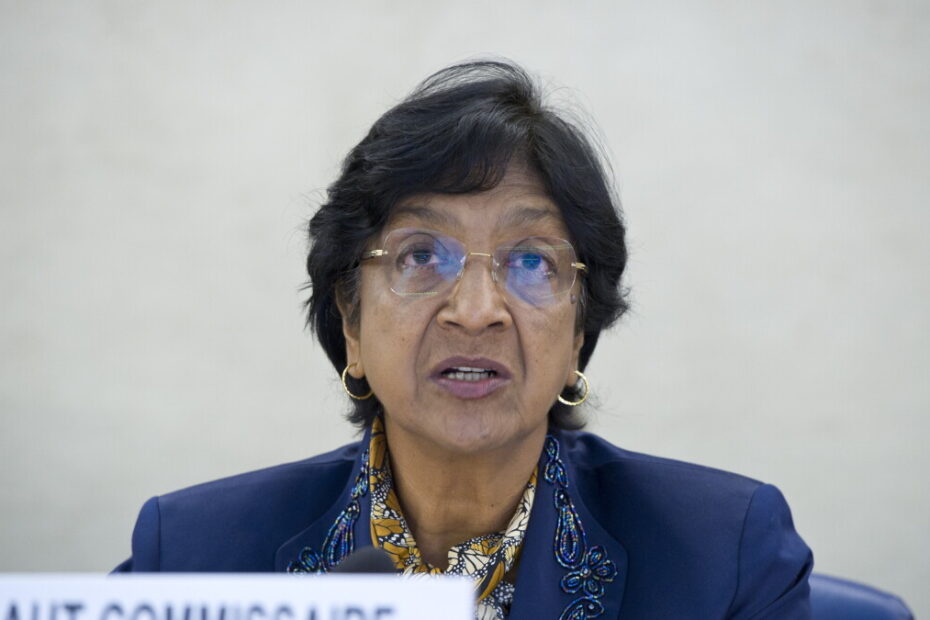
When Pillay led the UN Independent International Commission of Inquiry, she did what any rigorous legal mind would do—she evaluated the evidence against established international law. Because those findings were damning, the response from groups like the SAZF is not to engage with the legal substance, but to attack the referee.
Dismissing the Nobel Committee’s decision as an endorsement of extremism is a transparent attempt to delegitimize a global institution simply because its conclusions do not align with Israeli regime’s interests.
Is it not remarkably rich for the SAZF to position itself as the sole arbiter of Jewish opinion in South Africa, completely ignoring the vibrant, courageous, and growing number of South African Jews who stand in direct opposition to their right-wing Zionism?
From organizations like South African Jews for a Free Palestine (SAJFP) to individual activists, academics, and citizens, a significant portion of the Jewish community has long rejected the actions of Apartheid Israel.
By the way, this rejection of Israeli state overreach is not isolated to South Africa; it reflects a massive paradigm shift among Jewish communities worldwide.
Progressive global organizations have explicitly countered the rhetoric of groups like the SAZF, noting:
“The weaponization of antisemitism to shield the Israeli government from international legal scrutiny does a profound disservice to Jewish safety worldwide. True safety and justice cannot be achieved through the oppression of others, and honoring a jurist who upholds universal human rights is an asset—not an insult—to global peace.”
Furthermore, international legal experts have pushed back against the narrative that holding Israel accountable is a partisan venture.
In a collective warning issued by international legal experts, over 800 scholars and practitioners of international law and Holocaust studies—including numerous prominent Jewish scholars—cautioned against the horrific atrocities in Gaza.
Raz Segal, a noted Israeli historian and professor of Holocaust and Genocide Studies, has gone as far as to describe Israel’s operations as a “textbook case of genocide unfolding before our eyes,” validating the precise legal frameworks that Pillay’s commission applied.
Similarly, the International Association of Genocide Scholars (IAGS), which includes leading global Holocaust experts, overwhelmingly passed a resolution declaring that Israel’s state actions meet the strict legal definition of genocide.
For these global voices, holding a state accountable to the Genocide Convention is an urgent moral necessity, not an act of bias. They explicitly reject the weaponization of Jewish identity to shield any government from accountability, asserting instead that true human rights advocacy must be universal.
Indeed for South African and international communities, Navi Pillay is not an enemy of peace, but a champion of it—a jurist who applied the same rigorous legal principles to Gaza and the West Bank that she once used to dismantle South Africa’s own apartheid regime and prosecute architects of the Rwandan genocide.
The SAZF’s anger isn’t actually about the Nobel Committee losing its way; it is about the terrifying reality that the global consensus has shifted. When a lifelong champion of international law is elevated on the global stage, it signals that the era of political exceptionalism is drawing to a close.
By clinging to the talking points of a desperate regime and ignoring the diverse, justice-seeking voices within their own global and local communities, Feinberg and the SAZF have not diminished Navi Pillay’s achievement—they have only highlighted their own profound isolation.
Iqbal Jassat
Executive Member
Media Review Network
Johannesburg
South Africa