
By Hassen Lorgat
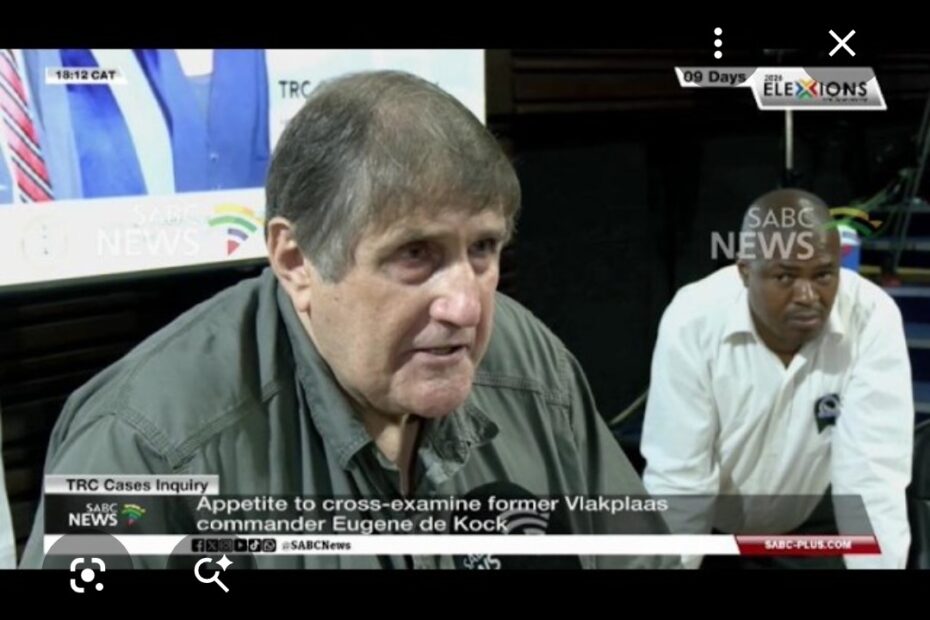
Eugene de Kock’s recent pronouncements on apartheid death squads were again in the news. The man the media has called Prime Evil is always interesting to national media houses, and it became a spectacle — easy meat for talk-shows — and he has not failed to capture attention. See here, here and here.
Courtesy SAHA
Let me be clear Eugene de Kock is a killer and loyal servant of white supremacy from family and schooled into it as my late friend and comrade, Eddie Koch wrote way back in 1996, in his the life story of an assassin. Since his long imprisonment, he has reiterated key points, long cherished by many Left intellectuals: that apartheid reform (democracy) and repression were twin strategies of the apartheid regime. Eugene de Kock has always argued that the “dirty work” was integral to the maintenance of the regime. The phrase dirty work was more recently used by the German Chancellor Friedrich Merz. Merz when he supported Israel’s military actions (June 2025) after it and the US attacked Iran. He said that “the dirty work Israel is doing for all of us” warranted “the utmost respect.” Not one European leader forcefully condemned him for that honest assertion, although French President Macron tried half-heartedly to distance himself from the statement.
Truth and Reconciliation
During his trial in 1996 and even in the subsequent TRC hearings in 1998, de Kock consistently repeated that orders for kidnapping, torture and murder came from senior officials, including former presidents P.W. Botha and F.W. de Klerk. Furthermore, he stated that his superiors expected him to “use his own judgment,” and that he had received medals for his actions. His defence logic was that state violence was systematic, with orders originating from the highest echelons of political leadership.
The revelations of the Truth and Reconciliation Amnesty Hearing on the “Attack on Transit House in Swaziland” (February 22, 2000), involving de Kock, presided over by Judge Ronnie Pillay, with Judge Khampepe as a panel member; must not be forgotten. We remember that de Kock was arrested in 1994 and charged with 89 counts, including six counts of murder, conspiracy to murder, attempted murder, assault, and kidnapping.
Capacity issue or lack of political will?
If we fast-forward 25-odd years, de Kock appears again before Judge Khampepe, who heads the Commission named after her, which itself raised legal challenges to her leadership by former presidents will not be discussed here. The Commission, whether overtly or not, raises questions such as the capacity of officials, the political will to prosecute offenders, whether there was a secret deal amongst the elites not to prosecute or litigate, and so on. Or maybe the leaders believed that society was not ready to open up the apartheid wounds that were still fresh?
Now, in 2026, de Kock appeared before the Khampepe Commission of Inquiry, which was initiated after campaigns to obtain justice in the post-TRC prosecutions. De Kock, who had served 20 years in C-Max, said that no one in the National Prosecuting Authority of South Africa had approached him to provide the names, times and dates of those further up the chain of command who gave the orders. This is the nub of this case, as the families campaigning for greater transparency and accountability, and for the prosecution of apartheid-era human rights violators, have so loudly and articulately proclaimed.
Can this failure to do the job properly — hearing the perpetrators and victims speak without prosecution following — not be regarded as wasteful expenditure?
During the Truth and Reconciliation Commission (TRC) hearings, we heard the testimony of how Eugene de Kock and his Vlakplaas counterinsurgency unit callously continued their dirty business. They drank alcohol and hosted braais while the bodies of their murdered anti-apartheid victims were being burned nearby. The individuals must take personal responsibility for this, but their dehumanisation ran deeper than the persons involved and demands we ask deeper questions about how these humans were made like this. The conversations about personal and collective accountability were emerging but did not go deep enough because even these few perpetrators of gross human rights violations were seemingly let off the hook.
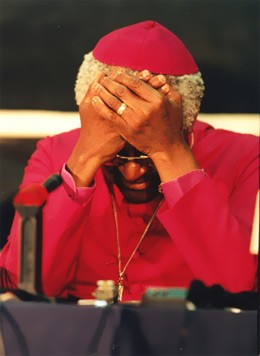
We, the public, already paid for the state to prosecute Colonel de Kock in two major trials in 1995 and 1996, and then General Magnus Malan and other military officers as well (Tutu, 1999:27). Bishop Tutu further notes in his No Future Without Forgiveness that a bevy of government officials from the Department of Justice and Security, and police personnel, cost money and time: “eighteen months to make a case successful against de Kock; since he had been a former state employee, the state was obliged to foot his legal bill, which came to R5 million — plus the cost of prosecution and its bureaucracy, and an expensive witness protection programme.”
As indicated above, the recent testimony of de Kock is more profound than those who label him a turncoat, as it touches on an understanding held by many of us: that apartheid was not only imposed with the ideological consent or submission of the masses. It needed repression — formal as well as hidden and informal — to keep the regime in its place.
18 talking pages
He told the Commission in his 18-page affidavit that he was the central “operations figure” at Vlakplaas — a secret headquarters for Section C1 (also referred to as C10) of the security police. He turned former struggle guerrillas into askaris, using them as “a death squad” responsible for extra-judicial killings, kidnappings, interrogations and bombings. He told us that he has all the information — the command structures, operational relationships, requests for assistance, the movement of instructions and covert liaison arrangements, how targets were selected from outside Vlakplaas after senior people approached him, and who executed instructions. This clearly left him bitter, as they are all directly implicated in the violent application of apartheid ideology: “None served a day in a South African prison — except me.”
This bigger-fish information he held, it appears, was not pursued by the Priority Crimes Litigation Unit, despite some pretence that they would approach him to obtain more information which would assist them “to move upward through the chain of command.” This never happened; once imprisoned, he was kept “at arm’s length.” It was the platform he used to speak out.
Political leaders knew of apartheid’s other face
Apartheid political leadership knew and gave the nod in various ways for their work. These include:
- Louis le Grange — Minister of Law and Order (1982–86). Examples he gave include the bombing of ANC offices in London; le Grange “decorated the people who were involved in this, including me.”
- Adriaan Vlok — Deputy Minister of Law and Order (1985–86) and Minister of Law and Order (1986–91) — visited Vlakplaas “on many occasions” and came “to congratulate me on the bombing of Khotso House… and Cosatu House.”
- P.W. Botha — Prime Minister (1978 to 1984) and then State President with enhanced presidential powers (1984 to 1989). De Kock said Brigadier Schoon told him the order to bomb Cosatu House came “from very high,” meaning it came from P.W. Botha.
Former South African President F.W. de Klerk was accused by former apartheid police colonel Eugene de Kock of having knowledge of and authorizing state-sanctioned violence during the apartheid era. De Kock, who commanded the notorious Vlakplaas counter-insurgency unit, frequently asserted that former president de Klerk had “blood on his hands” and publicly argued that his 1993 Nobel Peace Prize — shared with Nelson Mandela — should be revoked because he was “a killer who was never convicted.”
FW de Klerk consistently denied any personal involvement in, or state authorisation of, apartheid-era death squads throughout his political career and post-presidency. He acknowledged that “rogue elements” within the security forces committed gross human rights violations, but maintained that these actions were never part of official government policy or strategy. In the late 1990s de Klerk apologised for the suffering caused by apartheid but firmly denied that his government or the State Security Council (SSC) authorized assassinations, cross-border raids, or covert units like the Vlakplaas death squads. Finally, to protect his integrity de Klerk went to court and succeeded in blocking the clauses in the TRC’s final report that implicated him in third-force violence and state-sanctioned killings. Yet there are many who continue to ask questions about the National Party’s role in supporting the death squads and terror, particularly during the 1980s.
The Silence of the FW de Klerk Foundation
On the recent public clamour from some quarters that the Nobel Prize must be taken back from the former president, the FW de Klerk Foundation had at the time of writing still remained silent. Yet it has not quietened the call for de Klerk to return the Nobel Prize which he won together with Madiba in 1993. Others have joined the fray, including activist Carl Niehaus, following the recent hearings, even demanding its posthumous return.
The de Klerk Foundation did speak, a few years ago when de Kock’s parole application was denied. They argued that de Kock had to be treated the same as others, and granted parole. This was when the then Justice and Correctional Services Minister Michael Masutha (2014 ) denied former apartheid-era police colonel Eugene de Kock parole. De Kock was sentenced to 212 years in jail in 1996 for the murders he committed during the apartheid years.
Since we are talking of Nobel Peace Prizes, it is worth noting as I write at the end of October, there is no record of the FW de Klerk Foundation issuing a statement or congratulations to South African jurist Navi Pillay on winning the 2026 Nobel Peace Prize. This is despite a number of leading politicians, the president and former president Mbeki, civil society groups and international organisations issuing official messages of support following the Nobel Committee’s announcement.
Why the silence from the Foundation, about South Africa’s most recent Nobel Peace Laureate, Judge Navi Pillay, who in 1995 became the first Black woman acting judge on the South African High Court? Later that year, President Mandela and Justice Minister Dullah Omar nominated her to the United Nations, and she was elected by the UN General Assembly to serve on the International Criminal Tribunal for Rwanda (ICTR). She spent the next eight years in Arusha, Tanzania, prosecuting those responsible for the 1994 Rwandan genocide.
This silence speaks volumes for a person who served the judiciary and human rights for decades.
Their silence has nothing to do with the fact that in November 2022 the 18-carat gold Nobel medal and various pieces of jewellery were stolen from de Klerk’s Cape Town home — it was about politics. The irony now is that de Kock, a former die-hard servant of apartheid, has stated it clearly: the apartheid leaders needed the death squads and the other ideological apparatuses like media, churches and schooling and much more to keep us all subjugated. The structure and system of apartheid needed them and it could not work without the force, formally and informally used to repress the people. The cock has crowed and we will await the new dawn.
Hassen Lorgat