
By Hassen Lorgat and Iqbal Jassat
From Brazil to the United States, popular movements have made Palestine the litmus test of justice and for our collective humanity. No one can ignore what is happening in Gaza, the Westbank and the OPT. The frontline states, Jordan, Egypt and the others must make a stand.
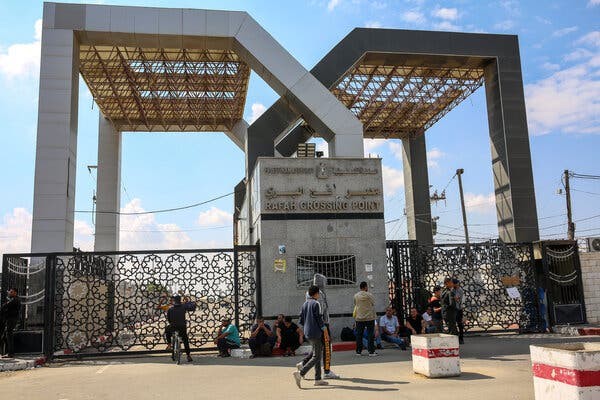
Egypt — the largest Arabic-speaking nation, on the doorstep of a people enduring genocide, engineered starvation, and ethnic cleansing — must learn that repression is not stability, and that meeting basic needs and standing for global justice go together. Cairo must rediscover its conscience, open the gates of Rafah, and let the Palestinian people live — and in doing so, renew itself.
The reality on the ground demands it. As severe winter floods submerge the flimsy makeshift tents of Gaza, turning a ruined landscape into a frozen swamp, the trapped Palestinian population faces a compounding horror. They are caught between an unrelenting brutal military campaign by the Zionist regime and the devastating forces of nature. Yet, just across the southern border, the gates of the Rafah crossing remain largely closed—a monument to regional paralysis.
For South Africans, who understand the heavy price of liberation and the moral imperative of international solidarity, Egypt’s stance is not merely a bureaucratic or diplomatic calculation. It is a profound abdication of moral and humanitarian duty.
South Africa has consistently demonstrated its commitment to Palestine’s quest for freedom and justice by persistently leveraging international judicial frameworks to challenge Israel’s ongoing violations.
This commitment was starkly underscored when South Africa submitted a massive, detailed dossier to the International Court of Justice (ICJ), documenting the Zionist regime’s systematic non-compliance with the court’s binding provisional measures.
This submission provided undeniable evidence of engineered starvation, infrastructure collapse, and the ongoing denial of basic human survival requirements.
President Cyril Ramaphosa forcefully articulated this stance, declaring at the BRICS summit that international law must be applied equally, explicitly demanding global accountability for the atrocities in Palestine.
This active, principled lawfare stands in sharp contrast to the passive containment policy managed by Cairo. As the sole Arab nation sharing a direct land border with the Gaza Strip, Egypt possesses the unique physical capability to give effect to the ICJ’s mandates for unhindered humanitarian access. Its failure to do so transforms a neighbor into a functional enforcement mechanism of the blockade.
To understand why a major regional power appears so paralyzed in the face of these binding international orders, political analysts point to the structural dependencies that underpin the administration of President Abdel Fattah el-Sisi.
This perspective argues that Cairo’s foreign policy is deeply constrained by the external forces that engineered and supported the Sisi coup which deposed the legitimately elected President Mohamed Morsi.
The pillars of the current Egyptian state are heavily tied to external patrons: billions of dollars in military financing from Washington, massive economic bailouts and investments from Gulf states like Saudi Arabia, and an intricate, highly integrated security partnership with Tel Aviv to monitor the Sinai Peninsula.
Through this lens, the strict restrictions at the Rafah crossing are not a reflection of Egyptian national will, but rather the fulfillment of a geopolitical bargain. By keeping the border tightly regulated, the regime prioritizes the stability of its alliances and the preservation of the regional status quo over pan-Arab solidarity, rendering it structurally complicit in the ongoing catastrophe.
Conversely, the Egyptian state and its defenders strongly reject any characterisation of submissiveness, framing their policy as a matter of supreme national interest and strategic foresight.
From Cairo’s perspective, the management of the Rafah crossing is a critical national security imperative. The state argues that an open, unregulated border risks the spillover of militant factions and weapon smuggling into the volatile Sinai Peninsula, which has long been a theater for costly counter-terrorism operations.
Furthermore, official Egyptian policy explicitly frames its refusal to permit a mass exodus of Palestinians as a defense of the Palestinian cause itself. Officials maintain that opening the gates to displacement would facilitate the permanent emptying of Gaza, effectively liquidating the prospects for a future, viable Palestinian state.
From this viewpoint, Egypt’s actions are designed to preserve the geographic integrity of Palestine, while its diplomats work behind the scenes to mediate ceasefires and coordinate aid under highly controlled conditions.
However, as the humanitarian crisis reaches an absolute breaking point, strategic abstractions can no longer shield Cairo from its ethical obligations. The international community, led by voices from the Global South, must place clear, unyielding demands on the Sisi administration to alter its course immediately.
What we call for:
First, Egypt must unconditionally open the Rafah crossing to allow an uninterrupted, large-scale flow of heavy machinery, water pumps, medical supplies, and winterized shelters to combat the catastrophic flooding.
Second, Cairo must defy external vetoes and utilize its state infrastructure to establish field hospitals and emergency triage centers directly at the border zone, facilitating the immediate evacuation of the critically wounded and sick.
Finally, Egypt must leverage its significant regional leverage to break the fuel blockade, ensuring that basic municipal infrastructure in Gaza can function to drain submerged areas.
Ultimately, this divide highlights a fundamental tension between immediate humanitarian mandates and the calculations of statecraft.
For South African observers, the comparison is clear: while Pretoria uses the full weight of international law to break a siege, Cairo navigates a web of security arrangements that sustains it.
As the floods rise and the crisis deepens, the closure of the Rafah gates remains one of the most tragic symbols of the conflict—a reminder that in the arena of global politics, geopolitical alignments often override the most urgent cries for human survival.
Egypt can no longer afford to remain a passive bystander to a tragedy unfolding at its doorstep; it must choose whether to remain an enforcer of isolation or become a conduit for survival.
Hassen Lorgat
(South African Media Activist & Trade Unionist)
Iqbal Jassat
(Executive Member of Johannesburg-based advocacy group Media Review Network)