
By Iqbal Jassat
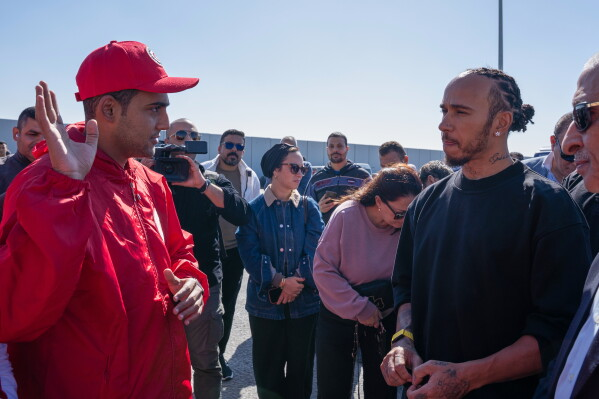
Social media headlines moved faster than a Formula One car this week, sparking a wave of viral claims that seven-time world champion Lewis Hamilton had entered the Gaza Strip. The reality on the ground, however, tells a far starker story. Hamilton did not enter Gaza. On Tuesday, he stood strictly on the Egyptian side of the Rafah border crossing, inspecting aid warehouses in El Arish and looking across a frontier that remains sealed to the outside world.
Clarifying this distinction is not a matter of mere pedantry. Suggesting that one of the world’s most recognisable athletes walked freely into Gaza sanitises a brutal geopolitical reality.
Access to the territory is tightly restricted by the settler colonial regime, and Hamilton was not granted entry into the enclave itself. Like every other high-profile humanitarian envoy, journalist, and observer who has travelled to North Sinai over the past three years, his journey ended at a concrete wall and a heavily fortified gate.
Beyond that gate lies an unprecedented landscape of devastation. Years of relentless Israeli bombardment have reduced entire neighbourhoods, hospitals, and universities to dust. Tens of thousands of Palestinians have been killed, with countless more still buried beneath the collapsed concrete of their own homes.
Now, as seasonal winter rains sweep away makeshift tents and flood displacement camps, more than two million survivors face the elements without adequate shelter, medicine, or clean water.
When a global icon cannot cross a border to witness the aftermath of such destruction, it forces an uncomfortable truth back into the spotlight: Gaza remains an open-air prison.
While ceasefire agreements promised a sustained surge of at least 600 aid trucks a day, humanitarian workers report that only a fraction of those lifesaving supplies are permitted through.
Israeli military authorities, who maintain control over the Gaza side of the crossing and all entry points into the Strip, continue to dictate what—and who—goes in or out.
Yet scrutinising this blockade requires looking at both sides of the fence, and Egypt’s role cannot be waved away with carefully choreographed photo opportunities.
Cairo routinely highlights its humanitarian convoys and Red Crescent logistics hubs, hosting international figures like Hamilton to showcase its relief efforts. At the same time, Egypt maintains a heavily reinforced security barrier along its frontier, enforces strict movement controls, and operates within security frameworks coordinated with Israel.
By managing the southern bottleneck of the enclave, Cairo shares responsibility for a border regime that keeps millions trapped inside a devastated territory while vital winter aid sits stacked in warehouses just miles away.
Lewis Hamilton’s decision to use his global platform to draw attention to Palestinian suffering deserves recognition. Still, the image of him standing at the edge of Rafah should not be mistaken for a breakthrough.
Until independent observers can cross freely, until aid flows without political obstruction, and until Palestinians are no longer sealed inside the ruins of their own homeland, a visit to the Gaza border remains just that—a glimpse from the outside of a prison whose gates remain locked.
Iqbal Jassat
Executive Member
Media Review Network
Johannesburg
South Africa