
By Iqbal Jassat
Why Nick Stewart’s FDD Ties Will Undermine the Iran Talks
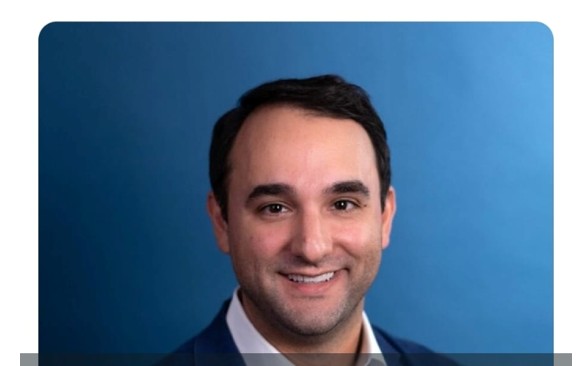
The appointment of Nick Stewart to the Trump administration’s Iran negotiating team is being framed by pro-Israel hawks as the addition of a “seasoned policy expert”.
However, for those familiar with the mechanics of Washington’s “maximum pressure” ecosystem, Stewart’s arrival signals the official installation of an ideological lobbyist with a clear objective to advance Israel’s goal to sabotage the talks.
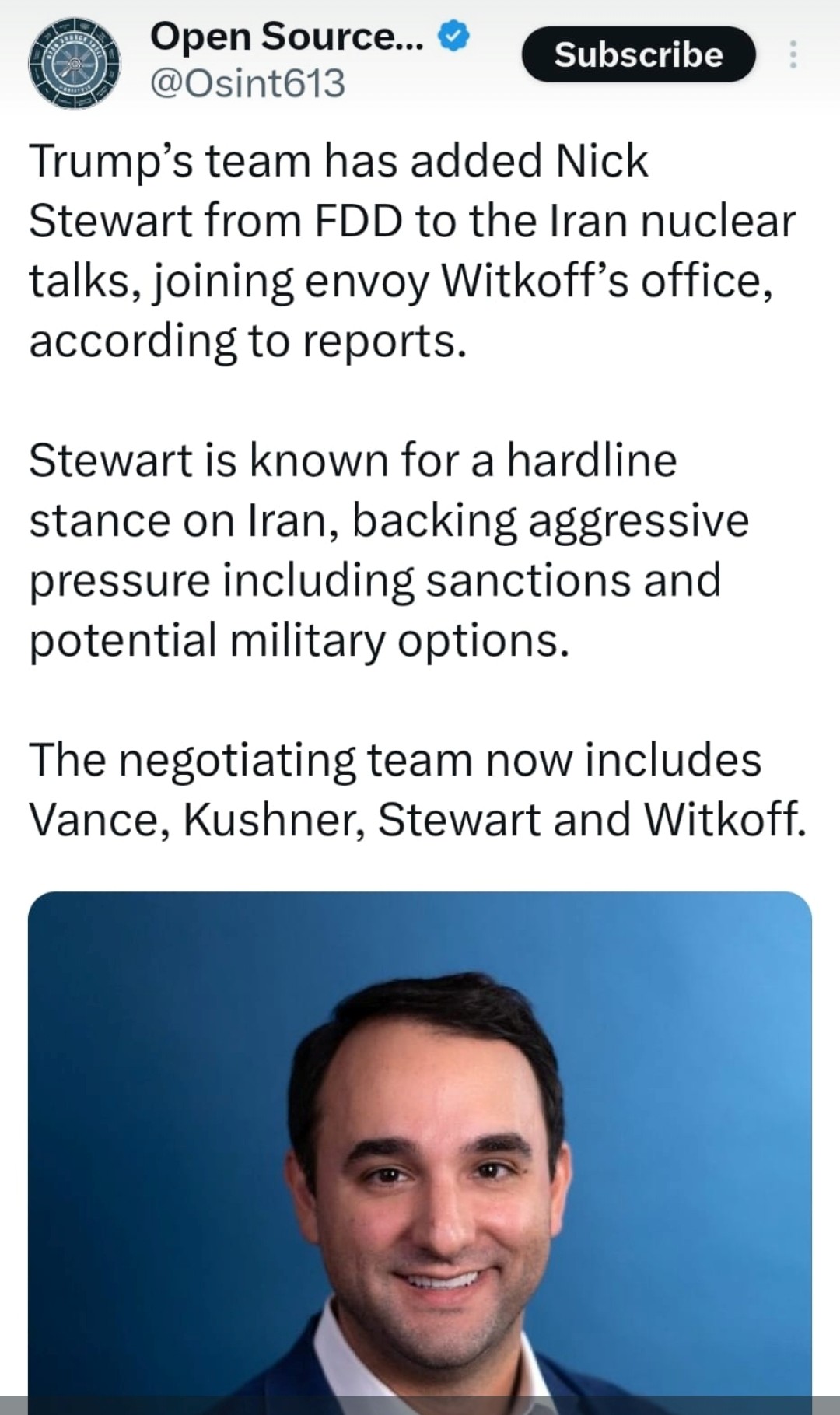
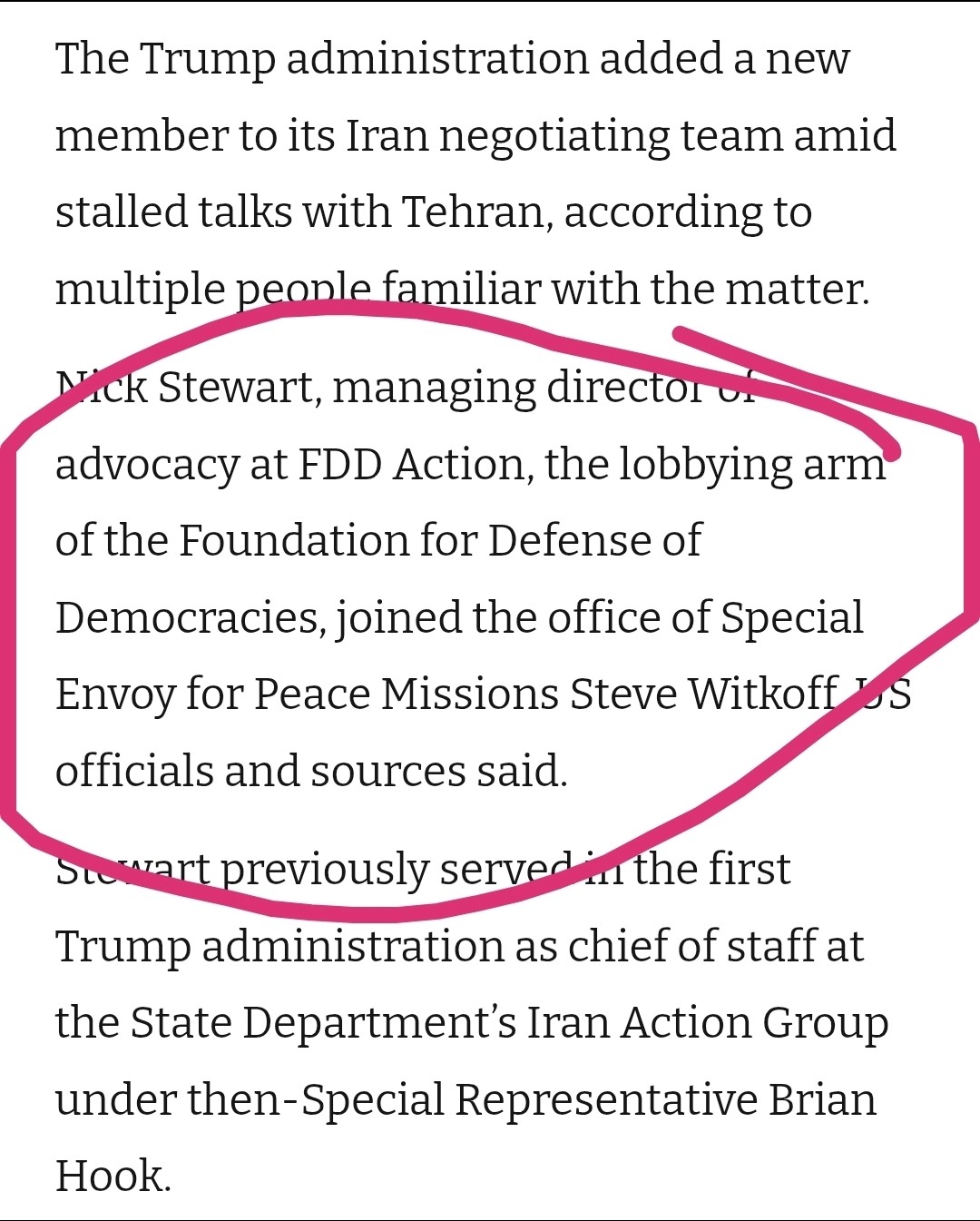
By pulling Stewart directly from his role as Managing Director of Advocacy at FDD Action—the lobbying arm of the Foundation for Defense of Democracies (FDD)—the administration has raised profound questions about whether its true objective is a negotiated peace or a manufactured path to regime collapse.
Stewart is not a neutral arbiter; he is a primary architect of the very hawkishness he is now
tasked with “negotiating.”
Having served as chief of staff for the State Department’s Iran Action Group under Brian Hook during the first Trump administration, Stewart represents the personification of a revolving door between ideological advocacy and executive power. His home institution, the FDD, has carved out a singular niche by providing the intellectual ammunition for policies that prioritize economic strangulation over sustainable diplomacy.
The credibility questions surrounding Stewart are rooted in the specific methods FDD utilizes to influence U.S. policy.
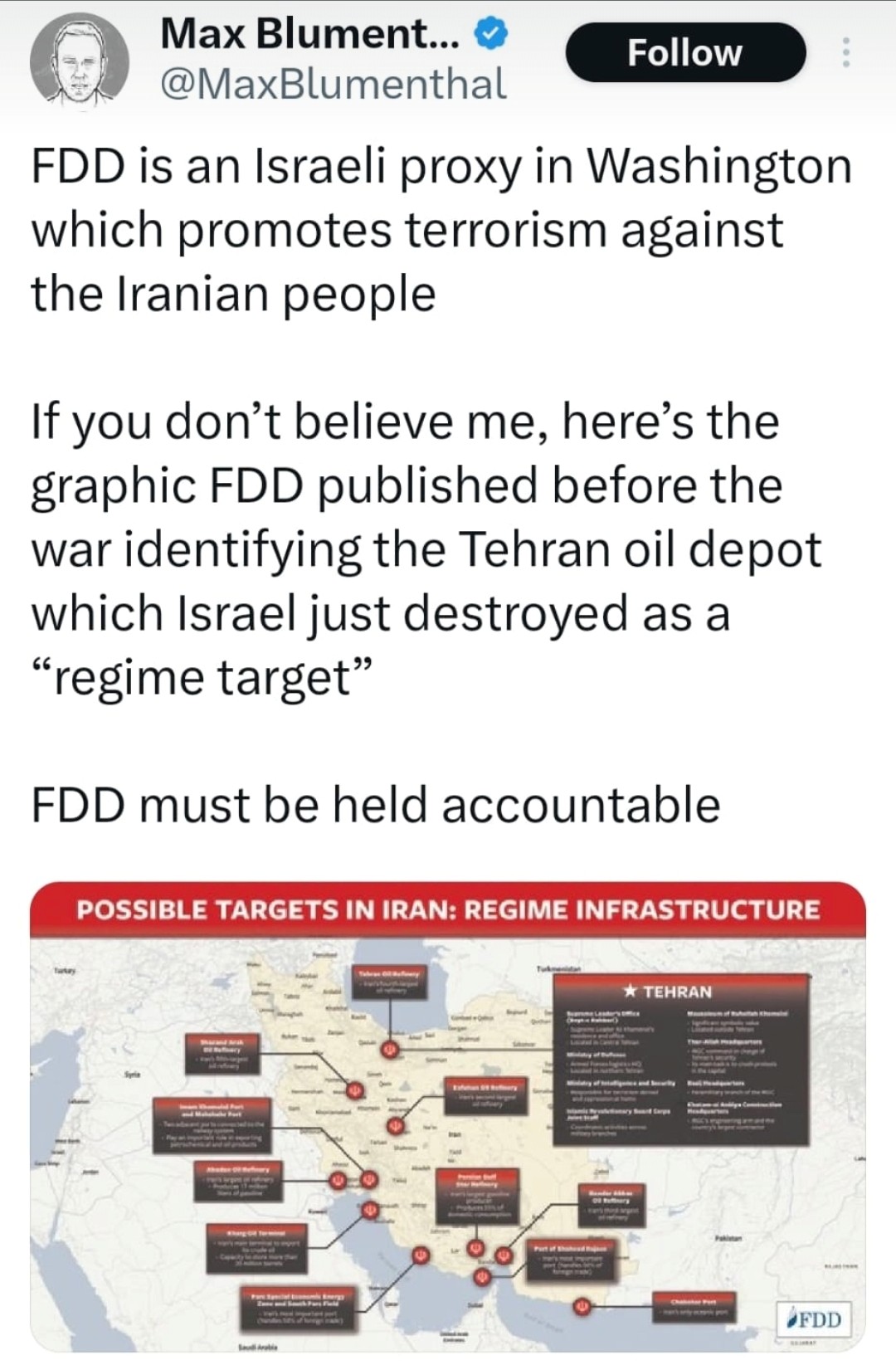
Investigative analyses of the organization’s media influence reveal what critics call a “circular sourcing loop”.
This process typically functions as follows:
- The Memo: FDD publishes a “research memo” with specific (often contested) statistics or
a highly securitized narrative. - The Adoption: Friendly officials in the State Department or National Security Council
adopt this data in their own talking points or “fact sheets”. - The Verification: FDD experts then appear on news networks citing the government’s
own talking points as “independent verification” of their original research.
Stewart sat at the receiving end of this loop during his previous government tenure. Now,
returning as a lead negotiator, he brings an institutional legacy that views diplomacy not as a
tool for compromise, but as a theater for demanding total Iranian capitulation.
As Trita Parsi of the Quincy Institute for Responsible Statecraft noted, hiring an FDD insider “strongly suggests
that reaching a diplomatic deal is not Trump’s objective”.
The FDD’s own history offers further reason for skepticism. Originally founded as “Emet”
(Hebrew for “Truth”), its initial mission filed with the IRS was to “enhance Israel’s image in North
America”.
While it rebranded following 9/11, critics argue it remains a primary vehicle for the interests of the Israeli political right and Gulf monarchies.
This was reinforced by the “Otaiba Leaks,” which revealed a close backchannel between FDD leadership and UAE
Ambassador Yousef al-Otaiba to coordinate policies targeting Qatar and Iran.
Perhaps most troubling is the FDD’s link to the “Iran Disinformation Project.” This
taxpayer-funded initiative was shut down in 2019 after it was caught using government
resources to harass American citizens, journalists, and researchers who criticized the
administration’s Iran policy.
FDD senior adviser Saeed Ghasseminejad was a paid contractor on the project, which attacked human rights analysts and journalists as “regime mouthpieces”.
Stewart’s former office at the Iran Action Group was the primary departmental contact for this controversial project.
In Stewart’s new role, his reliance on FDD-style “silver bullets” is already under fire. The FDD
recently sold the administration on a total naval blockade of the Persian Gulf, promising it would
“zero out” Iranian revenue and force a swift surrender. Instead, satellite imagery shows Iran
continues to load tankers, while global fertilizer shortages and rising oil prices have triggered a domestic manufacturing crisis.
If Stewart is to be a credible negotiator, he must answer for an institutional culture that treats dissent as “disinformation” and markets policy as a series of failed escalatory traps.
By appointing a man whose professional life has been dedicated to a lobby that views any survival of the Iranian state as a “strategic setback,” the administration has signaled that the “peace mission” may actually be a mission for permanent war.
Stewart’s background suggests he is less a bridge-builder and more a gatekeeper for a confrontation that serves FDD’s narrow donors rather than the American public interest.
Iqbal Jassat
Executive Member
Media Review Network
Johannesburg
South Africa