
By Saadia Gani
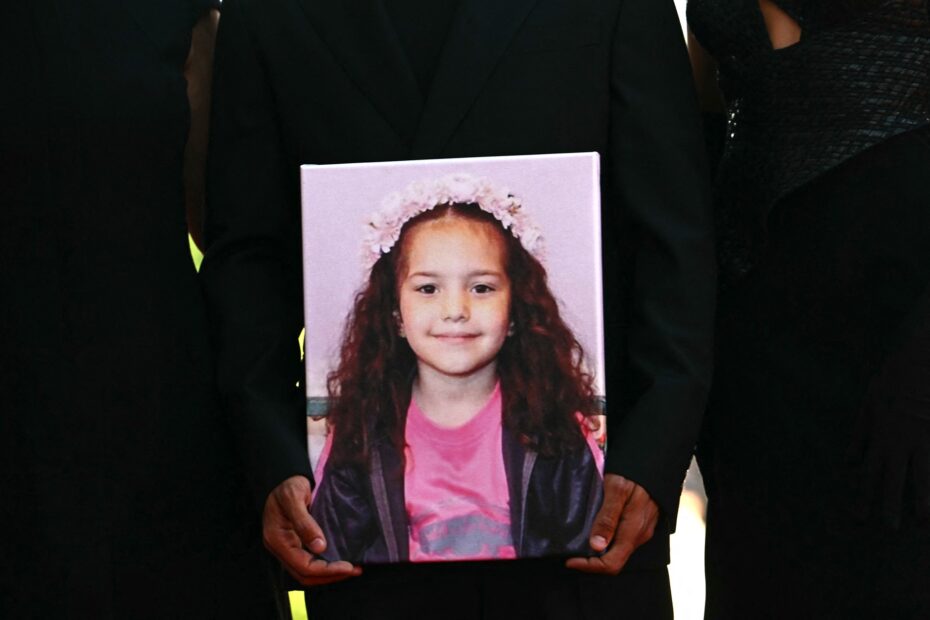
The film is based on a true story set in Gaza, where five-year-old Hind Rajab sits trapped inside a sealed car after an attack that has already taken the lives of her uncle, her aunt, and her four cousins.
At five years old, she is suddenly pushed into survival mode — surrounded by the smell of death, a car riddled with bullets, and the bodies of her loved ones — while instinctively trying to remain alive.
The film begins after catastrophe has already occurred. We are ushered in through fear. A child is still speaking inside a space where everything else has already stopped living.
“They are dead,” she says about her family around her. “Not sleeping.”
What follows is the prolonged unfolding of a single child’s voice among the voices of call-centre volunteer Rana and coordinator Omar, while Hind attempts to remain attached to life after every physical guarantee of safety has already been removed.
At one point, Hind tells Rana that she is from the “butterfly class.”
The phrase lingers and haunts the viewer.
It becomes an echo of all the children of Gaza: lives as fragile as wings, exposed to a world where protection fails and extinction can arrive without warning.
The butterfly becomes a rupture in meaning — innocence naming itself in a world that no longer protects it.
Inside the Palestine Red Crescent Society dispatch centre in Ramallah, communication fractures into two distinct voices attempting to restore hope, sanity, and some semblance of humanity.
One voice is procedural: coordinates, verification, emergency chains, permissions. It is technical language trying to maintain order under collapse. It searches for the “green light” that would allow paramedics to reach her. What should have been an eight-minute rescue becomes almost three hours of waiting.
The other voice is human: slower, softer, stabilising. It bends toward reassurance, telling Hind that someone will come for her soon. At one stage, Rana reads Surah Al-Fātiḥah with Hind to comfort and strengthen her.
Across impossible distance, voice itself becomes a form of care.
Between these two voices — one searching, one comforting — Hind remains suspended.
Speaking. Listening. Waiting.
“I want to go home.”
“Come for me.”
The statements still belong to the logic of childhood — the belief that adults will arrive, that systems will respond, that rescue remains possible.
Eventually, the language of systems shifts again: coordination, clearance, confirmation. An ambulance is finally dispatched. For a brief moment, order appears to reassemble itself, as though morality and procedure might still converge.
But the film refuses that illusion.
The ambulance carrying the paramedics is attacked before it reaches her. Rescue does not simply fail — it is violently interrupted at the threshold of arrival.
And then Hind hears the gunshots that kill the two paramedics sent to save her.
What makes the moment unbearable is not only the destruction of rescue, but its timing. Help is already in motion when it is erased.
This is where the film’s deepest truth settles: it is not silence that defines the tragedy, but communication without consequence.
A child speaks.
A system struggles to respond.
Nothing reaches her in time.
Hind Rajab dies at 7:30 p.m. that night in the dark, alone. The bodies remain inside the car — riddled with 335 bullets — and are recovered only twelve days later, after the tanks leave.
A butterfly and dead bodies.
Childhood and Israeli tanks.
Softness and merciless annihilation.
The violence exceeds military logic and enters another realm entirely — the destruction of fragility itself.
That is what makes the film so devastating.
The true horror lies not only in the death of a child, but in the destruction of the ordinary moral assumptions that should have protected her.
A butterfly is one of nature’s gentlest creations.
To massacre it with such overwhelming force is not merely violence.
It is the collapse of proportion itself
Saadia Gani is an attorney with Honors in English and Masters in Multi-disciplinary Human Rights