
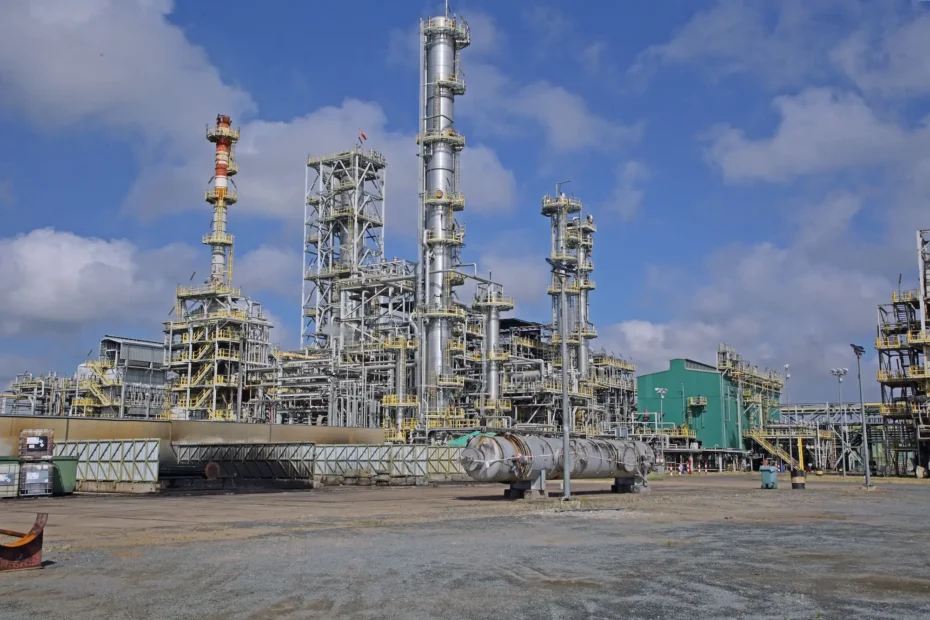
The twentieth century belonged to countries that controlled oil. The twenty-first may belong to those that can secure water.
By Sõzarn Barday
For much of modern history, oil determined the global balance of power. The discovery of vast petroleum reserves transformed the Middle East from a region of strategic importance into the centre of global geopolitics. Oil financed the growth of cities, sovereign wealth funds and world-class infrastructure. It shaped wars, diplomacy, trade and economic prosperity. Nations competed for access to oil because development depended upon it.
The coming decades may witness a profound shift. While oil will remain an important source of energy, water is increasingly emerging as the resource that underpins economic resilience, industrial growth and national security. In a warming world facing population growth, rapid urbanisation and accelerating technological development, access to reliable freshwater may prove more valuable than access to oil.
This shift is already becoming visible. Large AI data centres can consume millions of litres of water each day, depending on their size and cooling technology, while agriculture continues to account for approximately 70% of global freshwater withdrawals. As demand for water increases across food production, manufacturing and digital infrastructure, freshwater is becoming one of the world’s most strategically important economic assets.
Unlike oil, freshwater has no substitute. Countries can diversify their energy sources through solar, wind, nuclear or hydrogen. There is no alternative to water. Every household, farm, factory, hospital, mine, power station and data centre depends upon it. Water is the only strategic resource that agriculture, manufacturing, mining, electricity generation, artificial intelligence and every human being require simultaneously. Without it, there is no functioning economy.
History demonstrates that civilizations have always prospered where water was abundant. The great societies of the Nile, Tigris, Euphrates and Indus rivers flourished because dependable water made agriculture, trade and urbanisation possible. Although today’s economy is increasingly digital, it remains just as dependent on water as those ancient civilizations.
Climate change is accelerating this reality. Rising temperatures are altering rainfall patterns, increasing evaporation and intensifying droughts across many regions. Water scarcity is no longer an environmental issue confined to arid landscapes; it is becoming a defining economic constraint.
Industrial development is equally dependent on secure water supplies. Semiconductor manufacturing requires enormous quantities of ultra-pure water. Mining, pharmaceuticals, chemicals, steel production and food processing all rely heavily on water. Increasingly, so too does artificial intelligence.
Behind every AI application is a data centre filled with thousands of high-performance servers that generate enormous amounts of heat. Many facilities rely on evaporative cooling systems that consume significant volumes of freshwater, much of which evaporates during the cooling process. Water is also required to generate electricity and manufacture the chips that power these technologies. As countries compete to attract AI investment, they may increasingly find themselves competing for something even more valuable: reliable water supplies.
Recent approvals for large-scale data centre developments near Cape Town International Airport reflect South Africa’s ambition to establish itself as a regional digital hub. These investments promise employment, economic growth and technological advancement. However, they also raise an important policy question: can a water-scarce country continue expanding water-intensive industries without placing greater strain on already constrained resources?
South Africa has already experienced the consequences of water insecurity. The Cape Town “Day Zero” crisis demonstrated how quickly water shortages can threaten households, businesses and economic activity. As climate change intensifies and industrial demand grows, water security will increasingly influence investment decisions, business confidence and long-term economic competitiveness.
This is not an argument against industrial development or technological innovation. Rather, it is a recognition that economic growth cannot be pursued independently of resource sustainability. As water scarcity intensifies, water security must be treated as a core pillar of economic policy rather than merely an environmental concern. Decisions about investment, industrial expansion and infrastructure development should be informed by the long-term availability and responsible management of South Africa’s finite water resources.
Investment in water infrastructure, wastewater recycling, leakage reduction, smart metering, efficient irrigation and, where appropriate, desalination should become national priorities. Countries that manage water efficiently will be better positioned to attract investment, strengthen economic resilience and sustain long-term growth.
The Middle East offers an instructive lesson. Oil transformed the region because it became the indispensable resource of the twentieth century. Yet many Gulf states are now investing billions in desalination plants, wastewater recycling and advanced water management because they recognise that even immense oil wealth cannot compensate for water insecurity. Their experience illustrates a fundamental reality: a nation can import oil, develop alternative energy sources or diversify its economy, but it cannot function without reliable freshwater.
Investors are already recognising this shift. Water risk is increasingly factored into decisions involving infrastructure, agriculture, manufacturing and large-scale industrial projects. Companies that fail to manage water sustainably face higher operational costs, greater regulatory scrutiny and increasing concern from shareholders, insurers and financial institutions.
The strategic questions confronting governments are therefore changing. During the twentieth century, policymakers focused on securing energy supplies. During the twenty-first century, they may increasingly focus on securing water. The countries that understand this transition first will shape the next generation of economic development.
The twentieth century rewarded nations that discovered and controlled oil. The twenty-first will reward those that protect, manage and secure water. In an increasingly water-constrained world, prosperity will depend not only on the resources beneath a nation’s soil, but on its ability to safeguard the resource that every person, every industry and every economy depends upon.
Sõzarn Barday is a South African lawyer. She writes on human rights, international law and political developments. The views expressed are her own.