
- We Can, and Must, Do Both
By Hassen Lorgat
Our democracy has ultimately boiled down to this: potholes. Not to say that it is not important, but the framing during these times—after years of neglect, austerity, underinvestment, and corruption from incumbents and opposition groups—has resulted in pothole populism being the in-thing.
It is also coached as apolitical and implied professional—no-nonsense service delivery. But is it really?
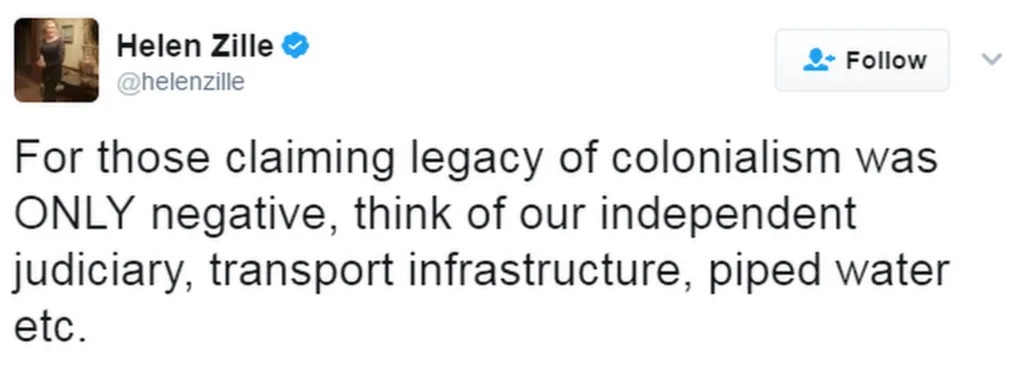
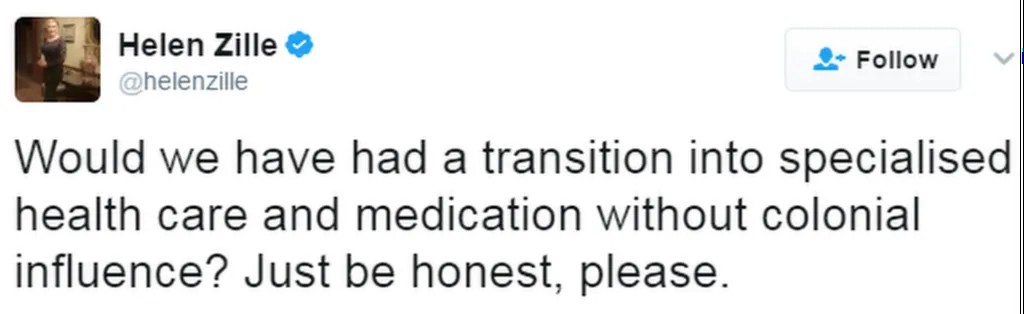
Voters in the forthcoming November local government elections are told to choose a government that keeps the street lights on and the potholes closed. This efficiency is personalised by Helen Zille. In some quarters, no doubt bolstered over the last two years by at least two prominent left-leaning public intellectuals who have asked us in Joburg to forget her worldview—such as the highly offensive, some say infamous, colonialism tweet in 2017.
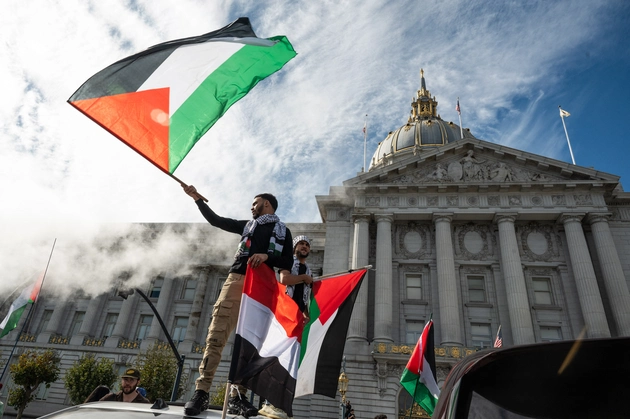
The DA’s loud and unequivocal condemnation of Russia’s invasion of Ukraine has exposed its silence around the genocide in Gaza. Many have pointed out that its support for the US-Israel attacks on Iran further nails their mast to the ideological corner of Empire and colonialism, which some claim lie at the heart of her politics.
The former DA leader John Steenhuisen, when quizzed, had “no view” on the matter, adding the cynical refrain that “one man’s terrorist is another man’s freedom fighter.”
This resulted in a political fallout where those like Ghaleb Cachalia, who called what was happening in Gaza—a genocide—were pushed out of the party. That was in November 2023, and it is not ancient history, nor even-handedness dressed up, but clearly taking a side against the children of Gaza and its people.
These recent endorsements of Zille by these two have fallen into the propaganda of the DA. They tell us to seek the real issues and thereby underwrite the false narrative that to govern efficiently, one must ignore global injustice and focus solely on narrow, technocratic fixes.
Earlier this year (2026), Ms Helen Zille, in an interview on Radio Islam, stated clearly that “genocide is a very big word”. Arguing further, she said that focusing on Palestine would divide voters and distract from local governance. She added that, given the distance, she and her party cannot directly influence international conflicts and should instead prioritise municipal service delivery. The radio station dismantled this view in their responses, but it seems that the two intellectuals have failed to do so.
In a subsequent interview in Polity, she was bolder and dismissed her critics of double standards and trying to turn the municipal election into a debate on international relations.
Their aim is to stop her winning the mayoral seat. “I’m fighting to be mayor of Joburg, not Ramallah, or Bethlehem, or Tehran, or Gaza City, or Tel Aviv. I’m focusing on fixing Joburg,” Zille stated.
A final detour before I conclude. Another conservative media outlet has tried to explain to their constituency what is at stake in the 4 November elections: Palestine. Their report is a dog whistle to their readers, advising them of the baddies and who the good guys are in the Joburg mayoral race. The baddies include Dr Tlaleng Mofokeng, who just beat off the Zionists’ attacks on her at the Health Professionals Council, as well as the likely ANC candidate, Frank Chikane, who continues to support SA’s gallant efforts at the ICJ, and RISE Mzansi’s candidate, Lukhona Mnguni, whom they imply is soft on antisemitism.
Their favourite candidates are candidates like Helen Zille (DA), Herman Mashaba (ActionSA), and Kenny Kunene (Patriotic Alliance), who are highlighted for their executive experience, which analysts believe may appeal to voters. Nothing is said about the allegations against Mashaba that became a public scandal, and in the case of the Patriotic Alliance, the charges are numerous and come from various quarters.
The Public Protector was called to investigate Minister Gayton McKenzie, alleging misuse of public funds—nearly R110 million mishandled via the Mzansi Golden Economy grants programme, plus around R31.95 million in questionable FIFA Club World Cup spending—and accusing him of running a “jobs-for-pals” scheme to benefit friends and party allies.
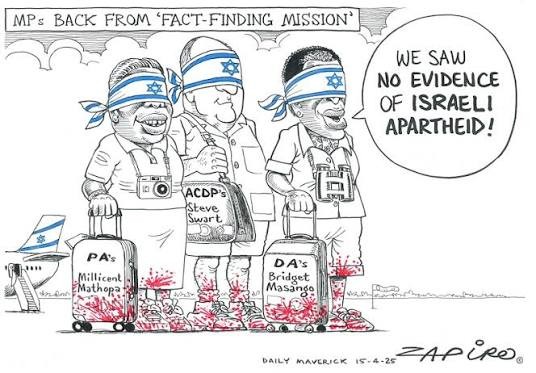
courtesy Daily Maverick
The DA camp has also been scrutinised by other media, in particular the Daily Maverick, which highlighted the allegations of DA-connected ideologues and apparatchiks.
Simply put, the allegations are that the DA and neoliberal consultancy-aligned Resolve Communications—a public affairs firm founded by former Democratic Alliance (DA) leader Tony Leon and led by former DA CEO Paul Boughey—center on claims of political lobbying, undue access, and influence peddling involving DA government ministers. This is deep and not crude corruption, but it is.
The full video can be seen here: https://www.youtube.com/watch?v=IOJFRr89zz8&t=16s
These concerns these new supporters of Zille ignore. They now only champion her “proven record” in Cape Town and frame her candidacy as a “pragmatic rescue mission” for a crumbling Joburg.
They ignore her refusal to take a clear, human-centred stand against the atrocities in Gaza. But to separate our domestic governance crisis from our international solidarity is ahistorical.
The root of the local government crisis lies not in “dabbling” in foreign affairs, as Zille suggests, but in the ANC incumbents’ poor performance, under-resourcing of municipalities, crushing austerity measures, and the pervasive corruption and maladministration that have hollowed out our cities. Service delivery is a political, not a technical, exercise. To demand efficiency without politically and human-centred participation is doomed to fail.
The RDP understood this—seeing service delivery not as a handout but as a people-driven, democratising process. The document noted that demanding a voice and quality public services is the “collective heritage of struggle, these common yearnings, which are our greatest strength, and the RDP builds on it. At the same time the challenges facing South Africa are enormous. Only a comprehensive approach to harnessing the resources of our country can reverse the crisis created by apartheid. Only an all-round effort to harness the life experience, skills, energies and aspirations of the people can lay the basis for a new South Africa.”
In the document there was no room for cronyism, nor corruption, as the masses were at the centre of human development. What the warriors are saying is that Zille is a denial of this right of people’s participation in the conception of where budgets are to be allocated and how it should be accomplished. This top-down approach will result in outsourcing and privatisation of an already beleaguered municipal governance structure. We must reject the Zille doctrine that pits potholes against Palestine. The choice is a false one.
Learning from the boy who grew up in the Cape
The claim we used to hear when growing up was not about these contemporary fascists in the US and the Middle East, but about Il Duce.
The claim we often heard was that Benito Mussolini “made the trains run on time”—but we know it is a myth. It was a propaganda piece that promoted his fascist project and his regime, suggesting efficiency and control. The truth was another matter: the trains did not universally run on time, although the repression of the Left and other undesirables was efficient—a bit like apartheid South Africa.
The counter to this dictator is a young man who was born in Uganda and played as a child in Cape Town whilst his parents worked here. In later years he confirmed the inspiration of African leaders like Mandela in his own life. This man is Mahmood Mamdani, now mayor of New York City. He and his other comrades in the DSA (Democratic Socialists of America) have shown that going back to basics pays dividends at the polls.
When attacked for who he was, he embraced his faith and his socialism, as well as his commitment to ending the genocide in Palestine. He has demonstrated that we can do potholes and Palestine.
This is our tradition in South Africa, and we must not run from it. And as the young NYC mayor has shown, dealing with the issues of importance to New Yorkers—and these include city-run grocery stores, his pied-à-terre tax on the rich, nor even to his trademark—though thus far, unrealised—vision for fast, free buses and universal childcare.
I watched with glee how in his first 100 days, Mayor Zohran Mamdani filled the 100,000th pothole. https://www.instagram.com/reels/DWzmP3_CTJb/
When attacked for his politics, he embraced his socialism and proved it in reality. He has shown us that you can do potholes and Palestine. This is today’s municipal socialism.
At the same time, on his first day in office, he reversed executive orders that had barred city officials from boycotting Israel and revoked the controversial IHRA definition of antisemitism, which critics say conflates criticism of Israel with Jew-hatred. He defends the BDS movement as a non-violent means of pressuring Israel. Recently, he even suggested that if Netanyahu entered New York, he—as a fugitive of international law—would be arrested. This did not happen, but the alignment with his politics was clear.
What is clear is that Mamdani demonstrates that building public trust through tackling everyday issues can be a foundation for greater political goals—including speaking truth to power in Gaza. He proves you can fix potholes, fight for Palestine whilst adhering to international justice.
Those who argue for a retreat from Palestine in the name of efficiency—dismissing it as a distant issue—are not just morally wrong; they are politically short-sighted. They would have us repeat the errors of the past, where some have harked back to the some quality township houses built under apartheid in places like Soweto, and elsewhere – whilst denying us real rights as humans.
This anti-human soul destroying efficiency for second class citizenry that serves elites at the expense of the poor cannot be continued. The poor and working people fought for this democracy. They don’t want to be mere or passive recipients of bad services; they want to be active citizens in a just society and to receive quality public services. People are willing to accept less, be it in services or material public goods, if they know that there is genuine commitment, resources, and effort directed at fixing our problems—and that elites are not favoured.
We must embrace our tradition of people-driven development and international solidarity. We can, and must, do both.
Hassen Lorgat
Has worked in trade union movement, civic associations, and anti apartheid sports movement led by the South African Council on Sports (SACOS) as well as NGOs for the past while. He has worked with civil society groups opposing harmful and exploitative mining and extractivism. Hassen is active with the SA BDS Coalition.