
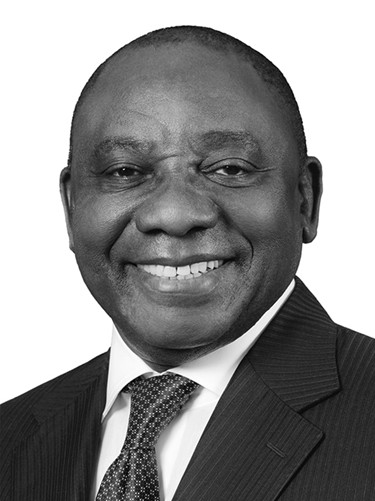
By Carl Niehaus*
President Cyril Ramaphosa’s decision to meet the family of the late Captain Daniel Perez, a South African-born citizen who served illegally in the Israeli Defence Force, and the South African government’s active role in facilitating the repatriation of his remains, is an act of profound hypocrisy that must be condemned without reservation. It is a betrayal of the law, a betrayal of South Africa’s stated solidarity with the Palestinian people, and a betrayal of the very principles the government claims to uphold when it speaks of justice and opposition to genocide.
Daniel Perez was a South African citizen. He was born in Johannesburg, raised in Glenhazel, and later moved with his family to Israel. He served as a tank commander and platoon commander in the IDF’s 7th Armoured Brigade. Wherever he served, that service was illegal under South African law. There is no ambiguity here. Section 198(b) of the Constitution of the Republic of South Africa is explicit: the resolve to live in peace and harmony precludes any South African citizen from participating in armed conflict, nationally or internationally, except as provided for in the Constitution or national legislation. The Regulation of Foreign Military Assistance Act and the framework administered by the National Conventional Arms Control Committee require prior authorisation before any citizen may render foreign military assistance. No such authorisation existed. His service was therefore a criminal offence.
This illegality is compounded by the character of the force in which he served. South Africa has taken Israel to the International Court of Justice (ICJ) on the charge of genocide against the Palestinian people in Gaza. The government has repeatedly described the actions of the Israeli military as genocidal. For a South African citizen to enlist and fight in that same military is not a private lifestyle choice. It is participation in the very apparatus accused of committing the crime that our own state has formally placed before the world’s highest court. The law does not permit it. Morality does not permit it. And political consistency does not permit the President of the Republic to treat it as an occasion for official assistance and a personal audience.
Former Minister of International Relations and Cooperation Naledi Pandor stated the position with clarity. No South African citizen can legally serve in the IDF. Those who do so are acting illegally and should be charged and arrested so that the law may take its course. That statement was correct when it was made. It remains correct today. The Economic Freedom Fighters have repeatedly and publicly called for the identification, investigation and prosecution of South African citizens who have served or are serving in the Israeli military. Those calls have been met with silence, delay and procrastination by the National Prosecuting Authority and the South African Police Service. The law is being flaunted by the very institutions charged with enforcing it.
This is not a new or isolated concern. I have, together with other EFF Members of Parliament, among them Nazier Paulsen, raised the issue of South African citizens serving in the IDF repeatedly in the National Assembly. We have done so through statements and through questions for written reply directed at the responsible ministers. Yet we have never received a satisfactory answer from the Minister of Police or the Minister of Justice and Constitutional Development. The questions remain unanswered in any meaningful sense. The concerns remain unaddressed. This persistent failure raises a serious question: is it intentional that our concerns have not been taken seriously? Does the South African government live comfortably with this contradiction because it is not, in truth, serious about fighting apartheid Zionist Israel to the hilt?
Against this background of unresolved illegality and institutional inaction, the government itself became involved in the repatriation of the remains of a citizen who had served illegally in the IDF. President Ramaphosa then received the family so that they could express their thanks. This is not neutral humanitarianism. This is the head of state extending official facilitation and presidential hospitality to the family of a person who broke South African law by fighting for a force accused of genocide. Had Daniel Perez returned alive, he should have faced arrest and prosecution. Instead, his remains were assisted home with state involvement, and his family was granted an audience with the President. That sequence of events is complicity dressed up as compassion.
The hypocrisy is staggering. The same government that speaks of solidarity with the oppressed, that has taken Israel to the ICJ, that has condemned the slaughter in Gaza, now finds it possible to assist and honour the family of a South African who fought on the side of the oppressor. One cannot maintain a genocide case at The Hague while treating service in the accused military as a matter deserving of presidential intervention. Words of support for Palestine are emptied of meaning when actions demonstrate the opposite. Consistency is not optional in matters of principle. Either the law applies, or it does not. Either solidarity is real, or it is a performance.
This conduct also weakens South Africa’s position at the International Court of Justice. How can the government credibly argue that Israel is committing genocide when it simultaneously facilitates the return of remains of a South African citizen who served in the Israeli military and then hosts the family at the highest level of state? The message that is sent is dangerous and clear: South African citizens who join the IDF need not fear serious legal consequences, and the state is prepared to extend assistance even in cases of clear illegality. That message undermines the moral and legal authority of the case South Africa itself has brought. It invites the charge of double standards. It suggests that principle is subordinate to other considerations.
The failure of the National Prosecuting Authority and the police to act on repeated calls for the prosecution of South African citizens serving in the IDF cannot be separated from this episode. When Members of Parliament raise the matter formally in the National Assembly, through statements and written questions, and receive no satisfactory response from the Ministers of Police and Justice, the pattern becomes unmistakable. When the state refuses to enforce its own laws against those who fight for a military accused of genocide, and then goes further by assisting the repatriation of one such individual’s remains and arranging a presidential meeting, the conclusion is difficult to avoid. The government lives with this contradiction because it is not fully committed to the fight against apartheid Zionist Israel. The law is selectively applied. Accountability is deferred. The powerful and the connected appear to operate under a different set of rules. This is unacceptable in a constitutional democracy that claims to be guided by the rule of law.
South Africa’s historic solidarity with oppressed peoples was forged in the fire of our own struggle against apartheid. That solidarity is not a slogan to be deployed when convenient and discarded when inconvenient. It is a living obligation. The Palestinian people continue to endure occupation, blockade, bombardment and the systematic destruction of the conditions of life. Their suffering demands more than rhetorical flourishes from Pretoria. It demands consistency. It demands that South African citizens who choose to serve in the military of the occupying power face the full consequences of that choice under our law. It demands that the President of the Republic not become a participant, however indirect, in the process of legitimising that choice after the fact.
Ramaphosa’s meeting and the government’s role in the repatriation of Perez’s remains represent a failure of that obligation. They represent a retreat from principle into the comfortable language of “assisting all South Africans irrespective of race or religion.” That language is a deflection. The issue is not race or religion. The issue is the law. The issue is the character of the force in which this particular South African chose to serve. The issue is whether the government is prepared to uphold its own statutes and its own stated foreign policy when those statutes and that policy become politically inconvenient. The unanswered parliamentary questions from EFF Members of Parliament make the same point: the government is not treating this matter with the seriousness it claims.
President Ramaphosa and the government he leads must choose. They can continue to speak the language of solidarity while acting in ways that contradict it, or they can align their conduct with their professed principles. They can continue to treat illegal service in the IDF as a matter for quiet facilitation and presidential meetings, or they can apply the Constitution and the statutes that prohibit such service. Consistency is not a luxury. It is the minimum requirement of serious political leadership. The repeated failure to answer parliamentary questions on this issue only deepens the suspicion that the commitment to confront apartheid Zionist Israel is not as absolute as the government pretends.
The meeting with the Perez family, and the government’s involvement in the return of the remains, fail that test. They are outrageous. They are hypocritical. They are a betrayal of the law and of the Palestinian people. South Africa deserves better. The struggle for consistency, for the rule of law, and for genuine solidarity continues.
*Ambassador Carl Niehaus is an EFF Member of Parliament.