
By Sõzarn Barday
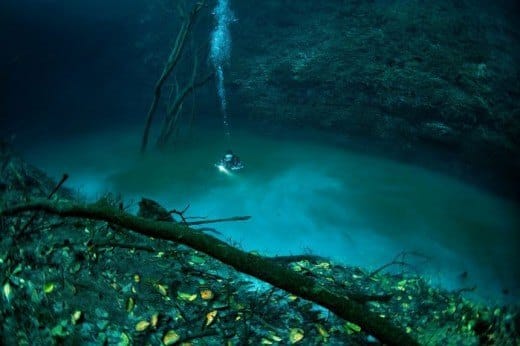
Freshwater exists beneath the ocean floor. But if a country does not own the sea itself, can it claim rights over the water beneath it? As freshwater becomes increasingly scarce, international law may have to answer a question it was never designed to confront.
When we think about freshwater, we usually think about what is visible: rivers, lakes, dams and wells.
But some freshwater is hidden.
Scientists have found low-salinity groundwater beneath continental shelves around the world. Some of these underground reserves were formed thousands of years ago, when sea levels were lower and areas that are now seabed were exposed land. Others appear to remain connected to groundwater systems onshore.
It is an extraordinary thought.
There may be freshwater beneath the ocean.
And that raises an equally extraordinary legal question:
Who owns it?
The answer is not as simple as identifying the country closest to the water.
International law has spent decades developing rules about who may use the sea and who may exploit resources beneath its seabed. But those rules were largely developed around questions of maritime jurisdiction and resources such as minerals, rather than freshwater.
Freshwater presents a different problem.
It can move through geological formations. It may be connected to aquifers beneath land. It may cross political boundaries. And unlike oil or minerals, it is directly connected to human survival.
The law, in other words, may have to catch up with the geology.
The law of the sea
The starting point is the United Nations Convention on the Law of the Sea, or UNCLOS.
UNCLOS divides the maritime environment into different legal zones and gives coastal states different rights in each.
A coastal state exercises sovereignty over its territorial sea, subject to international law. Further offshore, its exclusive economic zone gives it specific sovereign rights over natural resources.
Then there is the continental shelf.
Under UNCLOS, the continental shelf concerns the seabed and subsoil of submarine areas extending beyond a state’s territorial sea, according to the Convention’s rules. A coastal state has sovereign rights over its continental shelf for the purpose of exploring and exploiting its natural resources.
At first glance, that might appear to solve the problem.
If freshwater is beneath the seabed, perhaps the coastal state has the right to exploit it.
But that conclusion is not automatic.
UNCLOS does not expressly create a comprehensive legal regime for freshwater stored beneath the seabed. Its continental-shelf provisions refer to the mineral and other non-living resources of the seabed and subsoil.
That leaves a difficult question.
Does a state’s sovereign right over the continental shelf automatically give it the right to extract freshwater found beneath it?
International law does not provide a simple, universally accepted answer.
The law has a gap
The uncertainty becomes even more interesting when we look at the International Law Commission’s work on transboundary aquifers.
The Commission’s 2008 draft articles were designed to address groundwater systems crossing international boundaries. They recognise principles including equitable and reasonable utilisation, the obligation to avoid significant harm and cooperation between states sharing an aquifer.
But there is an important qualification.
The Commission stated that its draft articles did not cover freshwater contained in submarine geological formations beneath the continental shelf. In other words, international law has recognised the importance of groundwater as a shared resource while leaving offshore freshwater in a less clearly defined legal space.
The law has rules for the sea.
It has principles for transboundary groundwater.
But what happens where the two meet?
Water does not respect borders
The problem begins with the nature of groundwater itself.
An aquifer is not necessarily a neat underground lake. Water can move through porous rock and sediments. A groundwater system can begin beneath land and continue beneath the seabed.
That makes a political boundary look very different from a geological one.
Imagine a coastal aquifer that begins beneath a country, extends beneath its territorial waters and continues beneath its continental shelf.
If the country begins extracting large quantities of that water, could the extraction affect freshwater systems on land?
And if a similar aquifer crosses into another state’s maritime area, could one state lawfully extract water in a way that substantially affects the other?
These questions resemble traditional transboundary-water disputes, but with one crucial difference.
The resource is invisible.
Palestine shows why control matters
The legal importance of groundwater becomes particularly clear in Palestine.
The West Bank sits above the Mountain Aquifer, a groundwater system shared between the West Bank and Israel. The aquifer is not divided according to the political realities on the surface. Its water moves through geological formations that predate modern borders.
Yet access to that water is profoundly shaped by political and legal control.
This is what makes groundwater different from an ordinary piece of property.
The question is not simply who owns the land above the aquifer. It is also who has the ability to drill wells, develop infrastructure, extract water and determine how the resource is allocated.
The issue becomes even more significant under occupation.
In its 2024 advisory opinion on Israel’s policies and practices in the Occupied Palestinian Territory, the International Court of Justice addressed the exploitation of natural resources and restrictions on Palestinian access to water. The Court concluded that Israel’s exploitation of natural resources in the Occupied Palestinian Territory was inconsistent with its obligations under international law. It also found that severe restrictions on the Palestinian population’s access to available water were inconsistent with the obligation under Article 55 of the Fourth Geneva Convention to ensure the availability of water in sufficient quantity and quality.
The Court further found that the exploitation of natural resources was inconsistent with the Palestinian people’s right to permanent sovereignty over their natural resources.
The Palestinian example therefore illustrates something broader than the politics of one aquifer.
Control over water can become a question of international law because control over the resource can determine who is able to live, farm, build and develop.
And that principle does not disappear simply because the water happens to be underground.
The human-rights dimension
There is another reason the legal treatment of groundwater matters.
Water is essential to human life.
International human rights law recognises a human right to water. The UN Committee on Economic, Social and Cultural Rights has described water as a limited natural resource and a public good fundamental to life and health. Its General Comment No 15 links the right to water to sufficient, safe, acceptable, physically accessible and affordable water for personal and domestic uses.
That does not mean that every underground freshwater reserve belongs collectively to everyone.
But it does mean that water governance cannot be viewed exclusively through the lens of commercial exploitation or territorial control.
If a state discovers a major freshwater resource beneath its continental shelf, it may have legitimate interests in developing it. But questions of sustainability, environmental protection and access to water cannot simply disappear because the resource happens to be offshore.
The Palestinian experience demonstrates why this distinction matters.
A resource can exist naturally beneath a territory, while the legal and political ability to access that resource is controlled by someone else.
The resource beneath the resource
For centuries, international law has been preoccupied with territory.
Who owns the land?
Where is the border?
Who controls the sea?
Where does one state’s jurisdiction end?
But nature does not always follow those lines.
An aquifer can extend beneath a border.
Freshwater can exist beneath seawater.
A groundwater system can connect land and ocean.
And climate change may make previously overlooked sources of freshwater increasingly valuable.
That could turn offshore groundwater into more than a scientific curiosity.
It could become an economic resource.
And once a resource becomes valuable, the question of control inevitably follows.
The Palestinian experience offers a warning about why those questions matter.
The issue is not merely whether water exists.
It is whether the people who depend upon it can access it, whether its use is equitable, and whether the authority controlling the resource has the legal right to determine its fate.
So, who owns the water under the sea?
Perhaps the most accurate answer is: international law does not yet provide a simple answer.
UNCLOS gives coastal states significant sovereign rights over their continental shelves. International law also recognises principles governing transboundary groundwater. But offshore freshwater does not fit neatly into either category.
That does not mean the water belongs to nobody.
Nor does it necessarily mean that the nearest coastal state automatically owns every drop beneath its seabed.
Instead, the legal position may depend on the resource’s geological relationship with land-based aquifers, its location, maritime boundaries, domestic law and the interaction between different areas of international law.
That uncertainty is precisely what makes the issue important.
As freshwater becomes scarcer, the world will increasingly look for resources that were previously too difficult or expensive to access.
Some of those resources may be beneath our feet.
Others may be beneath the sea.
And when they become economically viable, the question will not simply be whether we can extract them.
It will be whether international law tells us who has the right to do so.
The next great water disputes may not be fought over rivers or dams.
They may be fought over what lies beneath the ocean floor.
And if Palestine has taught us anything about water, it is that the most important question is not always who owns the land above the resource.
Sometimes, it is who controls the water beneath it — and whether international law permits them to do so.
Sõzarn Barday is a lawyer and author who writes on human rights, international law and public policy. The views expressed are her own.