
By Iqbal Jassat
The systematic persecution of Rohingya Muslims in Myanmar stands as one of the most definitive moral and human rights failures of our time. Despite relentless international condemnation, UN declarations, and ongoing proceedings at the International Court of Justice, the stateless Rohingya population continues to endure an unrelenting campaign of state-sponsored terror, forced expulsion, and institutionalized erasure.
Today, as regional governments increasingly look the other way—or worse, actively deport those fleeing the carnage—the global community must confront a stark, uncomfortable truth: the military junta in Naypyidaw does not act in a vacuum.
It is sustained, bankrolled, and armed by a network of complicit foreign nations that value geopolitical leverage and economic extraction over human lives.
To understand the depth of this crisis requires looking back at a decades-long architecture of structural exclusion. For generations, the Rohingya have inhabited Rakhine State, yet they have been systematically stripped of their legal identity.
The foundational turning point arrived with the discriminatory 1982 Citizenship Law, enacted by a previous military regime to render the Rohingya stateless overnight.
What followed was a deliberate, institutionalized blueprint of apartheid: severe restrictions on freedom of movement, denial of healthcare, and the criminalization of their very existence.
This state-sponsored hostility exploded into full-scale catastrophe in August 2017, when the Myanmar military launched brutal “clearance operations” consisting of mass killings, systemic sexual violence, and the deliberate burning of entire towns. UN investigators concluded these atrocities were committed with clear genocidal intent.
Today, the catastrophe has reached an even more insidious phase. Trapped in squalid displacement camps or under siege in volatile villages, the remaining Rohingya are caught in the crossfire of an escalating civil war.
The military junta has resorted to the cruel irony of forced conscription—abducting and forcing young Rohingya men to fight on the front lines for the very military that slaughtered their families.
Concurrently, the junta’s primary method of warfare has shifted to devastating airstrikes. Military jets and drones routinely rain indiscriminate fire onto marketplaces, hospitals, and schools.
Meanwhile, regional neighbors are also deeply implicated. India has repeatedly renewed community and technology aid programs while cementing border demarcation agreements with the illegal regime. Rather than isolating a genocidal military, New Delhi actively pursues a “path dependency” policy of engaging whoever holds power in Naypyidaw, prioritizing border security and bilateral trade over humanitarian law.
Furthermore, regional commercial hubs like Singapore and Thailand have historically acted as financial conduits, allowing junta-linked brokers to bypass sanctions to source raw materials, electronics, and dual-use equipment vital for domestic weapons manufacturing.
The consequence of this international complicity extends beyond Myanmar’s borders, driving a severe regional migration crisis. Terrified families who risk their lives on treacherous sea voyages or slip across borders are increasingly met with hostility.
Regional governments are actively pushing back boats and executing forced deportations under the guise of border control. This is a flagrant violation of non-refoulement—the bedrock principle of international law that strictly forbids returning individuals to a country where they face a credible threat of torture, persecution, or death. Deporting a Rohingya refugee back to Myanmar is effectively signing their death warrant.
The situation for Rohingya refugees in Bangladesh has indeed reached a critical and agonizing breaking point. Over one million Rohingya refugees currently reside in Cox’s Bazar—the largest refugee camp cluster in the world—and Bhasan Char island, living in limbo with virtually no safe, dignified, or realistic prospect of returning home to Myanmar.
Packed into flimsy, temporary shelters made of bamboo and tarpaulin, which offer little protection against the weather, refugees in these camps are highly vulnerable to Bangladesh’s severe monsoon seasons, cyclones, and landslides, which routinely destroy shelters and wash away vital infrastructure.
The government of Bangladesh, which generously opened its borders in 2017, continues to maintain that repatriation to Myanmar is the only permanent solution. However, with the Myanmar military junta escalating its campaign of violence, stripping the Rohingya of citizenship, and enforcing mandatory conscription, returning home remains an impossibility.
The international community must refuse to treat the Rohingya crisis as an unfixable tragedy. Condemnation without material consequence has achieved nothing. True accountability requires dismantling the external networks keeping the junta alive. Global bodies and allied nations must aggressively expand sanctions to target financial institutions like the Myanma Economic Bank and impose a comprehensive global embargo on aviation fuel and arms transfers.
Governments providing weapons must be publicly named, shamed, and held legally liable for aiding and abetting war crimes.
Securing the safety and human rights of the Rohingya is not an isolated political issue; it is an urgent test of our collective humanity. Every country that arms the junta or forces a refugee back into their hands has blood on its credentials.
Despite accountability measures underway at the International Criminal Court (ICC) and International Court of Justice(ICJ), Myanmar’s military has yet to face adequate consequences for its atrocity crimes.
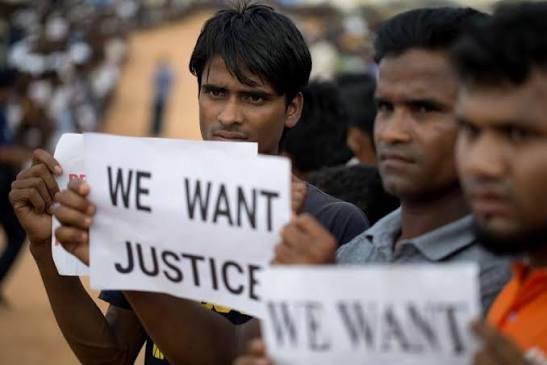
Upholding the human rights of the Rohingya as well as the entire population of Myanmar depends on achieving justice for the crimes by military commanders.
Unless urgent steps are taken to halt the atrocities, the military’s decades-long impunity will continue.
Iqbal Jassat
Executive Member
Media Review Network
Johannesburg
South Africa