
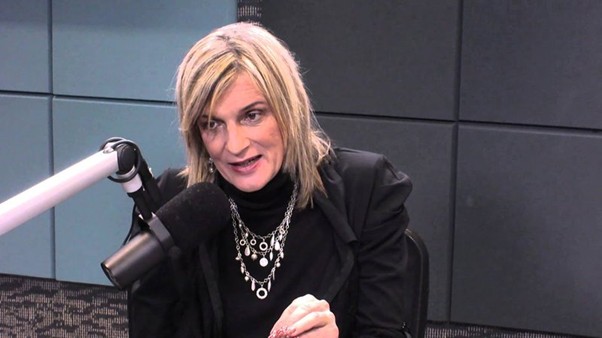
BizNews featured a shockingly sensationalist interview with a self-styled “terror expert” Jasmine Opperman, who shamelessly fuelled alarm and fear about Hamas in South Africa.
The interviewer Chris Steyn set the tone for an extremely biased discussion by conflating crime cartels in South Africa with Hamas.
He phrased the introduction of the interview without concealing his prejudice against Palestine’s Islamic Resistance Movement, Hamas:
“A great deal has emerged about crime cartels in South Africa in recent times, but what about the operations of shadowy international terror networks? For instance, Hamas. You’re an expert on extremism, Jasmine. What is Hamas up to on South African soil?”
Clearly unmindful of ethical journalism that requires, no demands rigorous, verifiable evidence if public discourse relates to contentious national security issues.
Failure to demand and establish proof gives rise to speculative threats, which is what transpired in the interview, as the transcript reveals.
When Jasmine Opperman, a so called “terror expert” issues high-profile warnings about Hamas without presenting transparent data, the line between objective intelligence and political narrative blurs.
The allegations she made suggesting that South Africa serves as a coordinated financial hub for Hamas represents a familiar pattern associated with Israeli Hasbara: alarming conclusions built on uncorroborated assertions.

The primary issue with this framework is the absolute absence of verifiable evidence. In a functional democracy, public warnings about national security threats must be backed by actionable, transparent facts, not myths of the type advanced by Opperman.
Instead, the public is frequently presented with vague technical claims—such as the existence of unverified digital wallets or opaque financial flows—that are never subjected to judicial scrutiny or independent verification.
When security analysis asks the public to take its most severe conclusions on faith, it ceases to be an objective science and becomes a tool for shaping public anxiety.
Furthermore, the framing of these allegations relies heavily on standard anti-resistance narratives. By viewing regional political dynamics exclusively through a securitised, Western-centric lens, such analysis automatically criminalises complex political movements.
In the case of Palestine, this approach neatly aligns with Israeli geopolitical objectives, which seek to isolate Hamas globally and delegitimise any state—including South Africa—that maintains an independent, pro-Palestinian foreign policy.
By focusing selectively on these entities while ignoring the broader context of state-sponsored violence in the Middle East, the analysis adopts a distinct ideological bias.
This credibility gap is widened by the professional networks anchoring these analyses. The counter-terrorism industry is tightly interconnected, often relying on “terror experts” and think tanks with deeply entrenched links to Israeli state narratives.
When local analysts frequently collaborate with, cite, or draw methodology from institutions that possess an explicit geopolitical agenda, their independence is compromised.
Rather than providing South Africans with an objective assessment of domestic vulnerabilities, the analysis effectively imports a foreign security paradigm designed to serve external state interests.
South Africa faces genuine institutional challenges, from porous financial regulations to overstretched law enforcement.
However, addressing these systemic issues requires sober, evidence-based policy, not the imported rhetoric of global geopolitical conflicts.
When national security analysis presented by BizNews swaps verifiable facts for politically convenient narratives, it loses its utility and serves only to misinform the public debate.
Anti-Hamas rhetoric is used in the service of Zionist propaganda, for it serves to discredit and dehumanise Palestine’s legitimate freedom struggle.
To do so as Opperman does, lends credence to Israel’s military actions while deflecting attention from the humanitarian crisis in Gaza.
Iqbal Jassat
Executive Member
Media Review Network
Johannesburg
South Africa