
By Hassen Lorgat,
This open letter was inspired by the coordinator of the Peoples Media Consortium, Martin Jansen, who wrote to me asking deep questions about these debates. As a member of the Consortium, as well as a member of Media Justice Afrika—both of which support the spirit of this letter—I pen it in my name to avoid delays.
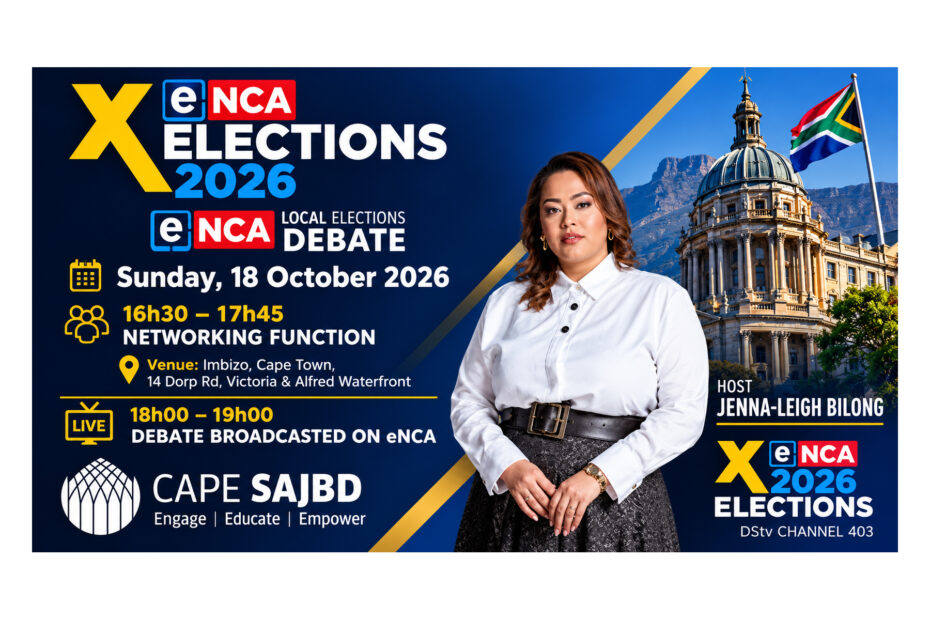
The Facebook page of the Cape SAJBD (Cape South African Jewish Board of Deputies) announced publicly that they would, in partnership with broadcaster eNCA, host a live local elections debate on October 18, 2026. They entitled the broadcast, under the theme We The Nation: Election Edition, but left out a number of other electoral groups that would lay claim to being part of the Nation—albeit one that would prefer issues of economic freedom and international solidarity, in particular Palestine, to be integral to our conception of who we are as South Africans.
Pic Courtesy: IOL
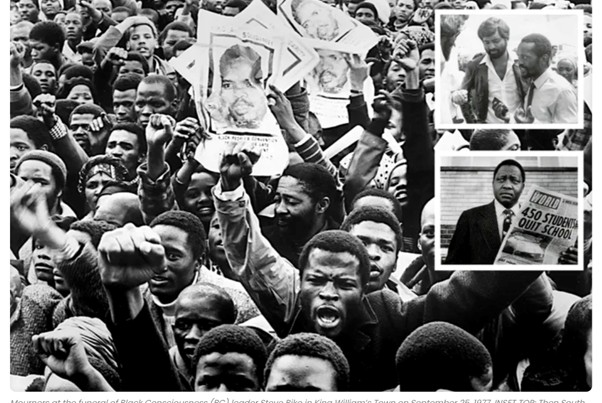
Coming one day before Black Wednesday that commemorates the struggles by South African civil society against media censorship is shameful.
We all recall that October 19, 1977, is a day commemorated nationally as National Press Freedom Day. It was a day when the apartheid regime banned The World and Weekend World and detained journalists and activists without trial under the Internal Security Act, including The World editor Percy Qoboza; and outlawed 19 Black Consciousness Movement organisations, including the Black People’s Convention (BPC) and the South African Students’ Organisation (SASO), just weeks after Steve Biko was murdered in police detention.
Fast forward to the Cape Mayoral debate on 18 October 2026. The mayoral debate featured only the following political parties: the DA (Geordin Hill-Lewis), the ANC (Jerimia Thuynsma), the FF Plus (Dr Corné Mulder), and the ACDP (Felon Christians). The Patriotic Alliance (PA) was invited, and its representative Cheslin Daniels arrived at the venue, but the party withdrew shortly before the broadcast. Notably absent from the debate were parties such as the EFF, which typically advance the issues of economic freedom and international solidarity—including Palestine—that the letter argues should be integral to our conception of who we are as South Africans.
The full programme can be found here as it was broadcast: https://www.enca.com/shows-videos/we-nation-election-edition-18-october-2026
From viewing the programme, the hostess raised a number of important issues for the voters. The hostess, Ms Jenna-Leigh Bilong (@ladybilong), who is described as a television news anchor, radio presenter and pastor, has profiles that say she carries “a gift for sharing truth with grace, clarity and authenticity.” She admitted upfront that the broadcast, in partnership with the Cape SAJBD, would not feature all the parties and that those present do not represent all. It was clear that this was “an editorial decision” for which eNCA must be totally held accountable.
Important Issues for (some) Voters
Firstly, this broadcast violates the right to freedom of expression as outlined in our Bill of Rights. In addition, it violates the guidelines and principles of the BCCSA as well as the IEC’s code of conduct. It begs the question: why were the EFF, Al Jama-ah and the GOOD party—which did so well in the last local government elections—excluded?
A few human rights activist organisations asked why parties like the African National Congress (ANC) would participate in a debate hosted by an organisation that has diametrically opposed views on Palestine, particularly around the SA government’s case of Genocide against Israel.
The ANC has for years prided itself as a leader of society and at times would praise the government for its leading role in the ICJ case. But it would equally argue that it has an obligation to unite society, and hence, I presume, that is why they participated. These ideas are plausible and I will not engage them, suffice it to say that when the debate became one that was broadcast on a free-to-air channel, it ceased to be a private debate where it could do what it pleases to convince, persuade and what not. If the role of a leader of society—and thus upholders of constitutional values—was to be honoured, it was obliged to insist that the excluded, with some gravitas, be included.
I found the participant details for the Cape SAJBD election debates you asked about. Here are the specific names for the 2019 and 2024 provincial debates.
The Cape SAJBD and eNCA hosted debates earlier in particular: April 14, 2019, at the Century City Conference Centre, moderated by eNCA’s Jeremy Maggs (it included the GOOD party, but excluded others like the EFF). On May 19, 2024, the partnership with eNCA was hosted by Prof. Onkgopotse JJ Tabane (it included the GOOD party but excluded the EFF). It is important to note that the ANC did not participate in this debate, for issues related to venue choices and questions of Palestine, I recall, but I may be wrong.
According to the Cape SAJBD’s official website, the election debate co-hosted by eNCA was held on Sunday, October 10, 2021, at the Investec offices. The hostess was eNCA’s Sally Burdett. The usual suspects were there: DA, the GOOD party, VF Plus, ACDP and the ANC—those excluded in particular being the EFF.
Secondly, because it was held over the past few years does not mean that they have not violated constitutional rights and fair play rules that society lives by.
We are obliged to look at the 2021 local government election results in the Western Cape (with Cape Town as the core) to determine who could be contenders.
We all know that the Democratic Alliance (DA) performed the best, retaining control of the City of Cape Town with an absolute majority, though its vote share declined compared to the previous term. The African National Congress (ANC) remained the official opposition, while the Economic Freedom Fighters (EFF) became the third-largest party in Cape Town with 10 seats. The GOOD party won 9 seats, and the newly participating Cape Coloured Congress (CCC) won 7 seats. Al Jama-ah performed mediocrely, winning 3 seats, with a vote share of approximately 1.19% (proportional representation votes), making it a minor party in the city council.
Thus, in this recent debate, on results alone, the EFF, CCC and the GOOD Party have a greater claim to be at the table than the ACDP, FF Plus and the PA (Patriotic Alliance). The PA, whilst polling low in the Cape Town city council in 2021, in subsequent years showed significant growth. Thus, these issues are complex and not a perfect science.
The only conclusion I can draw is that eNCA were clearly not only in this for the limited debate that would advance free speech. This must have been a lucrative financial arrangement. Would I be accused of asking the SAJBD member in the Cape how much they paid for this partnership? If it is not a question to ask them, I believe eNCA are free to answer, as they cannot label it as antisemitic. Will they?
Thirdly, I can only conclude that the exclusion, solely on the numbers—leaving aside the EFF’s drama and antics in parliament during those early years—means they should have been at the table of debates.
It is clear that the EFF was excluded on political ideological grounds, a position strongly held by the DA, who oppose the EFF for its content and its style. This is the reason they stated publicly why they wanted a Government of National Unity: to keep out the EFF.
My appeal is therefore directed to the ANC, and I remind them of what Rosa Luxemburg wrote: that freedom exclusively for government supporters or a single party is not freedom at all, but a special privilege, concluding that “freedom is always and exclusively freedom for the one who thinks differently.”
If they refused on principled grounds, it begs the question whether this partnership, as it currently stands, could host free-to-air debates about democratic participation and inclusion—by making editorial choices that violate both the BCCSA and IEC spirit and letter of their guidelines. I think the guidelines and the law speak for all other parties that will be participating and thus go further than what I have argued.
The Independent Communications Authority of South Africa (ICASA) and the Broadcasting Complaints Commission of South Africa (BCCSA) state that regarding election coverage by free-to-air and subscription broadcasters, it must be:
“Equitable” Does Not Mean “Equal”
Under Section 59 of the Electronic Communications Act (ECA) and the ICASA Municipal Election Broadcasts and Political Advertisements Regulations, broadcasters are required to provide equitable coverage to contesting political parties.
During elections, the BCCSA generally defers matters regarding political party airtime and systemic fairness to ICASA. The IEC too has a role, as I have pointed out.
I am persuaded by the argument that with so many parties participating it could be unwieldy and not make for good broadcasting, but there must be a fair process and not simply stating that others are not there, as was stated on Sunday, October 18. That is unjust and unconstitutional.
Excluding some real contenders in this election violates the conditions for free and fair elections as outlined in the Electoral Act, which contains an Electoral Code of Conduct aimed at promoting “conditions that are conducive to free and fair elections” and that create a climate of tolerance, free political campaigning, and open public debate.
The Way Forward
Those major parties excluded from these debates, like the EFF, have time over the duration of the entire election period to have their say. The guideline that the broadcaster’s overall coverage must be balanced so that a broad range of political voices must be remedied—and fairness must be seen and heard—as a matter of urgency. Two weeks remain for eNCA to do the right thing in the public interest.
Hassen Lorgat, Media Justice Activist