
Courtesy https://mediaenviron.org
A Short Story
By Hassen Lorgat
A Note on This Edition
Zonke Skat is a work of literary fiction that explores the lives of migrant mineworkers in apartheid-era South Africa. The title, drawn from Fanagalo (the lingua franca of the mines), means “all the time” — a phrase that captures both the endless shifts underground and the broader theft of workers’ lives by an economic system built on extraction.
The story follows Moruti Mohlala, a village priest who takes the place of a dead mineworker named Pule in order to understand what broke him. What he discovers is a story of labor, land, and the quiet violence of a system that measured human worth in sweat.
I. A Small Funeral in a Dusty Village
Not many came to the funeral of the man found hanging near the home he had built for his family. The bulldozers were idling not far away; apartheid was consolidating its borders, redrawing the earth.
They buried their dead on village land, as custom demanded. The local moruti of St. Joseph’s Church was called to lead the prayer. He was familiar with mineworkers, though usually he buried their family members — women, children, those left behind. This was his second burial, and the body was brought back by the home-boys in plain pine boxes.
He was a compulsive reader who spent his spare hours studying the worker-priests of Europe, meditating on how labor had to be organized. Yet he was not fully formed as a radical; he loved his Bible too much for pure politics.
Dust hung in the air; the rains had forgotten the region for months. Standing on the dry earth, Moruti Mohlala spoke into the haze. Unlike the others who came back from eGoli, the dearly departed had not died of silicosis or phthisis. He had died of a broken heart. At nineteen he had left for the gold mines, worked continuously, and sent every cent home. He did not know why he took such a personal interest in this burial because God’s children were equal in his eyes as well.
St. Joseph’s was not known for radical theology, but Moruti could surprise his flock. “Let us pray,” he said, and the small congregation stood from their red plastic chairs. He opened Leviticus 19:13: “Do not defraud or rob your neighbor. Do not hold back the wages of a hired worker overnight.”
As he read into the dusty wind, the priest became fascinated by the life story of the deceased. His heart or his head drove him, he was not sure, but faith was not far off from a curious desire to know someone who could have been a friend. And he could do with the money too.
After speaking to the family asking for permission to take the allotted family slot in the mine, he decided to go to the deep shafts of the Transvaal. Searching for Pule and what led to his untimely death now became an obsession.
II. The Replacement
Moruti was like family, a homeboy, and being of similar age, knew Pule, but they were not that close. He was not related to Pule by blood, but they were bound by community and shared struggle. Because of this, he did not have to stand in the recruitment queues. He became the replacement worker — a system mining companies used to keep families bound to the shafts after a breadwinner died or disappeared. The company believed this fostered loyalty; Moruti simply needed the wages and sought the truth of what had broken Pule. They shared the surname Mohlala — meaning the footprint or the trail. Names have a way of choosing us, the priest smiled.
The village priest traded his clerical collar for heavy canvas overalls, exchanging daily sweat for a predictable wage. It was low, but better than starvation. His vow was to discover why a young man who survived the daily death-run deep beneath the earth had taken his own life upon returning home.
Riding four-four in the back of an overloaded minibus taxi with homeboys from his region, Moruti watched the landscape turn to mine dumps. They brought him to the factory gates, where he was processed into the system. What greeted him was the ceaseless rhythm of the crushing machines and lifts to carry workers up and down into the underground. He was not used to a machine running on traditions reinforced every single day.
All the time, zonke skat… that’s what they gave to the company. Their time is measured in sweat. And the best years of their lives. As a man of some education who had spent two years in the seminary, he learnt the habit of taking notes and carried a small notebook wherever he went, writing down everything he observed.
III. The Hard Bunk and Struggles to Dream
Moruti inherited Pule’s bunk bed. The bed was related to the floor in its hardness; if anything, it was needed so that there was enough space for people to walk between the bunk beds.
A good sleep, day or night, was always needed if work was to follow after breakfast. But Moruti also inherited Pule’s shift, and that did not help. Making Pule’s friends helped, but he could not help wondering, with such a hard bed, if dreaming of anything was even possible.
Through these old friends he pieced together Pule’s life. It was a males-only dormitory; women were a species you found in the townships, near the shops, or around the shebeens.
He now saw and felt what Pule had seen and felt. He worked eGoli, the City of Gold, and like thousands of others, he too was sending remittances home like millions of men across Southern Africa. But Pule was local, not a foreign recruit from Mozambique or Nyasaland. Moruti came to see Fanagalo not as an insult, but as a survival tool — a shared dialect of necessity. “Kuluma fanakalo” — speak like this. Pule used to joke that it was created so the white manager could give orders without learning African languages.
Like the old Pule, Moruti was Pedi and considered himself friendly rather than jovial. As he was not a big drinker, many thought him a deep thinker. “Teetotaller,” he used to say, savoring the “tea” hiding inside the word. He preferred rooibos tea with lemon and honey to the various concoctions of local beer.
His inner circle was tight. He moved easily among men from all corners of the continent: a Muslim worker from Zanzibar who called the faithful to prayer in the compound; a fiery Mpondo miner from Bizana with ritual scarification on his face, whose presence guaranteed protection. Moruti felt the warmth of that circle as the new Pule.
Moruti preferred to write in his notebook late at night after lights-out, proud to occupy the bed of a man who had built bridges across divisions. Pule’s native Sotho tongue had given him access to Setswana and Lozi speakers from Zambia; his fluent isiZulu had unlocked connections with Xhosa miners from the Eastern Cape. The Sotho miners kept close to him, loyal, small in stature but carrying heavy knobkerries beneath their blankets. The Malawians were quiet and dependable; the Shangaan from Mozambique were preferred by “WENELA” (Witwatersrand Native Labour Association, WNLA) recruiters because they endured extreme heat better than most.
These were long-term contracts if you did not get injured or die in a mining accident. Zonke skat for the same boss.
Moruti listened to them all. In becoming their listener, he became their therapist — a spiritual doctor in a place starved for humanity. The shift system was disruptive: eight days of work, four days off, and then back into the rhythm — day, night, day, night, every hour, every minute, every day.
During what little recreation time existed, workers played board games. The men rarely talked about work; that was the furthest thing from their minds, unless there was an accident, a death, or a pay dispute. They would also complain if the food was rotten or below standard. More often, the talk was about women — their wives back home, or those available locally to create temporary comfort away from home.
The man from Bizana loved football. “I’m a Buccaneer, footie is my passion,” he’d say. “Bra, I’m telling you I could have been a champion. I used to be a striker, but I could do midfield too.”
Then the discussion would shift back to family: “My teenage son is not doing well at school. He doesn’t listen to his mother, and there’s little I can do from here. That boy needs a man to tell him to respect his elders.”
Over and over again he heard many voices tell him: “The communal kitchen is now for this group or that tribe. Be careful not to transgress.”
Pule did not have to hear much more, as pangas, knobkerries, knives, and homemade guns were common features for the discerning eye. Hidden just enough to warn off those who dared enter their territories — however those territories were defined.
There were traditional board games the workers loved — Ludo and Morabaraba, known as Mlabalaba in some languages, which was favored by the Basotho migrant workers. Whatever the game, it gave them a chance to talk outside the heavy shadow of digging holes. The new Pule did not play these games; instead, he occasionally joined in playing Donkey — a simple, fast-paced card game where players tried to gather four matching cards and slap them down onto the table while shouting “Donkey!” The last person to lay down their hand was the loser.
On the weekends, the mine was a different space. Almost liberated. Songs and dance, food, beer, and stick fighting alongside the gum-boot and isicathamiya groups — a sight for tourists to behold. But for those who lived there, it was not for others but for their own well-being. This was the recharge that was needed for the sweat that would be shed in the days to come.
IV. The Machinery of Men
The observant new mine worker, Pule’s replacement, looked around and tried to place what he had heard about the mines with what he saw. Real life looked worse. Management of the compounds and hostels operated on a simple system of indunas and boss boys, grouping people by tribe or clan. The hostel had many blocks, which made control easy. Each block held ten to twenty rooms and housed men from different communities.
At the head of it all were the two Blackjack men. They controlled who entered and left the hostel. No one really knows why these powerful men were named after the irritating burr that sticks to you when you walk through the bush — a plant that also has healing powers. What is clear is that the name stuck, and that their two-way radios and warrior sticks added to the power the white bosses had given them.
They were aware that they were the frontline of control and had the trust of the management. Put simply, they learnt through time and now employed the tried-and-tested method of divide and rule, starting from the moment a man was recruited in his homeland.
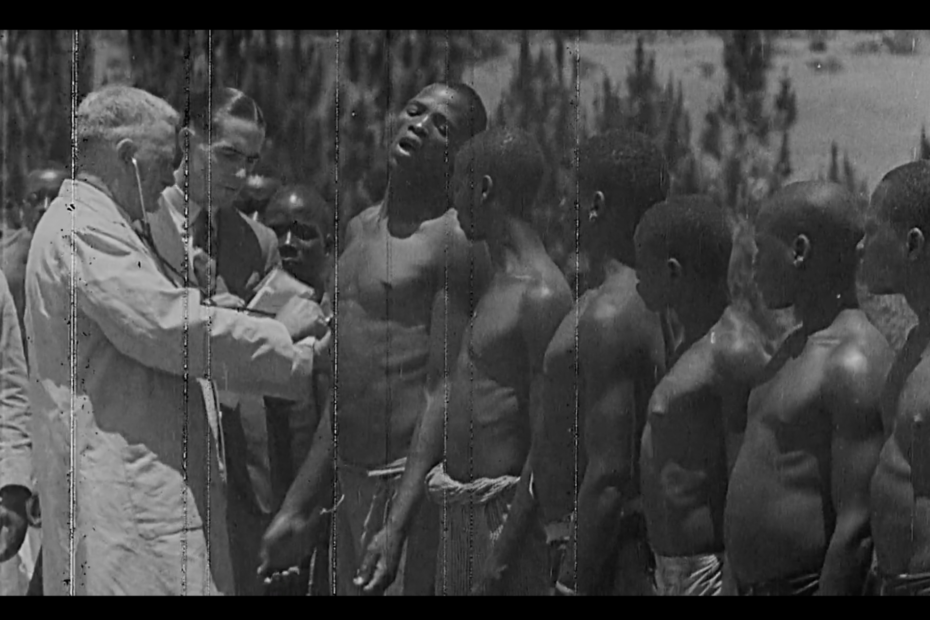
Moruti heard again, in his role as the new Pule, how particular workers were tested to see if they could endure the extreme underground heat. They were taken to doctors’ rooms by the Chaimba — the Chamber of Mines — where men in white coats made notes in thick ledgers as the miners sweated. By recording every physiological reaction, they turned human endurance into a science to be checked and re-checked.
Chisano from Mozambique went through the test. They wanted to see if his muscular frame was strong enough to go underground and extract shiny metals for the company and the rich people of the world. Over and over, this story repeated itself.
Pule had described it in a letter to his uncle — a liberation movement activist working in a different kind of underground. Pule knew his uncle would appreciate the letter, as it laid bare capitalism without the glossy polish of advertisements. The letter remained striking to read:
“They treat the body as a machine — cheaper than steel, because when it breaks down from exhaustion, it is replaced. There was plenty of labour.”
He wrote what he knew: that black workers’ hands were tied and they were paid starvation wages. White workers were granted trade unions, state protection, and supervisory roles under the Nationalist government. Black miners had no legal trade unions, lower pay, and hazardous conditions. “This,” he wrote, “is a recipe for disaster… the workers feel they cannot take it anymore.” This was precisely the kind of intelligence the political underground used to inform its theoretical analysis.
One night, a miner nicknamed Chilembwe from Malawi — those who knew said that he acted like the Malawian anti-colonial fighter — came to speak with the replacement Pule. Management considered him trouble because he had a habit of asking questions that made bosses uncomfortable. After a few days of not hearing from Chilembwe, the rumour mill said that he had been quietly sent back early to his home in the Chiradzulu District of Southern Nyasaland.
V. The Master’s Plan and the Small Matter of the House
Moruti now thought to himself that he had to work harder to understand the story of the slow death that led to Pule’s demise. The machines worked non-stop and at full speed but some things were slower to understand.
This is the story of Pule’s home. After years of saving every cent, Pule had built a grand, modern house back in his village in the Northern Transvaal. It was his monument to years spent beneath the earth.
The new Pule had in his possession the many letters that the departed had written to family — his wife and daughter — and friends, but his consistent contact was the uncle from the underground. He heard stories, wrote and read the Bible during his time off, until he fell asleep before the candle could burn out.
The apartheid government had declared the area a “black spot” designated for white development. The yellow bulldozers had already flattened six homes nearby, including the local chicken farmer’s coop. Pule’s family was forcibly relocated to the Eastern Cape.
This letter was now carried by Moruti in the inside pocket of his jacket, so close because it was the news that broke Pule as they kept telling him. The exact date could be traced back to the first day when they said workers went crazy: 11 September 1973. That morning, a wildcat strike erupted at Western Deep Levels Mine in Carletonville. Police opened fire on striking miners, killing twelve and injuring dozens more.
Moruti learnt that in the mines, some get rich and others stay poor. But he knew that this formula was wrong. Some become rich at the expense of the others, the majority who became poorer because of the land removals, the apartheid black spots, whatever. What was becoming clearer to him was that life was cheap and the promise of the advertising was not for him. Moruti, like Pule, was now seeing life as it truly was.
Now he understood why Pule left for good.
When Pule returned to his village, he found his sturdy home standing alone on condemned land. He spent his nights sitting outside, staring up at the stars in silence.
The following morning, officials from the Department of Native Affairs arrived in a white Volkswagen with government registration plates (GG). They handed him demolition papers. Pule begged the officials for time, asking if he could dismantle the home with his own hands rather than see the bulldozers crush it. The inspectors agreed to return on Friday.
The next morning, a neighbor found Pule hanging from the branch of an old tree in the yard — the same branch where his children’s swing used to hang.
VI. The Footprint
Months later, having served his time in the mine, Moruti Mohlala returned to the village. He was ready to walk his path. He reached into his pocket and looked at his savings book, checking the balance of his earnings. The priest doubted they were worth it, but he had accomplished what he set out to do. He had learned the truth about Pule.
Moruti walked up to the tree where Pule had died and sat beneath its shade, alone, but carrying the load of memories of the long time it took away from life to build that house.
He glanced through his notebook, seeing that it had all come to this. He had tried to walk in Pule’s shoes, but this was only part of the time that Pule had walked. Time was no longer than rope… this home was the wages of his hope, but he was dragged down by apartheid’s stubbornness.
Author’s Note
The story emerged from a simple line or reflection on apartheid in Bishop Desmond Tutu’s book, No Future Without Forgiveness (1999, Rider), in particular Chapter 2, which deals with the terrible memories South Africans have of apartheid. The case of the hanging is told of a gardener, and the favour he asked — to demolish his own house — is real, and the author has adapted it to the mining context, basing it in the 1970s. This takes us into a journey of the migrant labour system, a sub-regional system, and alongside it the consolidation of apartheid’s forced removals and the beginnings of resistance, as a backdrop to the story. Hence, the 1973 Western Deep Levels strike, but the rest of the characters are fictionalised.
The title Zonke Skat comes from Fanagalo, the simplified pidgin language that developed in South Africa’s mines and factories. It means “all the time” — a phrase that captures both the endless shifts underground and the broader theft of workers’ lives by an economic system built on extraction.
I also gave the protagonist the surname Mohlala, which means “footprint” or “trail” in Sotho languages, to hopefully capture the priest walking in his homeboy’s shoes to discover both himself and the truth about Pule, and hopefully the cruelty of life under apartheid.
End