
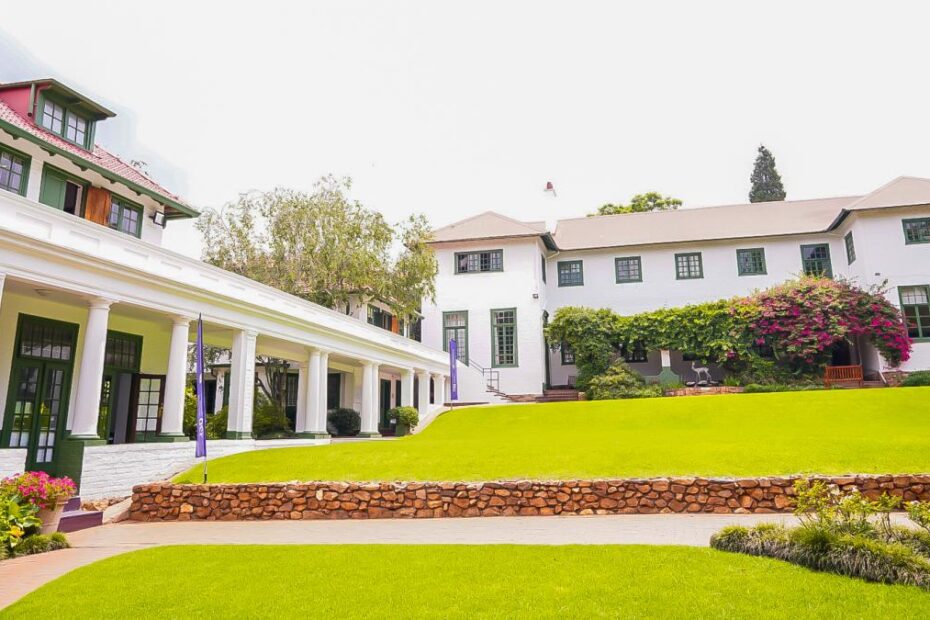
Education is not neutral. Schools do not simply teach mathematics and literature; they shape moral frameworks and social consciousness. When schools openly embrace political ideologies, they are making ethical choices about the world their students are being prepared to inherit. That reality demands scrutiny, and this is the reality of King Davids School who openly and proudly proclaims itself as Zionist.
To be clear, Judaism and Zionism are not the same thing. Judaism is a religion and a diverse global identity that has existed for thousands of years. Zionism, founded in the late 19th century by the secular nationalist Theodor Herzl, emerged as a political project rather than a purely religious one.
Cloaked in the language of Jewish self-determination, it quickly assumed the features of a colonial, exclusivist ideology — embedding racism, dispossession and, later, apartheid into its foundations. Conflating the two is intellectually dishonest and morally dangerous, because it shields a political doctrine from criticism by wrapping it in the language of faith and identity. This distinction matters more today than ever.
Over the last two years, Israel has dropped 2,000-pound bombs on refugee camps, starved two million people as a weapon of war, and targeted humanitarian convoys — from the World Central Kitchen to the World Food Programme. Three American doctors who volunteered in Gaza described a chilling pattern of sniper-inflicted gunshot wounds to the heads and chests of children under 12. The deliberate targeting of children is not an accident of war — it is policy.
Families have been erased from civil registries. Almost every major humanitarian organisation — Amnesty International, Human Rights Watch, Médecins Sans Frontières, UNICEF, Oxfam, Christian Aid, and even the International Court of Justice — has condemned Israel’s offensive as a gross violation of international law, and in many instances, as genocide.
Alarmingly, Israel has disregarded almost every clause of the Geneva Conventions and the Rome Statute. This is what the belief of Zionism has allowed and justified. Over the past two years, the world has watched the devastation of Gaza unfold in real time. The images have been live streamed into our homes, phones and classrooms. This is not distant history. This is the defining humanitarian crisis of our era.
Against this backdrop, the Roedean controversy forces an uncomfortable question: what does it mean for schools like King Davids to align themselves with political ideologies connected to state violence and ongoing humanitarian catastrophe? South Africa should be uniquely sensitive to this question. Our own history is shaped by the painful lessons of apartheid — a system that was once defended, normalised and taught within institutions as necessary, justified, even virtuous. We know, better than most, that education can be used to normalise injustice long before society recognises it as such.
That is why this moment cannot be reduced to a simple narrative about discrimination or sports fixtures. The public debate has focused narrowly on whether cancelling a match was exclusionary.
But the larger issue is whether we are willing to interrogate the ideological frameworks operating within our educational institutions at all. We routinely scrutinise schools for racism, sexism and homophobia. We debate curricula and institutional values. We recognise that education must evolve alongside society’s understanding of justice. Yet when it comes to Zionism, we suddenly become hesitant. We treat the ideology as beyond critique, as though examining it is inherently controversial.
Why?
If education is meant to cultivate critical thinking and ethical awareness, then no political ideology should be immune from scrutiny — especially one that is inseparable from a genocide, contemporary global conflict and immense civilian suffering. None of this is about children or sport. It is about the responsibility of institutions that shape young minds. Schools should be places where empathy, critical inquiry and universal human dignity are nurtured. When any political ideology becomes embedded in an educational ethos, it deserves the same rigorous ethical examination we would apply to any other.
The Roedean controversy has revealed a society deeply uncomfortable with having this conversation. But discomfort is not a reason for silence- it is a signal that the conversation is overdue. In 2026, education cannot exist in a vacuum, detached from the moral realities of the world students are inheriting. Academic excellence and institutional prestige cannot shield schools from ethical accountability. If we celebrate educational achievement, we must also be willing to examine the values that accompany it.