
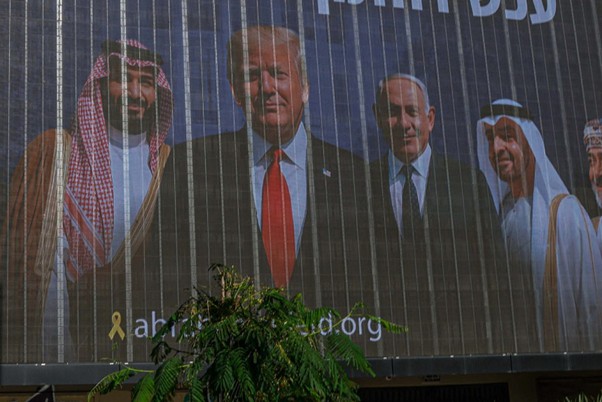
Saudi accusations that Abu Dhabi acts as Israel’s proxy have ignited a media firestorm. But similar anti-Israel sentiments circulate within the UAE itself.
In late January, an article by Ahmed Al-Tuwaijri, a prominent Saudi academic who had served as a dean at King Saud University and a member of the Saudi Shura Council, caused a stir on social media. While affirming that “the Saudi people hold nothing but affection, brotherhood, and respect for the Emirati people,” Al-Tuwaijri accused the United Arab Emirates (UAE) of throwing itself “into the arms of Zionism and [accepting] that the Emirates be Israel’s Trojan horse in the Arab world,” as a means to gain regional power and weaken Saudi Arabia — a betrayal of the Kingdom’s longstanding “assistance and care for the Emirates.”
The immediate context for Al-Tuwaijri’s article was the growing rift between Saudi Arabia and the UAE, with Yemen as the main faultline. In December, the Southern Transitional Council (STC), a UAE-backed separatist group that was part of the fragile anti-Houthi alliance, launched a surprise offensive to seize large areas in the oil-rich province of Hadhramaut.
When deescalation efforts between Saudi Arabia and the STC failed, Riyadh moved swiftly to cut what it viewed as the STC’s main lifeline: UAE military support. Later that month, Saudi Arabia bombed a weapons shipment sent from the UAE to Yemen’s port city of Mukalla.
What began as a localized flare-up soon grew into a heated confrontation across multiple flashpoints. After sidelining the UAE in Yemen, Saudi Arabia moved to roll back Emirati influence along the western Red Sea. It deepened support for the Sudanese Armed Forces against the UAE-backed Rapid Support Forces, financing drones supplied by its defense partner, Pakistan, while simultaneously bolstering the authority of Somalia’s central government, prompting Mogadishu to cancel all agreements with the UAE.
Tensions between Saudi Arabia and the UAE are long-standing, and frictions between the two, while reported in Western media, were never officially acknowledged by either country. Given the silence of official channels, the military confrontation in Yemen came as a surprise to many observers — and was quickly subsumed by the region’s deeply polarized media landscape.
Saudi-owned channel Al Arabiya kept a near-constant live stream amplifying Riyadh’s narrative of UAE’s destabilizing role in the region, while Sky News Arabia — a joint venture between Sky and the Abu Dhabi government — drove a counter-narrative consistent with the Emirates’ position on combating terrorism and Islamic radicalism.
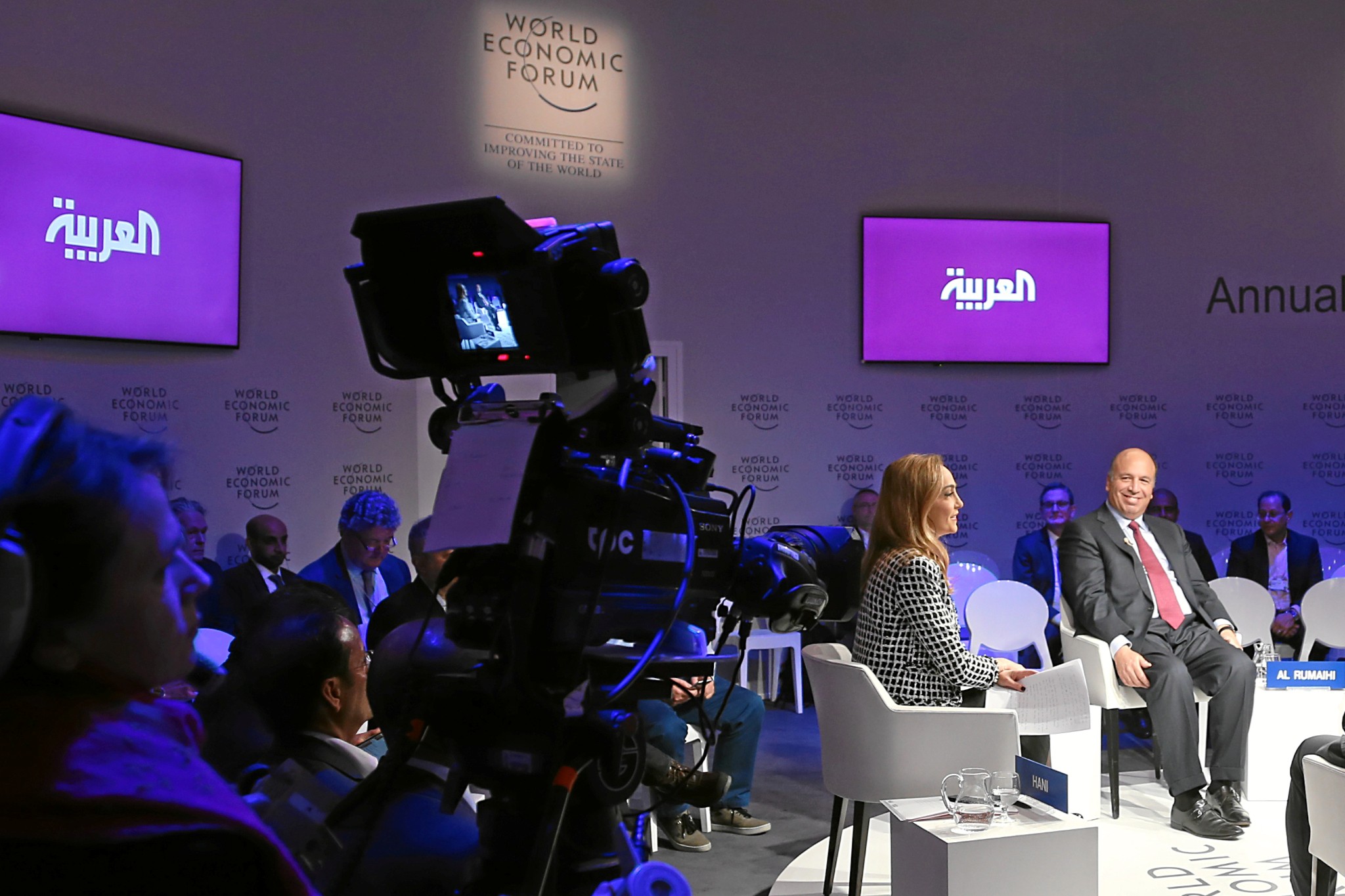
Nadine Hani, Senior Presenter at Al Arabiya, hosts a panel on “The Future of Economic Reform in the Arab World,” at the annual meeting of the World Economic Forum in Davos, Switzerland, January 22, 2016. (Remy Steinegger/CC BY-NC-SA 2.0)
And Al-Tuwaijri was only one of several Saudi analysts who joined an impassioned media campaign, appearing across regional and international outlets to malign the UAE by emphasizing its ties with Israel.
“For the first time, the [destabilizing] Israeli project [in the region] is wearing an Arab abaya,” Saudi analyst Munif Ammash Alharbi argued in an interview with Deutsche Welle (DW) Arabic, accusing the UAE of “propping up militias and undermining the nation-state” in Yemen, Sudan, Libya, and Somalia. Alharbi went on to suggest that the UAE-backed offensive in Yemen was retaliation against Saudi Arabia for persistently backing a two-state solution in Israel-Palestine.
Accusations that Abu Dhabi acts as Israel’s proxy have long irritated Emirati officials, who insist the UAE is a sovereign actor whose interests sometimes align with Israel’s. But recent remarks by U.S. Senator Lindsey Graham in Tel Aviv may reinforce that perception.
Relaying a message from Israeli Prime Minister Benjamin Netanyahu, Graham told reporters that “Bibi wanted me to tell the press that he’s amazed by the level of cooperation, and the significance of the partnership of the United Arab Emirates with Israel — that MBZ [UAE President Mohamed bin Zayed] has done everything asked, and then some.”
Mobilizing the media
Al-Tuwaijri’s article and its ecstatic reception in the Arab world jolted the Emiratis, who reportedly rushed to solicit support from their pro-Israel allies. On X, Israeli journalist Barak Ravid shared Al-Tuwaijri’s article and accused the Saudi press of promoting “anti-Israeli conspiracies, anti-Abraham Accords rhetoric,” and using “antisemitic language,” adding pointedly, “It is clear this is coming from the top.”
Shortly after Ravid’s post, the article was briefly deleted, which made Saudi Arabia appear as if it had momentarily faltered. Yet within hours, the article was republished as a show of defiance, especially after the Anti-Defamation League (ADL) joined to call out “prominent Saudi voices” for making anti-Israel statements.
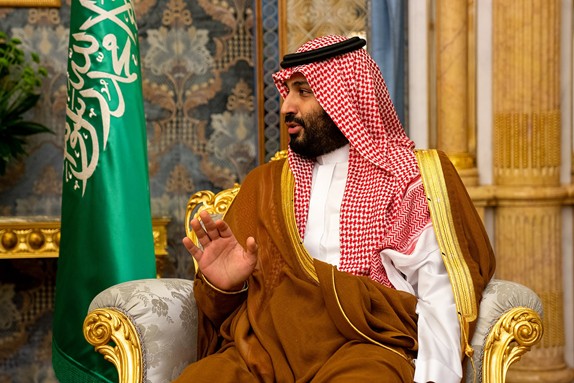
Saudi Crown Prince Mohammed bin Salman in Jeddah, Saudi Arabia, September 18, 2019. (U.S. Department of State)
Over the following days, rhetoric against Saudi Arabia intensified — both within the UAE and among Western pro-Israeli outlets — with several hit pieces personalizing the dispute by targeting Saudi Crown Prince Mohammed bin Salman. Netanyahu weighed in, too, saying, “We expect from anybody who wants normalization or peace with us that they not participate in efforts steered by forces or ideologies that want the opposite of peace.”
But contrary to Netanyahu’s assumptions and those of many Israeli commentators, Saudi Arabia is not actively seeking to normalize ties. While the Kingdom has consistently maintained that it does not oppose normalization per se, it is not in any hurry to advance it, certainly not while Netanyahu and his religious extremist coalition remain at the helm of the Israeli government.
Saudi Arabia has come to accept that neither a security deal with the United States nor an upgraded status of a major non-NATO ally would provide sufficient buffer from an Iranian or an Israeli attack, as Qatar’s experience recently shows. Nor do they trust that Washington would honor any F-35 deals, particularly given its failure to deliver them to the UAE, even as Israel’s stalwart ally.
Saudi Arabia’s leaders realize that an entirely conflict-free region may be out of reach, but want to avoid being surrounded by conflicts with spillover effects. The UAE’s geopolitical and maritime interests — in particular, maintaining its foothold around the Gulf of Aden and the Red Sea — have created conditions of instability with protracted conflicts along Saudi Arabia’s borders. While the UAE sits comfortably shielded by its geography from the direct consequences of its interventions, Saudi Arabia is far more vulnerable to their cross-border reverberations.
This is especially critical for the Kingdom and its ambitious but stalling Vision 2030. Despite committing large amounts of capital into various sectors, Saudi Arabia’s economic woes have reached a crescendo. Regional conflict has only added to these shortfalls, warding off the foreign investment and creative talent that Saudi Arabia sorely needs. The Kingdom is particularly anxious that a U.S. war on Iran will set the region ablaze and undo years of investment into its Vision 2030, threatening to unravel the ambitious promise before it fully takes root.
In fact, unreported details suggest that the discord between Saudi Arabia and the UAE is linked to Vision 2030. According to Emirati government officials, Saudi Arabia recently sought investment to rescue its struggling megaprojects, which the UAE declined.
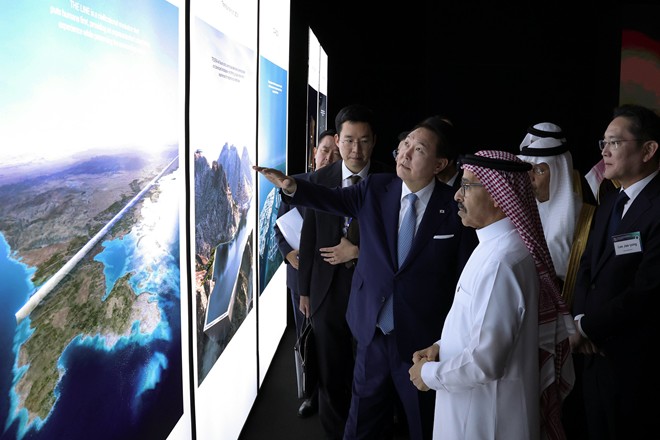
Korean officials tour the NEOM Exhibition, the cornerstone project of Vision 2030, in Riyadh, Saudi Arabia, October 23, 2023. (Kim Yong Wii/CC BY-NC-SA 2.0)
For Saudi leaders, this was a massive affront. From the Kingdom’s perspective, Saudi Arabia has accommodated Emirati adventurism and its destabilizing military interventions, which are dangerously close to Saudi borders — potentially jeopardizing its Vision 2030 projects — all in the hope that the UAE would reciprocate by injecting capital into the Kingdom. Kuwait, by contrast, announced last August that it had slated $164 billion for regional investments, with Saudi Arabia as its top destination.
To the Emiratis, however, the ensuing escalation is evidence of Saudi Arabia’s inability to handle rejection with composure.
A shrewd soft power strategy
In his article, Al-Tuwaijri argued that the UAE’s alliance with Israel is a “betrayal of God” and that Israel is “on its way to a rapid demise” — statements that deeply incensed many pro-Israel readers. But similar sentiments circulate across the Arab world, and sometimes veer into explicit antisemitism, including in the UAE.
Two examples come from the popular Emirati podcast platform, ArabCast. An episode titled “How will Israel end?” featuring Egyptian author Osama El-Shazly, is among the podcast’s most viewed. Responding to the Emirati host’s request to “describe the Jewish human,” El-Shazly, with calm and conviction, cites the Book of Joshua in the Hebrew Bible to claim that genocide is inherent to Jewish identity, calling it one of “perpetual victimhood and endless whining.”
In another episode, Iraqi author Khazal Al-Majidi claimed that Israel seeks to take over the entire Arab world, adding that there was no archaeological evidence linking Israel or its prophets to historic Palestine. Both Al-Majidi and El-Shazly’s remarks went largely unchallenged by the Emirati host — and indeed were used in episode trailers to promote the show on social media.
This is an example of the UAE’s shrewd soft power strategy. Publicly, English-speaking Emiratis are mobilized by the government to reiterate the country’s commitment to the Abraham Accords and to combating a shared enemy in “radical Islam.” Domestically, however, narratives may align more closely with those promoted by Saudi Arabia and other Gulf states, as the UAE remains attuned to popular sentiments.
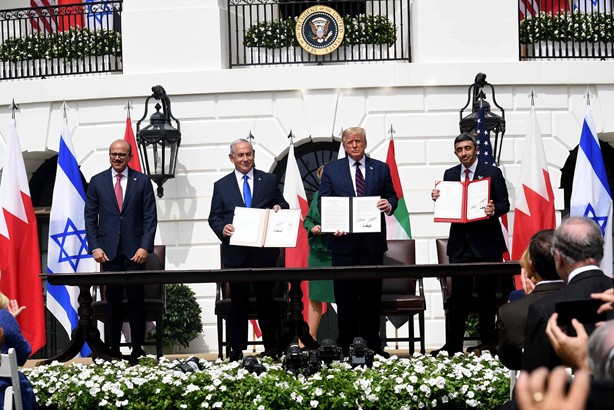
Israeli Prime Minister Benjamin Netanyahu, U.S. President Donald Trump, UAE Foreign Minister Abdullah bin Zayed Al Nahyan, and Bahraini Foreign Minister Abdullatif bin Rashid Al-Zayani attend the Abraham Accords signing ceremony at the White House, September 15, 2020. (Avi Ohayon/GPO)
A case in point is the UAE’s enlistment of Ali Aljifri, a naturalized Emirati cleric of Yemeni descent, to deflect blame and accuse the “Zionist occupation” and the Arab-speaking operatives in Unit 8200, along with the Muslim Brotherhood, of fomenting discord between the UAE and its neighbors.
For the UAE, these are not contradictions, but an attempt to manage the tension between its deepening relationship with Israel — one that is critical to expand its own budding technology and arms sectors — and the fact that it is geographically, religiously, and culturally embedded in a region increasingly dissatisfied with Emirati foreign policy.
The ‘Trojan Horse’ in Gaza
Curiously, four instances of the UAE appearing to act on Israel’s behalf in Gaza appear to have gone unnoticed by Saudi commentators — or perhaps this silence is intentional, given the two countries’ shared opposition to Hamas’ future role in Palestinian politics.
In Yemen, Saudi Arabia readily accused the UAE of smuggling weapons under the cover of aid. Yet it shied away from directly citing former Hamas representative Osama Hamdan, who in 2024 made a similar allegation that the UAE had used its field hospital in Gaza to disguise an intelligence unit sent to locate Hamas rocket launch sites. Al-Tuwaijri repeated those allegations in his article and referenced a now-deleted report from the Jerusalem Post about the UAE using its military bases to support Israel’s war efforts.
The appearance of UAE-plated cars allegedly used by members of the Israel-allied Abu Shabab militia in Gaza has fueled further speculation about the UAE’s local ties, mediated through its direct connection to shadowy Palestinian politician Mohammed Dahlan. But the extent of Abu Dhabi’s direct involvement is unknown.
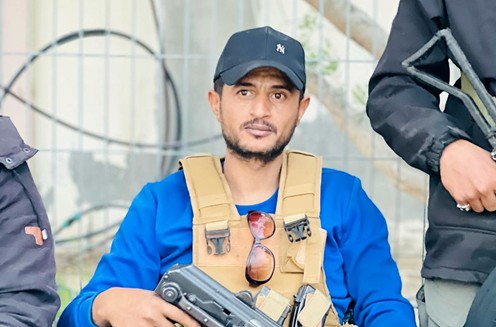
Yasser Abu Shabab (Popular Forces/Facebook; used in accordance with Clause 27a of the Copyright Law)
In November, the UAE was also tied to another controversy surrounding the possible trafficking of Palestinians outside of Gaza through an obscure firm called Al-Majd Europe. The company’s founder, Israeli-Estonian national Tomer Janar Lind, lists Dubai as his base on LinkedIn, where he also claims to have established a consulting company. This thread linking Lind to the UAE, however circumstantial, was sufficient to stir rumors about Abu Dhabi’s role in facilitating the so-called “voluntary migration” of Palestinians from Gaza.
While UAE presidential advisor Anwar Gargash recently affirmed that the country has no agenda in Gaza, despite joining U.S. President Donald Trump’s Board of Peace, its entangled business and political interests suggest otherwise. Multiple reports and leaked blueprints indicate the UAE is set to bankroll a “gated community” compound in the south of Gaza, where it will allegedly install biometric surveillance to monitor residents, as well as take charge of their “re-education” and “deradicalization.”
According to a DropSite report, former U.S. general and ex-CIA director David Petraeus is the architect of the “gated community,” which Abu Dhabi appears poised to fund. Petraeus also serves as Middle East chairman of the private equity giant Kohlberg Kravis Roberts & Co. (KKR), which maintains offices in both the UAE and Saudi Arabia. Together with BlackRock, KKR holds substantial stakes in the Abu Dhabi National Oil Company (ADNOC) and a minority stake in ADNOC Gas Pipeline Assets, dovetailing neatly with the 2025 UAE-Israel energy deal.
The timing and alignment of these initiatives point to broader Emirati interests in Gaza, where the compound may serve as an initial foothold in a longer-term nexus of energy, real estate, and port development.
For its part, Saudi Arabia has also joined Trump’s Board of Peace, but has emphasized its view of the body as a “transitional administration” for Gaza, while also scaling up its humanitarian aid to the enclave. In doing so, as with the Abraham Accords, it has sought to avoid lending legitimacy to an initiative widely condemned as a neocolonial effort to profit off of Palestinian dispossession — allowing the UAE to tread this political minefield instead.
Last week, when Senator Graham rebuked Saudi Arabia for its bickering with the UAE, he insisted that “MBZ is not a Zionist.” If the UAE felt it necessary for a pro-Israel senator to make a public statement to clear Mohammed bin Zayed’s name, it speaks to the gravity that the charge of “Zionist” carries in the Arab world. In moving to distance itself from Zionism — but not Israel — the UAE keenly understands that in the contest of narratives, it is Saudi Arabia that is winning.
Mira Al Hussein is a sociologist of the Arab states of the Gulf and a Research Fellow at the Alwaleed Centre, University of Edinburgh.
“Reprinted from…”In widening Saudi-UAE rift, Israel is at the heart of a narrative war