

Pic Courtesy: Al Mamlaka English
By Hassen Lorgat
They say that war is the continuation of politics by other means. This truth landed with brutal clarity on Eid day—also South Africa’s Human Rights Day—when the news broke: Israel’s nuclear reactors had been struck.
The news brought to the fore the unspeakable: Israel’s nuclear program, held by a privileged few. Israel is widely believed to possess nuclear weapons, built with the support of France and the knowledge of the United States, but it has never officially confirmed or denied this.
They call this policy “ambiguity.” To add salt to injury, we are confronted with the world powers’ blatant double standards. They quietly affirm that Israel as a ” democratic western nation” now in possession of nuclear technology was deemed ”responsible”.
They were welcoming it into their exclusive club, even as it stands accused of perpetrating genocide against Palestinians in Gaza—where even one of its last die-hard supporters has withdrawn their backing before the ICJ.
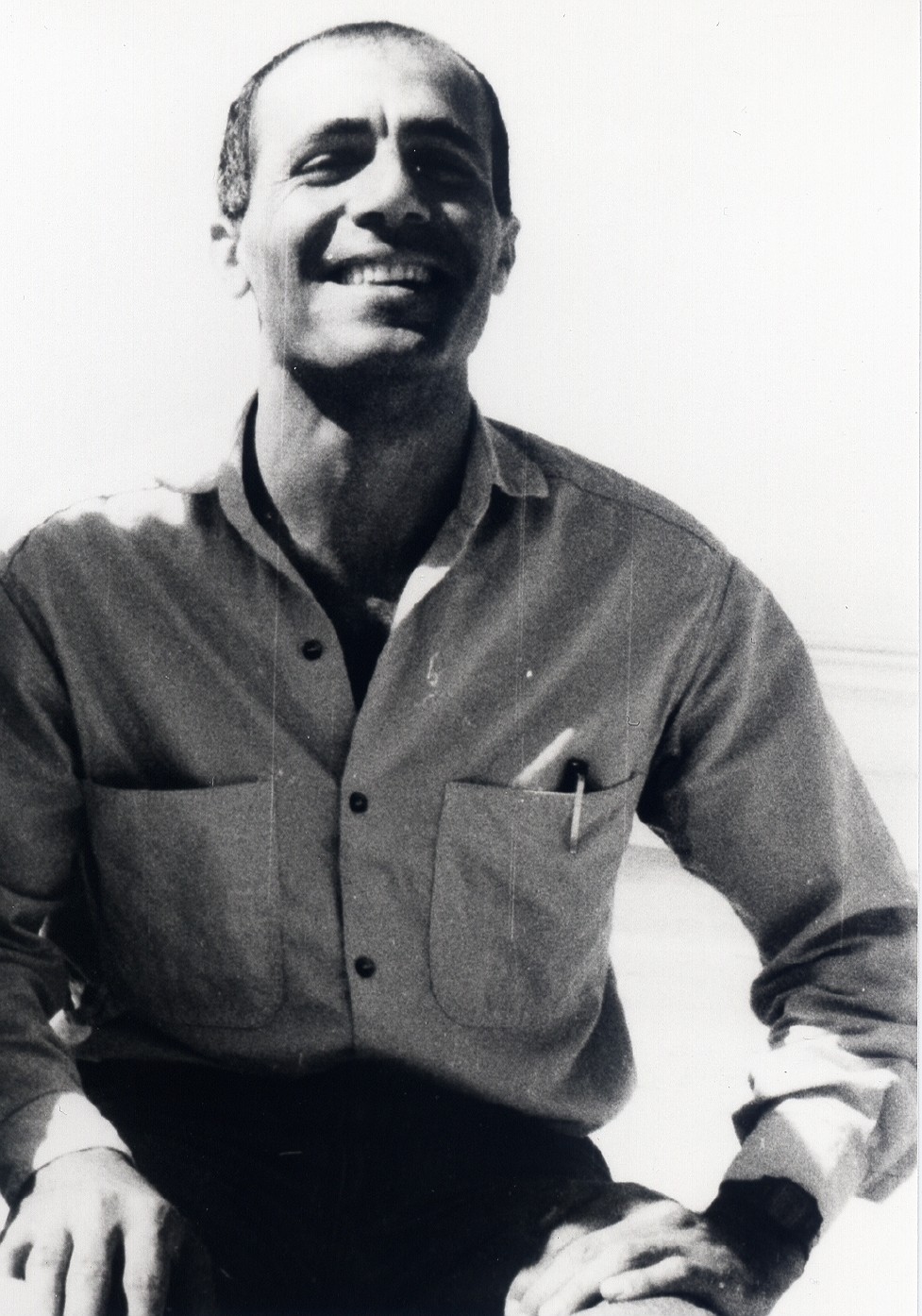
Mordechai Vanunu
(https://rightlivelihood.org/the-change-makers/find-a-laureate/mordechai-vanunu/)
We all know that Israel is not a member of the International Atomic Energy Agency (IAEA), so its nuclear program is not subject to the same international oversight as Iran’s. Iran, by contrast, is a signatory to the Non-Proliferation Treaty (NPT) and an IAEA member, meaning its nuclear facilities are subject to inspections.
Yet it is this nation—seeking only the right to peaceful nuclear energy—that has faced intense international pressure and sanctions over concerns it seeks nuclear weapons.
But all these lies came crashing down. It was Iran’s control of the airspace, and its missiles, that struck Dimona—just nine kilometers from Israel’s nuclear reactor. This was a message to nuclear powers of their own vulnerability.
Latest reports from Israeli rescuers say over one hundred people were hurt in Iranian missile strikes on the southern city of Dimona—where Israel’s main nuclear site is located—and the nearby town of Arad. This marks one of the most serious escalations since the US-Israel war on Iran began. Iranian state TV called the strikes a “response” to an attack on Iran’s Natanz nuclear facility earlier that day. The exchange marks a sharp new phase in the conflict, now in its fourth week, with both sides targeting each other’s nuclear sites.
While the weapons used by Iran were said to be ballistic missiles carrying conventional warheads with hundreds of kilograms of explosives, some reports noted the potential use of advanced hypersonic missiles like the Fattah-1. It is reported that Israel lost seven senior officers killed in the strike.
But the political significance is what matters most: the shattering of the illusion of invulnerability that Israel’s nuclear ambiguity was designed to protect. This is precisely what Mordechai Vanunu warned about decades ago.
I first wrote about Mordechai Vanunu and Dimona back in 2010 as he became the public face behind exposing Israel’s ownership of deadly nuclear weapons. More recent revelations talk of others before him who exposed this such as Yehuda Ben Moshe, secretary of the Jerusalem-based Committee for Denuclearization of the Arab-Israeli Conflict,
Then, I quoted Vanunu’s poem “I Am Your Spy” which tells a part of his story and his vision of transparency: a call for Israel and all countries to be accountable to the same laws, including those governing atomic energy and international human rights. His poem, written from Ashkelon Prison in 1987, struck me then as deeply Brechtian:
I AM YOUR SPY
I am the clerk, the technician, the mechanic, the driver.
They said, do this, do that, don’t look left or right, don’t read the text. Don’t look at the whole machine.
You are only responsible for this one bolt. For this one rubber-stamp. This is your only concern. Don’t bother with what is above you. Don’t try to think for us. Go on, drive. Keep going. On, on, on. . .
There is nothing to fear. Not to worry. Everything is ticking just fine.
Our little clerk is a diligent worker. He’s a simple mechanic. He’s a little man. Little men’s ears don’t hear, their eyes don’t see.
Who is in charge? Who knows where this train is going? . . .
This bolt is part of a bomb. This bolt is me. . .
Rise and tell the people. You can. I, the bolt, the technician, the mechanic? —Yes, you.
You are the secret agent of the people. You are the eyes of the nation.
Agent-spy, tell us what you’ve seen. Tell us what the insiders, the clever ones, have hidden from us. Without you, there is only the precipice. Only catastrophe.
I’ll do what I have to. I’ve heard the voice of my conscience and there is nowhere to hide. . .
Get off the train. The next stop — nuclear disaster. The next book, the next machine. No. There is no such thing.
Finding Dimona
Vanunu said that “Dimona should be open to international inspections, should be shut down because it is past its age, beyond 25–30 years, and when I wrote it was 40 years working. But if the U.S. is looking for nuclear weapons in the Middle East, or a nuclear factory, it is here in Israel.”
That was some sixteen years ago when I first quoted those lines. Today, Vanunu remains under restrictive conditions, a living reminder of the cost of speaking truth to nuclear power.
I then quoted Adbusters, which advocated at the time for an international inspection of this nuclear facility. The text read:
Let’s Inspect Dimona
“For three decades Israel has refused to allow the International Atomic Energy Agency to inspect its highly sensitive nuclear weapons facility at Dimona—in total defiance of UN Security Council resolutions. Israel has adamantly refused to participate in nuclear nonproliferation while demanding that other countries, most notably Iran, do.
“The way to a nuclear free Middle East is to eradicate double standards. Israel cannot threaten military action against Iranian nuclear facilities whilst demanding the right to maintain its own. The international community can no longer afford to allow Israel to act with impunity. It is time to reconcile policy in the Middle East. Israel must be held accountable.”
And so, the question that must be asked is: have Iranians turned the tables on Israel?
Or has this moment merely exposed the dangerous instability of a world built on double standards? The only path forward is to demand accountability for all nations and to renew the call for a nuclear weapons-free world. No more exceptions. No to nuclear weapons.