
By Iqbal Jassat
Does the change of leadership in South Africa’s opposition party signal a leap in policy from its shameless silence on Israel’s horrific conduct of terrorism against Palestinians and its unprovoked unlawful war on Iran?
Don’t hold out any hope that it will change course which requires a backbone to oppose and confront Israel, a regime that thrives on apartheid, occupation, ethnic cleansing, wars and genocide.
The country’s new Democratic Alliance leadership enters office carrying political baggage that is being carefully downplayed rather than examined.
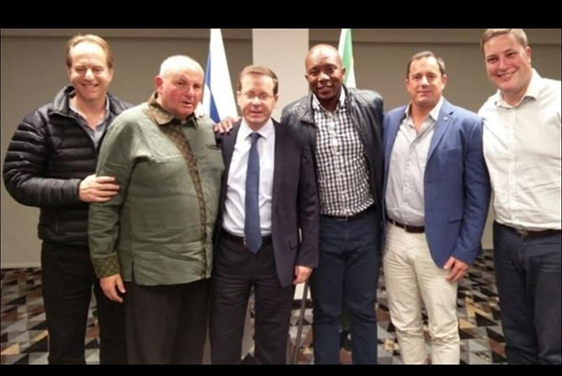
Largely ignored in public discourse is the documented association between the party’s new leader, Geordin Hill-Lewis, and Israeli political figures during official delegations.
These were not incidental encounters. They formed part of structured engagements that signalled alignment at a time when the realities of occupation and systemic repression were already widely known.
What is conveniently omitted is how these relationships shape present political posture. The reluctance to take a clear and principled stance on Israel’s actions is not accidental. It reflects continuity, not change.
Networks built over time do not dissolve with leadership transitions. They entrench positions, inform silence, and define what is politically acceptable to say.
This pattern is not isolated. Across political systems, leadership figures maintain ties within a broader international framework that rewards alignment and discourages dissent.
We recall Helen Zille’s casual dismissal of Israel’s genocidal violence in Palestine. “Genocide is a very big word,” she said, adding that she had “not been to Gaza” and therefore could not say.
At the time in a Mail & Guardian oped titled Zille’s attitude is one of colonial denial hiding behind the mask of efficiency, Aslam Fataar & Imraan Buccus wrote that it was not just a passing remark. It revealed an attitude that goes beyond one politician.
“It captured a way of thinking that prizes order and efficiency while pushing aside questions of justice. This way of thinking has a long history. It comes from the colonial playbook, and today it sits comfortably in neoliberal politics”, they correctly asserted.
Sure, Hill-Lewis is a new leader but the legacy of the DA on Israel is that despite having different leaders, the same calibrated silence endures.
South Africa’s solidarity movements insist that Palestine’s freedom struggle cannot be understood in isolation.
The issue is not confined to a history of alignment with Zionism. It is what that history produces in the present.
Nor can it be condoned as diplomatic neutrality. It is must be called out for what the DA represents: political positioning shaped by alignment with power.
Iqbal Jassat
Executive Member
Media Review Network
Johannesburg
South Africa