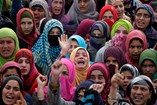
For over seven decades, the Kashmir conflict has remained one of the most enduring and unresolved disputes in modern international relations. Despite early intervention by the United Nations and repeated affirmations of the right to self-determination, the promised plebiscite has never materialised. This paper argues that Kashmir represents a case of “freedom deferred,” shaped by the intersecting failures of state actors, the strategic inertia of global powers, and the fragmented agency of non-state actors, including the Kashmiri diaspora. Through a comparative analysis with cases such as East Timor and South Sudan, the study interrogates the selective application of self-determination in international politics. It concludes that the persistence of the Kashmir dispute reflects not merely diplomatic failure, but a structural condition in which geopolitical interests override normative commitments to justice and democratic choice.
1. Introduction
The Kashmir dispute has shaped the geopolitical relationship between India and Pakistan since their emergence as independent states in 1947. It also intersects with broader regional tensions, including the Sino-Indian dispute over Aksai Chin. Strategically located between three nuclear-armed and populous states—India, Pakistan, and China—Kashmir spans approximately 80,000 square kilometres and is home to over 17 million people.
As one of the longest unresolved conflicts of the modern era, Kashmir has been marked by territorial division, militarisation, and recurring cycles of violence. Since the entry of Indian forces into the region on 27 October 1947, the former princely state of Jammu and Kashmir has remained divided along the Line of Control (LoC), separating areas administered by India and Pakistan. Despite multiple wars and prolonged diplomatic engagement, a mutually acceptable resolution has remained elusive.
Central to the dispute is the question of self-determination, affirmed in early United Nations Security Council resolutions, particularly United Nations Security Council Resolution 47. These resolutions called for a free and impartial plebiscite to determine the political future of the region. Yet, more than seven decades later, this commitment remains unfulfilled.
This paper argues that the Kashmir conflict represents a case of “freedom deferred”—a prolonged denial of self-determination shaped by the failures of state actors, the inertia of global powers, and internal fragmentation among stakeholders.
2. Theoretical Framework: Self-Determination and Realpolitik
The principle of self-determination occupies a central place in international law, enshrined in the UN Charter and subsequent human rights instruments. However, its application has been inconsistent, often subordinated to geopolitical considerations.
From a realist perspective, states prioritise sovereignty, territorial integrity, and strategic advantage over normative commitments. Liberal institutionalism, while emphasising the role of international organisations, reveals limitations in enforcement mechanisms. Constructivist approaches highlight how narratives and identities shape the legitimacy of claims.
Kashmir sits at the intersection of these frameworks: legally justified, politically contested, and strategically constrained.
3. Failure of State Actors
3.1 India: Sovereignty Over Self-Determination
India’s position has evolved from initial acceptance of a plebiscite to a firm assertion that Kashmir is an internal matter. The gradual erosion of regional autonomy, culminating in the revocation of Articles 370 and 35A in 2019, reflects a decisive shift toward centralisation.
This approach prioritises territorial integrity and national security while marginalising international mediation. By reframing Kashmir as a domestic issue, India has effectively insulated itself from external pressure. These Indian politiking will not work as Kashmir struggle for freedom is alive and in transitional phase on the route to total freedom from India.
” Justices can be delayed but will never be Denied”.
3.2 Pakistan: Internationalisation Without Resolution
Pakistan has consistently raised the Kashmir issue in international forums, emphasising human rights and self-determination. However, its strategy has often lacked coherence and sustained diplomatic leverage.
Internal political instability and shifting priorities have limited Pakistan’s ability to translate advocacy into tangible outcomes. The reliance on rhetorical positioning rather than strategic diplomacy has weakened its effectiveness.
3.3 Bilateral Deadlock
Both states have instrumentalised Kashmir as a symbol of national identity and political legitimacy. This mutual entrenchment has produced a zero-sum dynamic, where compromise is politically costly and thus avoided.
4. The United Nations and Global Powers: Institutional Paralysis
As the saying goes ” To paralyses a process is by doing over analyses of matter” in other crude word “Time dealy tactics”.
4.1 The Limits of the United Nations
The UN played an active role in the early years of the conflict, passing resolutions and deploying observers. However, the absence of enforcement mechanisms has rendered these efforts largely symbolic.
Peacekeeping missions have maintained a fragile status quo but have not advanced political resolution. The gap between normative commitments and operational capacity is stark.
4.2 Great Power Politics
Global powers have approached Kashmir through the lens of strategic interest rather than normative obligation. During the Cold War, alliances shaped responses. In the contemporary era, economic and security partnerships—particularly with India—have further reduced incentives for intervention.
4.3 Selective Application of Self-Determination
The contrasting trajectories of East Timor and South Sudan illustrate the role of international consensus. In both cases, sustained pressure and coordinated intervention enabled referendums and eventual independence.
Kashmir, by contrast, lacks such consensus. Its resolution is perceived as too costly in geopolitical terms.
5. Non-State Actors: Fragmentation and Narrative Contestation
Non-state actors have played a complex role in the Kashmir conflict. Armed groups have internationalised the issue but also contributed to its securitisation, undermining the legitimacy of the broader movement.
Civil society and human rights organisations have documented abuses and raised awareness, yet their influence on policy outcomes remains limited. The dominance of security narratives has overshadowed humanitarian concerns.
6. The Kashmir Diaspora: Potential and Paradox
The Kashmiri diaspora occupies a unique position, with access to political systems, media platforms, and resources in democratic societies. However, this potential has not been fully realised.
Diaspora activism is often episodic, driven by moments of crisis or commemoration rather than sustained engagement. Internal divisions and leadership rivalries have fragmented efforts, reducing overall impact.
Moreover, there is a tendency to externalise responsibility—particularly toward Pakistan—while underutilising opportunities for advocacy within host countries. This has resulted in a pattern of visibility without structural influence.
This critique is not absolute; many diaspora actors have made meaningful contributions. However, the broader pattern reflects underperformance relative to capacity.
7. Comparative Analysis: Why Not Kashmir?
The cases of East Timor and South Sudan demonstrate that self-determination can be realised when geopolitical conditions align.
In East Timor, international outrage and Western support led to a UN-sponsored referendum.
In South Sudan, sustained diplomatic pressure and regional cooperation facilitated independence.
Kashmir differs in key respects:
It involves two nuclear-armed states.
It lacks unified international support.
It is embedded in broader strategic calculations.
Thus, the absence of resolution is not accidental but structural.
8. South Africa and the Possibility of Mediation
South Africa’s foreign policy, grounded in human rights and peaceful resolution, offers a potential model for engagement. Historical precedents in mediation—such as involvement in African conflicts—demonstrate its capacity.
However, any role in Kashmir would require careful navigation of geopolitical sensitivities and the consent of primary stakeholders and moreso a honet intention and non-partisan approached. The ruling party ANC is infested with Indian lobbyist and some have earned Indian highest civilian award for their loyalty to India and some are serving as SA Ambassador to India. Do I need to say more or let it be for your own investigation and imigination. Kashmiris have hope in South African leadership specially while Comracde President Cyril Ramaphosa is at the helm of state affairs.
9. Discussion: The Architecture of Delay
The persistence of the Kashmir conflict reflects a convergence of factors:
Strategic restraint due to nuclear deterrence
Economic considerations influencing global alignments
Institutional limitations of international organisations
Fragmented advocacy among non-state actors
These factors create an “architecture of delay,” where resolution is perpetually postponed.
10. Conclusion
The Kashmir conflict endures not due to lack of legal frameworks or historical clarity, but because of political calculations that favour its continuation. The failures of state actors, the selective engagement of global powers, and the fragmented agency of non-state actors have collectively transformed a promised act of self-determination into a prolonged condition of political limbo.
“Freedom Deferred” is therefore not merely a description of Kashmir’s past—it is an indictment of the international system that sustains its present.
Author:
Salman I Khan. Paul Harris Fellow, T.I
Founder and Chairman
South African Kahsmiri Action Group (SAKAG)
Kashmir Center for African Union (KCAU)
Kashmir Global Movement (KGM)
References
Ali, T. (2011). The Duel: Pakistan on the Flight Path of American Power.Amnesty International (2018). Human Rights in Kashmir Report.Herrera, G. (2019). South Asian Nuclear Tensions Analysis.Lamb, A. (1991). Kashmir: A Disputed Legacy.Mandela, N. (1998). NAM Conference Speech, Durban.Noorani, A. (2002). The Kashmir Dispute 1947–2012.Rahman, M. (1996). UN Resolutions and Kashmir.UNPO (2017). Self-Determination Framework.Wheeler, N. (2010). International Security Studies.