
By Iqbal Jassat
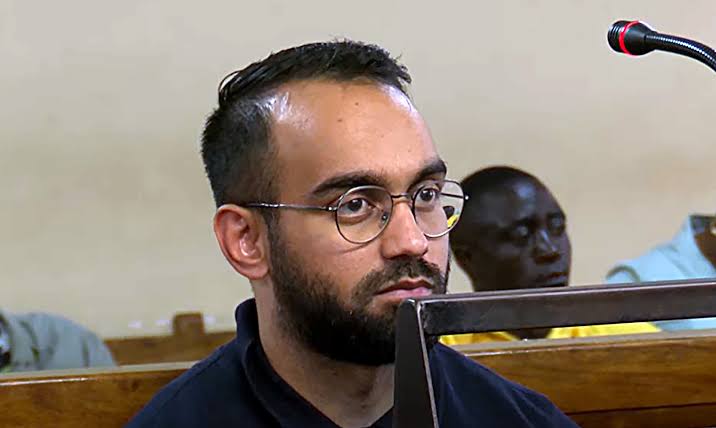
The criminal prosecution of 35-year-old Ziyadh Hoorzook under anti-terrorism legislation reveals a deeply concerning double standard in South Africa’s justice system.
While the State deploys the full might of the law against a local citizen over a single, years-old financial transaction, it maintains a glaring, institutional silence regarding South African nationals actively serving in Israel’s army – a foreign military accused of global atrocities including genocide.
This selective application of justice suggests that our legal apparatus is being steered by Israel’s geopolitical agendas rather than an objective commitment to human rights and constitutional sovereignty.
The State’s case against Hoorzook rests heavily on a 2017 cryptocurrency transfer of R11,500 to Al-Sadaqah, an organization that was operating openly as a humanitarian relief charity at the time.
Because South Africa has not formally proscribed this group, prosecutors are relying heavily on data and terrorist designations unilaterally dictated by the United States.
By entertaining these foreign frameworks and utilizing “expert witnesses” aligned with Western counter-terrorism doctrines, South African authorities risk criminalising legitimate Islamic charitable giving (Sadaqah).
Pursuing a citizen over a decade-old donation looks less like a genuine domestic security priority and more like a performative attempt to appease the Financial Action Task Force (FATF) to exit the international greylist. True justice cannot be bartered for economic compliance.
The aggressive posture taken in Hoorzook’s case stands in stark, painful contrast to the State’s complete failure to prosecute South African nationals serving in the Israel Defense Forces (IDF).
Under our own domestic law—the Regulation of Foreign Military Assistance Act (RFMAA)—it is a distinct criminal offense for any citizen to serve in a foreign military without formal authorization from the National Conventional Arms Control Committee (NCACC).
The NCACC has confirmed that zero authorizations have been granted for citizens to fight in the IDF.
And despite civil society groups, including Media Review Network (MRN) and the Palestinian Solidarity Alliance (PSA) submitting comprehensive dossiers identifying South Africans actively participating in military campaigns that our own government has classified as genocidal before the International Court of Justice (ICJ), the National Prosecuting Authority (NPA) has not secured a single conviction.
This imbalance creates an unsustainable legal paradox. On one hand, a South African Muslim faces imprisonment based on a minor financial transaction interpreted through the lens of a unilateral American list. On the other hand, citizens can physically put on the uniform of a foreign army, deploy to a conflict zone, and return home with total domestic impunity.
When digital financial footprints are swiftly weaponized to satisfy international financial watchdogs, while actionable dossiers on illegal foreign military service are allowed to gather dust, the integrity of our legal system is compromised.
South Africa’s courts must remain fiercely independent, free from Islamophobic biases, and blind to geopolitical convenience. If the law is to be respected, it must be applied equally—meaning the State must stop persecuting citizens under foreign pretexts while ignoring flagrant violations of its own domestic laws.
Critics who argue that aggressively prosecuting a citizen over a single, relatively small financial transaction from nearly a decade ago (2017) represents an overreach driven by external geopolitical pressures rather than genuine domestic security threats, cannot be dismissed.
Given the fact that the group Al-Sadaqah is not officially sanctioned or listed as a terrorist organisation by the United Nations Security Council (UNSC), South Africa is not automatically bound to view it as such.
Indeed, under South African law, only sanctions and designations ratified by the UN Security Council carry an automatic international legal mandate.
Unilateral listings by individual nations — such as the United States or Apartheid Israel — hold no direct statutory authority over South African jurisprudence.
If South Africa is to protect its constitutional sovereignty, our authorities must stop persecuting citizens under foreign pretexts while ignoring flagrant, documented violations of our own domestic laws. The rule of law must be blind to foreign pressure and absolute in its equality.
Iqbal Jassat
Executive Member
Media Review Network
Johannesburg
South Africa