
By Hassen Lorgat
The professor teaches, but does not learn.
History is of the classes, and not the classroom.
We all know that people, and every generation,
make their own history… in struggle.
But for the learned ones,
history and politics are only the art of the possible—
always the lesser of two evils,
never contemplating the best of the best.
He tells the reader,
those schooled to serve, and labour:
dim your visions,
ignore the dignity in service and service with a smile,
but not without a Living Wage.
Take from those who believe that
colonialism brought us an independent judiciary,
transport, and piped water—
even for only a tiny minority… that was progress.
Take what is on offer.
The crumbs are what you must fight for, not the whole loaf, the bakery.
For this esteemed man of letters,
who only sings the chorus of the Anthem
(ignoring the verse and the pre-chorus):
Ring the bells that still can ring.
Forget your perfect offering.
There is a crack, a crack in everything.
That’s how the light gets in.
The Anthem was born
when days were dark and friends were few
(whilst neoliberals lay waiting in the wings),
when the whole world was plunged into darkness and chaos.
In these uncertain times,
the singer-poet did not want perfect offerings.
He and others were licking his wounds.
Can the professor not see the light?
Has he lost the spirit of sumud?
These times are different.
Scouring thick books in a half-lit library locks him out
from what is happening—stuck.
This is the anthem for a doomed prof—
still, without struggle,
without hope.
Only hopelessness.
Maybe his walls of ivory tower are too thick,
or it is just too high from modest ground,
that blinds him to the fightback in play.
…the partisans did not die.
In our world, Victor’s Orban grinder is no more,
and in the belly of the beast the Trumpet blows a different tune,
the cheap insults from a somniloquising president do not stick anymore.
Young comrades knock on doors—it’s potholes and Palestine—
and open the airwaves with hope.
They are trying to right the wrongs—
from the times of Geronimo to Rosa Parks,
who took her seat, sat down so that we could stand up.
Today they fill potholes and grocery stores and stop AI data centres,
but they never forget Palestine.
These new breeds of partisans
have learnt from history.
Never forgetting
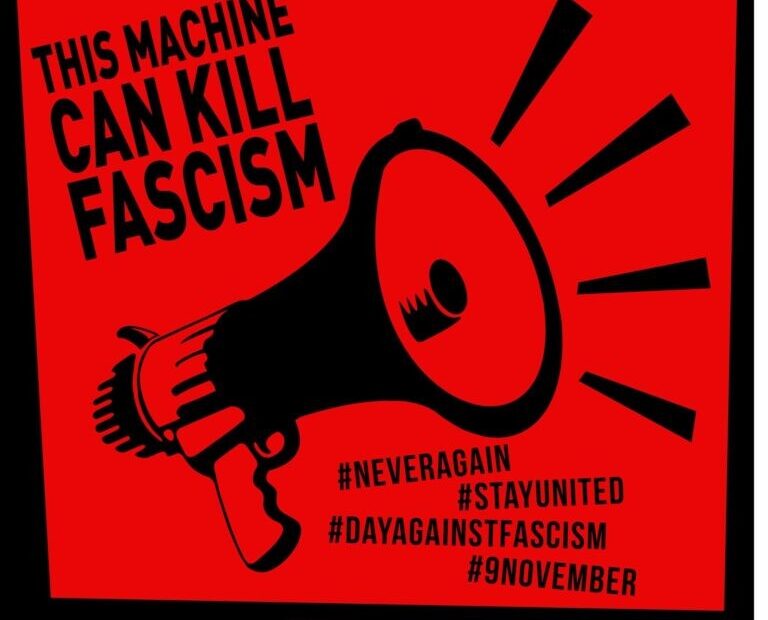
that the clarion call of Nuremberg,
“Never Again,” remains our solemn vow,
written from the ashes of the Holocaust and the Nuremberg Trials
to prevent all future mass atrocities, crimes against all humans, and genocide.
Yes, Never Again
was for all people—not only for some.
These young people are singing all the songs,
but keep coming back for home, renewal, and sumud.
They keep coming back as The Partisan,
whose chorus is being written by us.
As we write,
we are all PARTISANS
who sing about the down and out,
and sing,
and keep organising against
ICE and the anti-African xenophobes at home.
Always going on,
overcoming the jackboots, the batons, and the prisons
…and the frontiers of the mind.
The prof reads history
but only sees the defeats and listens to the singer
and the performance.
We all know that the singer of The Partisan
is not the composer,
as it touches us where it hurts.
It was crafted in the heat of the
French anti-fascist resistance,
becoming their anthem.
We keep singing the Partisan:
Oh, the wind, the wind is blowing.
Through the graves the wind is blowing.
Freedom soon will come.
Then we’ll come from the shadows.
Hassen Lorgat
Has worked in trade union movement, civic associations, and anti apartheid sports movement led by the South African Council on Sports (SACOS) as well as NGOs for the past while. He has worked with civil society groups opposing harmful and exploitative mining and extractivism. Hassen is active with the SA BDS Coalition.