
By Hassen Lorgat & Iqbal Jassat
Our national anti-apartheid sports movement, the South African Council on Sport (SACOS), working with SANROC, worked tirelessly to isolate South Africa culturally and, in particular, in the sports movement.
Organised under the banner “No Normal Sport in an Abnormal Society,” the camp contributed towards our own democratic breakthrough in 1994.
The time now, in the spirit of fair play and sportsmanship, is for us to raise our voices and our bats against the jailing of political prisoners in Pakistan, in particular Imran Khan.
When South Africa was a global pariah, suffocating under the weight of apartheid, international sports solidarity was our lifeline. For decades, many parts of the global sporting community erected a wall of isolation against institutional racism, holding a mirror to our pariah state.
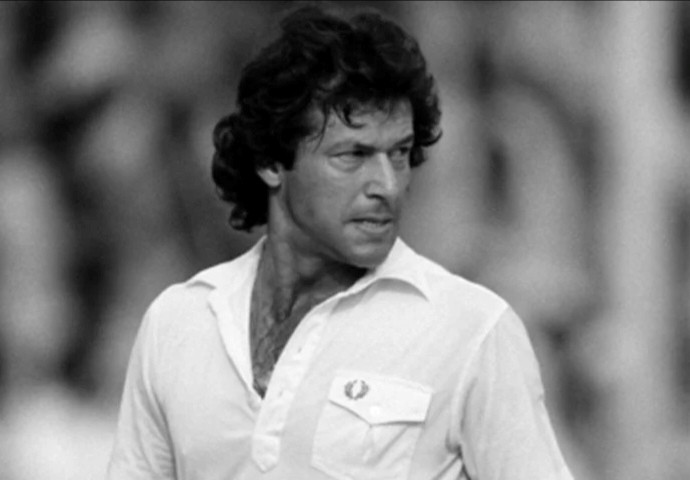
Among the giants who stood firmly on the right side of that history was Pakistan’s World Cup-winning captain, Imran Khan.
In his 1983 autobiography, Khan stated unequivocally that he had no qualms about declining lucrative offers to play in a country where a man was considered inferior because of the colour of his skin. He chose moral principle over personal profit. He stood for us when it mattered.
Today, that same icon languishes in a raw Pakistani prison cell. At 73 years old, he faces solitary confinement, systemic legal weaponisation, and medical neglect so severe that international appeals report he faces severe vision loss in his right eye.
Yet, while global cricketing legends rally to demand his basic human rights, Cricket South Africa (CSA) and our modern Proteas are completely missing in action. Our sporting establishment’s silence is thus questionable.
We learn that the current humanitarian campaign to secure Khan’s welfare began as a noble peer-to-peer petition. Initiated by Australia’s Greg Chappell, the movement has submitted letters to Pakistan’s Prime Minister Shehbaz Sharif signed by over 21 global titans, including Sunil Gavaskar, Clive Lloyd, Sir Alastair Cook, Ian Chappell, and David Gower.
The signatories are demanding fundamental humanitarian considerations: urgent completion of independent medical assessments, unhindered family visits, and immediate medical treatment.
But this campaign cannot remain an exclusive club for 1980s contemporaries. Because South Africa was isolated and banned from international cricket during Khan’s playing prime, our local administrators and legends probably do not share locker-room memories with him.
If it is true that behind closed doors, this lack of “shared history” has been used as a convenient shield for inaction, it is a cowardly excuse.
Surely you do not need to have faced Imran Khan on a pitch to recognise the blatant injustice of his detention.
By treating his imprisonment as a private matter for his ageing rivals, the broader cricket world—and South Africa in particular—is failing a critical moral test.
South African cricket exists in its current, prosperous form because the world weaponised sports to fight tyranny. Our unity era navigated a path back to legitimacy only because global actors forced accountability on our behalf.
For Cricket South Africa (CSA) to sit on its hands and treat Khan’s imprisonment as a “foreign political issue” is utterly unacceptable. We are calling for the release of a man who in his later years served as the 19th Prime Minister of Pakistan from 2018 to 2022. He was removed from office on 10 April 2022, after growing tensions with the military. Since August 2023, Khan has remained incarcerated, amidst mounting political protests led by his party demanding his release. Even Amnesty International in 2024, called for his release, noting:
Amnesty International has found several fair trial violations under international human rights standards which have resulted in his arbitrary detention, denying his right to liberty.
https://www.amnesty.org/en/documents/asa33/8507/2024/en/
CSA is quick to champion progressive causes, domestic transformation, and social justice when it aligns with corporate branding and low-stakes public relations. But true institutional courage means speaking out when the stakes are high and diplomacy is uncomfortable.
Our modern, multi-millionaire players—who wield immense global leverage through social media and player associations—must also look in the mirror.
Staying quiet to protect corporate relationships or lucrative T20 league contracts while a foundational figure of the global game is broken in a cell is a damning indictment of the modern player’s conscience.
When players claim that “sports and politics shouldn’t mix,” they mock the very legacy that allows them to wear the Proteas badge on the world stage today.
We are not asking South African cricket to adjudicate the complex, hyper-partisan labyrinth of Pakistani domestic politics.
But we are demanding that they stand against the subversion of justice, the violation of a Supreme Court medical directive, and the cruel treatment of an elderly sportsman.
The campaign must transition from an elite, back-channel appeal into a mass-based movement.
At a minimum, we expect CSA leadership to officially endorse the international humanitarian call for Khan’s fair medical treatment.
In addition, we call on democratic-era Proteas legends—the beneficiaries of our return to sport—to publicly sign their names alongside Chappell and Gavaskar.
Indeed, we remind the South African public to look at the green and gold cap and remember that the privilege to wear it was bought with the currency of global solidarity.
Imran Khan didn’t stay silent when South Africans were being oppressed.
Our continued silence in the face of his persecution is nothing short of a betrayal of our own liberation legacy. It is time for South African cricket to stand up for the man who stood up for us.
Iqbal Jassat, Executive Member, Media Review Network, Johannesburg, South Africa
and
Hassen Lorgat Social Justice and Media Activist