
By Iqbal Jassat
South Africa’s constitutional democracy is explicitly built on human dignity, equality, and religious freedom, yet, the persistent, exclusionary rhetoric emanating from figures linked to the African Christian Democratic Party (ACDP) serves as a stark reminder that these foundational values remain under threat from divisive political ideologies.
Recent social media commentary by Louise Swart, wife of long-serving ACDP Member of Parliament Steve Swart, exemplifies a deeply troubling trend: the weaponisation of fear against Muslim communities.

Facebook post by Louise Swart
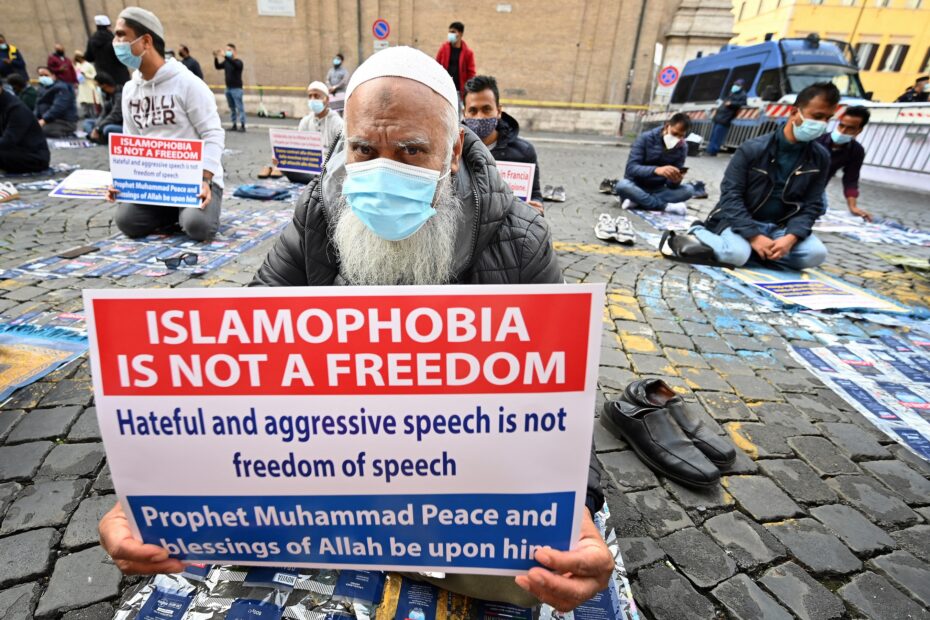
By trafficking in tropes that frame Muslims and Islam as inherent national security threats or agents of radical violence, such rhetoric moves beyond legitimate political discourse into the realm of blatant Islamophobia.
This fear-mongering does not exist in a vacuum. Rather, it directly mirrors and fuels the uncritical, dogmatic support for Israel championed by the ACDP leadership, most notably by party leader Reverend Kenneth Meshoe, who has openly declared that his role in the South African Parliament includes acting in defence of Israel.
To understand the roots of this hostility, one must examine the intersection of Christian Zionism and local xenophobic anxieties. By using the language of “secure borders” to stoke fears of an imagined Islamic threat, figures within the ACDP attempt to transplant complex global geopolitical animosities onto the fragile fabric of South African society.
This framing relies on a binary worldview that reduces a diverse global faith to harmful caricatures, completely ignoring the rich history of South African Muslims who stood shoulder-to-shoulder with activists of all creeds in the liberation struggle against apartheid.
Furthermore, this domestic fear-mongering is inextricably linked to the party’s foreign policy framework.
The ACDP’s unwavering alignment with Israel—even in the face of widespread international condemnation and historic litigation at the International Court of Justice (ICJ)—is frequently justified through a selective reading of biblical prophecy.
When Reverend Meshoe pledges to use his parliamentary seat to defend a foreign state, he prioritises a specific theological mandate over the universal human rights principles that South Africa has vowed to uphold globally.
Critically, this uncritical alignment requires its defenders to dehumanise those who oppose it. In the context of the Middle East, Palestinian self-determination is erased; in the context of South Africa, local Muslim voices and pro-Palestinian human rights advocates are subtly framed as adversaries to Christian values.
This is a dangerous distortion. Opposing the policies of a settler-colonial regime or demanding accountability for international law violations is not an attack on faith—it is an assertion of human rights.
This posture has rightfully drawn sharp condemnation from broader South African civil society, human rights organizations, and government officials.
Critics have pointed out the hypocrisy of the ACDP’s stance, noting that the party relies on a “one-eyed foreign policy” heavily influenced by sponsored political trips to Israel.
Human rights defenders and political commentators argue that the ACDP’s defense of Israeli military actions amounts to a betrayal of South Africa’s constitutional values and its global commitment to fighting systematic oppression.
Critics from across the progressive Christian spectrum have similarly slammed the ACDP, stating that the party’s theological justifications distort core biblical principles of justice and compassion to protect an oppressive regime.
While human rights defenders celebrate South Africa’s legal bravery at the ICJ as a continuation of its anti-apartheid legacy, the ACDP has instead weaponized theological intimidation, warning the state that it was “inviting the judgment of God” for challenging Israel’s actions.
Critics maintain that by placing loyalty to a foreign regime above international humanitarian accountability, the ACDP acts as an apologist for ongoing colonial occupation.
South Africans must reject any political rhetoric that seeks to divide citizens along religious lines for electoral or ideological gain.
The ACDP’s attempts to merge domestic border anxieties with an unyielding pro-Israel agenda do a profound disservice to the project of national unity. In a democratic South Africa, there can be no room for Islamophobia disguised as national security, nor can parliamentary duties be co-opted to shield any foreign state from humanitarian scrutiny.
True faith, in the context of our liberation history, must always manifest as action in defence of the oppressed, the marginalized, and the universal dignity of all human beings.
Iqbal Jassat
Executive Member
Media Review Network
Johannesburg
South Africa