
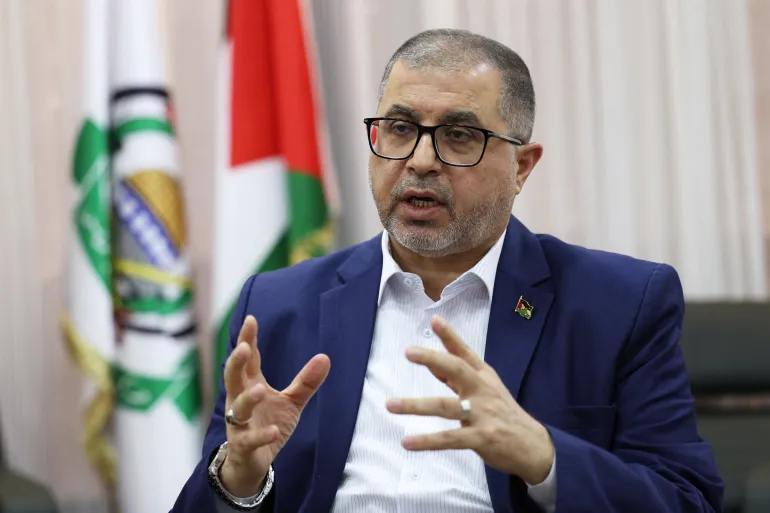
A strategic loss and a disaster for the Zionist entity, as well as a qualitative shift in favor of the Palestinian cause – Bassem Naim
By Iqbal Jassat
When historic numbers of Muslim Americans secure victories in the United States midterm elections, the immediate analysis within Western media typically centers on a familiar narrative: a milestone for civic representation, a triumph of domestic diversity, and a grassroots rejection of domestic Islamophobia.
However, thousands of miles away, the reactions from external political entities reveal a vastly different calculus. For the Islamic Resistance Movement, Hamas, the political ascension of Muslims in Washington is viewed not through the lens of identity politics, but through the uncompromising prism of geopolitics and the future of the Palestinian struggle.
To understand Hamas’s perspective, one must look past the domestic triumphs of representation and examine how the group interprets shifting power dynamics within the borders of Israel’s most powerful benefactor.
In official communications following the election cycles, senior Hamas officials have actively framed the electoral outcomes as a “strategic defeat” and a “strategic disaster for the Zionist entity.”
This reaction underscores a vital distinction in how Hamas evaluates Western politics. The movement does not view the election of a Muslim candidate as an automatic victory for their cause simply based on shared faith.
Historically, senior figures have routinely downplayed the significance of internal American elections, declaring that administrative shifts in Washington do not deeply alter foundational U.S. foreign policy.
Instead, Hamas measures the utility of American politicians strictly by their public stance on the Israeli-Palestinian conflict, U.S. military aid, and the broader regional balance of power.
From Hamas’s viewpoint, the true significance of the midterms lies in the normalization of pro-Palestinian dissent within the mainstream American political fabric.
For decades, unyielding diplomatic and military support for Israel was considered an untouchable third rail in Washington politics; to challenge it was to guarantee political exile.
Today, Hamas looks at the American electoral landscape and sees a fundamental rupture in that status quo.
This shift was explicitly articulated by Bassem Naim, a member of Hamas’s political bureau, who noted that while a sweeping political victory itself is standard for a Western democracy, the rhetoric surrounding it is not.
Naim’s remarks on the election highlighted a notable change in candidates’ public stances regarding support for Palestinians and criticism of Israel, noting that such positions previously carried severe political risks.
In a post on his Telegram channel, reviewed by the Yemeni News Agency (Saba), Naim noted that what is new in these elections is the radical reversal in the positions of certain candidates.
He pointed out that they not only expressed opposition to the Zionist entity and the Zionist lobby, they also voiced support for the Palestinian people and their legitimate rights, and explicitly condemned the ongoing genocide.
Public stances that a few years ago would have been enough to end a candidate’s political career, or even lead to their arrest on charges of antisemitism or supporting terrorism.
Indeed, Hamas views the integration of these pro-Palestinian and anti-war positions into mainstream platforms as a sign of shifting domestic pressures.
Rather than viewing these election results as isolated milestones for civil rights, Hamas interprets them as evidence of the erosion of Israel’s historical hegemony over American foreign policy, creating a permanent voice for the Palestinian cause within the US establishment.
They do not expect a handful of lawmakers to radically dismantle Washington’s foundational alliances overnight. However, in the rhetoric of these newly elected officials, the movement sees the opening of a cracks in a once-impenetrable wall—proving that even in the heart of the American political establishment, the Palestinian cause has found a permanent, audible voice.
Not surprisingly many major Islamic organisations in the US view the wins as the fruitful result of multi-year, grassroots civic engagement and voter registration drives.
For instance the Council on American-Islamic Relations (CAIR) National Executive Director Nihad Awad highlighted that the Muslim community’s significant voter turnout gave them the ability to impact the results of numerous races across the country, a reality that has been recognized nationally by the media and major political candidates.
Overall, mainstream Muslim organisations do not view these midterm wins merely as individual political achievements, but rather as a systemic shift toward institutionalrf presence and a clear declaration that Muslim Americans refuse to be treated as political scapegoats.
Iqbal Jassat
Executive Member
Media Review Network
Johannesburg
South Africa