


By Uri Davis
The Palestine Chronicle has received this letter from Jerusalem-born Uri Davis, a member of the Palestinian National Council and Deputy Commissioner-General for Political Affairs in the Fatah organization. We present an edited version of Davis’s theses on what a liberated Palestine may look like, framed in opposition to “any organization (involved in) the Zionist settler-colonialization of historic Palestine.” The views presented are those of the author based on his reading of international law.
This contribution is cognizant of more than a century of a continuing genocidal, apartheid, Zionist invasion of historical Palestine, beginning with the Balfour Declaration of 1917.
Despite the subsequent establishment of the genocidal apartheid State of Israel in 1948 and the elimination of a highly developed Palestinian civilization cultivated on the land of historical Palestine, the land itself remains. Palestinian ownership of the land is evidenced in both Ottoman and British Mandate registration.
The theses summarized below assert the possibility of Palestinian liberation from the river to the sea, in conformity with the implementation of UN resolutions on the question of Palestine, notably the UNGA 181(ii) of 1947 and UNGA 194(iii) of 1948. I take as points of departure the texts The Statehood of Palestine by John Quigley, my own Views on a Future Opposition to Zionism, and Ilan Pappe’s Israel on the Brink.
Theses on a Liberated Palestine
- The embedded racism of a genocidal Zionist invasion of historic Palestine and of apartheid Israel blinds its academic, political, social and military establishments as well as its mainstream civil society from comprehending the specificity of the indigenous Palestinian Arab people and their staying power, known commonly as sumud (steadfastness).
- Given that the core of this invasion of historic Palestine is predicated upon the pillage of indigenous Palestinian Arab land and the looting of Palestinian-Arab possessions, a regime of escalating corruption is endemic to its established academic, political, social and military systems and cannot be repaired.
- Assuming the above, assisted by the escalating success of the global Boycott, Divestment and Sanctions (BDS) movement, this thesis suggests the implementation of the right of return of all displaced Palestinians. This includes the families of all Palestinian-made refugees in 1948 and 1967, and during the ongoing genocide. The property rights of these families are recorded in the Ottoman and British Mandate registration, representing all localities from which they have been ethnically cleansed.
- That the PLO amends its constitutional definition of “Palestinians” in Article 5 of the Palestine National Covenant, from those with “a Palestinian father,” to those born to “a Palestinian father or mother.”
- Amending Clause (e) of the definition in Article 7 of the 1995 Palestinian Authority Elections Law, which enfranchises those born in Palestine but not those with “Israeli citizenship,” for the latter to share the right to vote.
- Accepting further that as an inalienable necessary condition for eligibility in respect of participation in national and/or regional and/or local elections, every adult Palestinian citizen to sign a declaration in good faith, opposing collaboration with Zionist institutions.
Under these conditions, the racist concept of Jewish “return” defined under genocidal apartheid Israel Law of Return of 1950 (1970 Amendment) will be abolished. The framework outlined above may serve as a starting point for a democratic socialist state of Palestine, where all citizens and returnees share equal rights, free from settler-colonialism and racial discrimination.
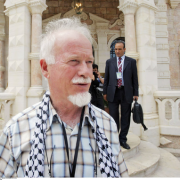
– Uri Davis is a member of the Palestinian National Council and Deputy Commissioner-General for Political Affairs in the Fatah organization. He contributed this article to the Palestine Chronicle.
The views expressed in the article do not necessarily reflect the editorial position of The Palestine Chronicle.