
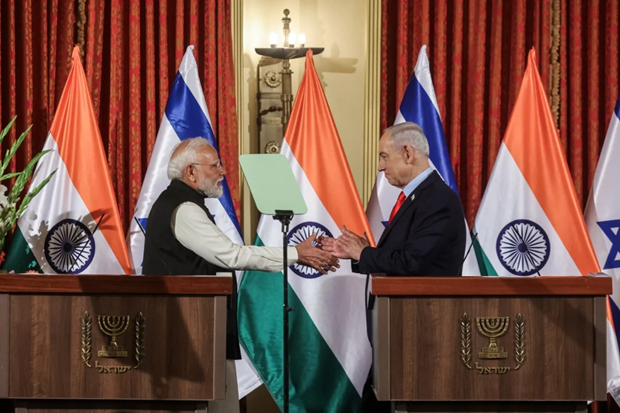

First, India’s shift toward a Hindu Rashtra and its growing replication of aspects of the Israeli model domestically means that India has been moving ideologically and institutionally closer to Israel for years. India is the largest buyer of Israeli weapons on the planet.

Second, India’s complicity in the genocide in Gaza has tied New Delhi more closely to Israel’s war-making. This complicity also extends to several Indian companies that remain deeply embedded in Israel’s military-industrial complex.


Third, despite the obvious risks – energy supplies, migrant workers in the Gulf, and the Indian families dependent on remittances – New Delhi appears to have bet on the bluster of U.S. power and the “economic opportunities” that might arise in a post-war Iran. Large Indian conglomerates such as Adani, Ambani, and Tata, would no doubt be watching closely.

Fourth, India’s war with Pakistan, or Operation Sindoor is on pause. With all of the realignments taking place in the Middle East, New Delhi sees a closer alignment with Israel as a way to strengthen India’s prospects in any future confrontation with Pakistan.

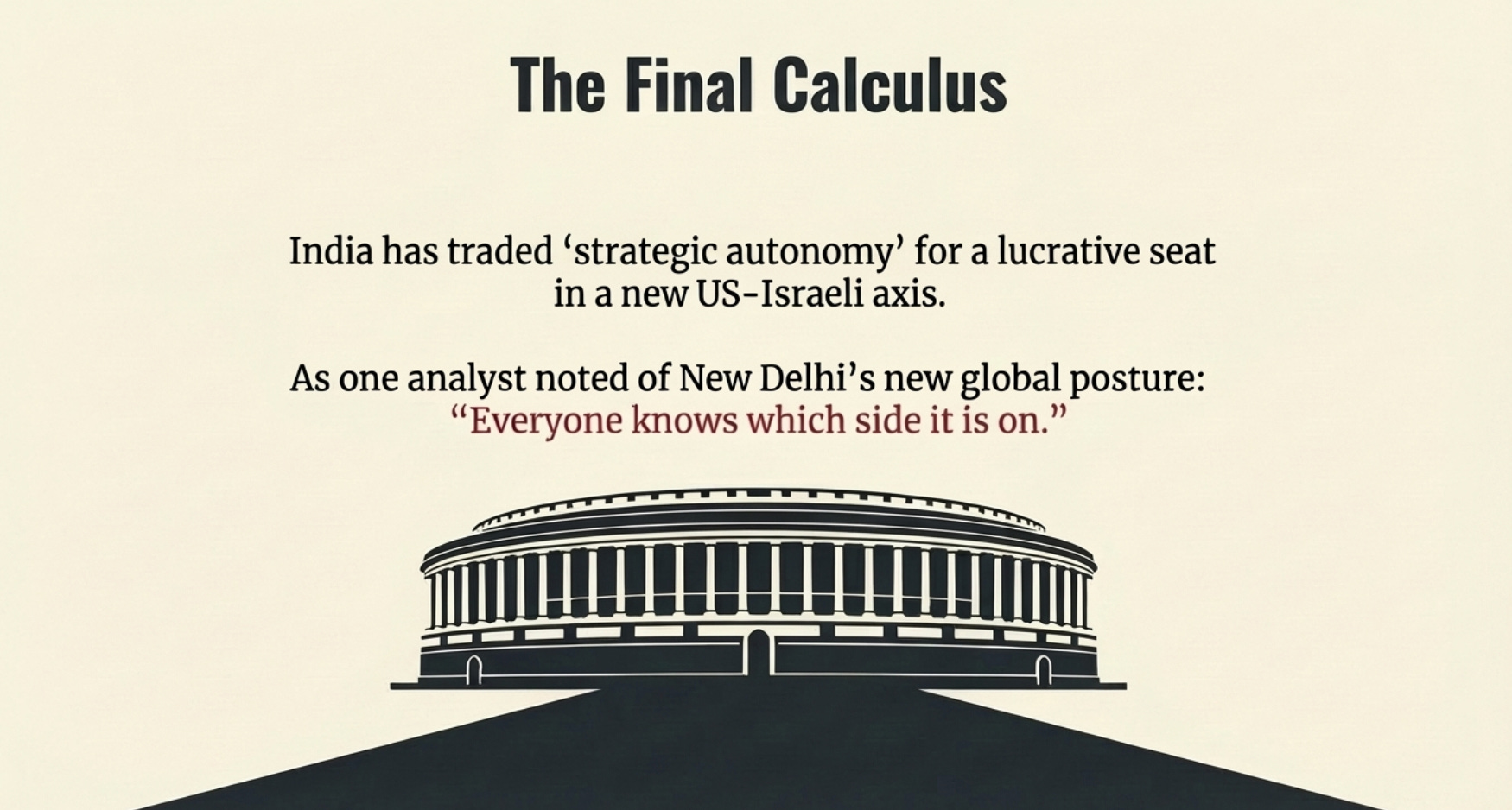
Fifth, New Delhi is already part of the strategic I2U2 grouping (India, Israel, the UAE, and the United States), as well as the India–Middle East–Europe Corridor (IMEC), launched in 2023. These initiatives were intended to integrate Israel into the region and provide a strategic alternative to China’s Belt and Road Initiative. In practice, India had already become part of the U.S–Israel strategic bloc in everything but name. Now, this alignment has only been made more explicit.
“Reprinted from…”Why India supports the war on Iran – by Azad Essa