
By Iqbal Jassat
For over a century, the ghost of Arthur Balfour has haunted the Middle East, casting a long imperial shadow over the dispossession of the Palestinian people. But a historic announcement in the House of Commons by Foreign Secretary Ed Miliband signals that the United Kingdom is finally beginning to dismantle its own tragic colonial legacy.
By officially declaring Israel’s occupation of Palestinian territory unlawful, banning settlement goods, and blocking arms exports, Downing Street has done more than just update its foreign policy. It has effectively begun to shoot down the very premise of the Balfour Declaration, reversing a century of British complicity in the erasure of Palestine.
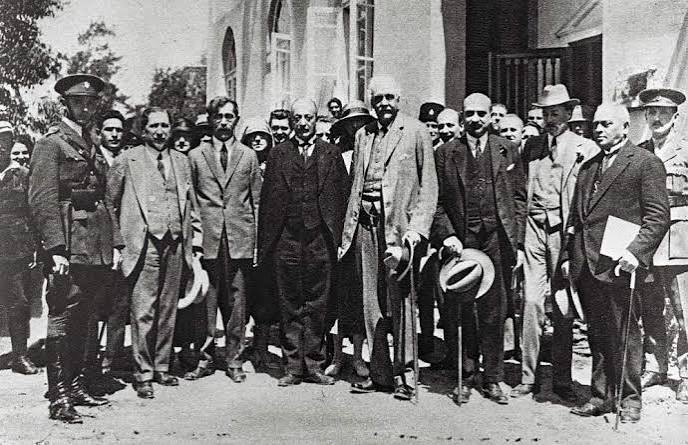
The 1917 declaration was an act of supreme imperial arrogance: one nation promising another people’s land to a third party, with a hollow caveat that “nothing shall be done which may prejudice the civil and religious rights of existing non-Jewish communities.”
For 109 years, that caveat was treated as a disposable footnote. Britain watched as the “national home” it promised mutated into a system of permanent subjugation, illegal territorial expansion, and systematic displacement.
However, what makes this moment a true watershed is the explicit language now emanating from London. When the British government uses the term “ethnic cleansing” to describe the actions of state-backed settler terrorists in the West Bank, the diplomatic fiction that sustained the occupation for decades collapses.
Indeed, by aligning with the International Court of Justice’s 2024 advisory opinion, the UK is acknowledging that the Zionist project, in its current expansionist form, has fundamentally violated international law.
Let’s not forget that for decades, the Global North provided Israel with a diplomatic shield and a steady supply of weaponry. Today, that shield is fracturing under the weight of Israel’s own extremism, catalyzed by provocative actions like the E1 settlement tenders that aim to permanently sever any hope of Palestinian statehood.
Of course, the backlash from Washington and Tel Aviv has been swift and furious. Critics will call Britain’s new stance a betrayal. But in reality, it is a long-overdue reckoning.The Balfour Declaration set a cycle of violence and dispossession into motion.
It is only fitting that the nation which signed that catastrophic promise is now taking the lead to dismantle its consequences. By cutting off the economic and military lifeblood that sustains the occupation, Britain is finally telling the world that its century-old blank cheque to Israel has officially bounced.
The sweeping policy changes announced by Miliband signal that the UK has abandoned its long-standing “rhetoric-only” approach.
However, while a formal shift to seeking UN Security Council (UNSC) chapter VII sanctions against Israel is a logical progression of the UK’s new legal position, it remains a highly complex and unlikely scenario in the near future.
By officially adopting the stance that Israel’s occupation is entirely unlawful in accordance with the ICJ, Britain has established the necessary domestic legal justification to push for international enforcement.
Under international law, once an occupation is deemed illegal, third-party states are obligated to not recognize or assist it.
What follows next will either see Britain going the whole way at the risk of severe backlash from the Trump administration, or remain running on the spot by being entangled in complex lawsuits engineered by Zionist lobbyists.
The likelihood of Britain seeking a UNSC sanctions resolution against Israel is unlikely. Simply because doing so would trigger a catastrophic diplomatic rupture with the United States for an initiative destined to be vetoed.
However if it is understood that the UK is executing a different playbook, by leveraging its weight as a global financial hub to enforce heavy national and regional economic penalties, Israel will not escape the pain.
By cutting off the banking, real estate, and trade networks that fuel the occupation from within London, the British government is nevertheless choosing to inflict real-world economic pain.
Iqbal Jassat
Executive Member
Media Review Network
Johannesburg
South Africa