
To understand what is happening in Gaza, one must go back to 1948.
That year, more than 750,000 Palestinians were expelled or driven to flee, and hundreds of towns and villages were emptied or destroyed. Palestinians call it the Nakba, the catastrophe. Much of Gaza’s population descends from those refugee families. Many of those dying there since October 2023 are the children and grandchildren of the uprooted.
This text starts there because, for Palestinians, the Nakba is not a closed chapter. It is the historical fracture on which everything else has been inscribed.
It will say what happened before 7 October 2023, what has happened since, what the institutions have established and what they have yet to decide. It will also say, first, who died on 7 October: about 1,200 people killed in Israel, and 251 hostages taken to Gaza.
Mourning one group does not require erasing the other.
I am not a historian by training. I am an essayist on history, and I come from Laghouat, a city whose memory long remained oral. On 7 October 2023, the first images from Gaza arrived. I recognised the grammar.
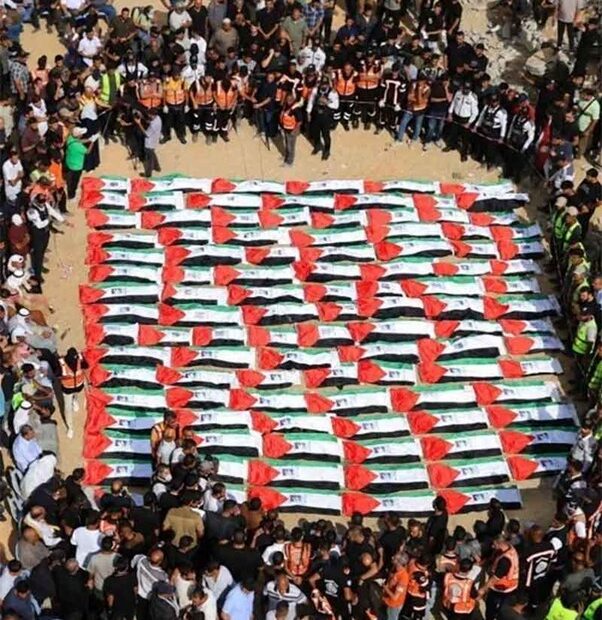
The first act of genocide is to turn people into numbers. The first act of resistance is to turn numbers back into people.
There is a convenient way to tell the story of Gaza: begin on a Saturday morning in October 2023. Everything before it vanishes, and the earlier dead become mere “context.”
This text refuses that arithmetic.
A child killed in 2014 is no less dead than a child killed in 2024.
Ahed, Zakaria, Mohammed, Ismail
On 16 July 2014, four boys of the Bakr family were playing on the beach in Gaza. A first projectile struck the hut where they had taken shelter. They ran. A second caught them on the sand. Foreign journalists, from a nearby hotel, saw it and reported it. Israel’s military investigation was closed without prosecutions.
That summer, the UN counted 2,251 Palestinians killed, 551 of them children.
You have probably forgotten those figures.
The four boys had been forgotten before that, because the world had heard “conflict” and had not heard “children.”
This is what we call context.
In 1982, at Sabra and Shatila, Lebanese militiamen massacred Palestinian refugees and Lebanese civilians while the Israeli army controlled the area. Israel’s own Kahan Commission found that Israeli officials bore indirect responsibility and held that Ariel Sharon bore personal responsibility.
Then came the siege.
In 2006, Dov Weissglas, adviser to Prime Minister Ehud Olmert, used the image of a population to be kept “on a diet” to describe the restrictions imposed on Gaza.
Since 2007, the blockade has turned daily life in Gaza into a chain of restrictions, shortages and humanitarian crises.
Then the wars.
“Cast Lead,” 2008–2009: about 1,390 Palestinians killed according to B’Tselem, 759 of whom, by its investigation, took no part in hostilities.
The Great March of Return, 2018–2019: a UN commission of inquiry, examining 189 deaths through the end of 2018, found reasonable grounds to believe that in the vast majority of cases reviewed, Israeli forces’ use of live ammunition was unlawful.
Shireen Abu Akleh, an Al Jazeera journalist, killed in Jenin in 2022 beneath a vest marked “PRESS.”
The numbers tell part of this story.
Statistics are necessary, but they sometimes become the refuge of those who no longer wish to look at faces.
Hind
On 29 January 2024, Hind Rajab, five years old, phoned the Palestine Red Crescent from a car in Gaza.
Around her lay the bodies of her relatives.
She begged someone to come and get her.
The call lasted hours.
Two paramedics, Yusuf Zeino and Ahmed al-Madhoun, set out.
They never came back.
Nearly two weeks later, the car and the bodies were found.
Forensic Architecture’s analysis documented hundreds of bullet impacts on the vehicle.
She was five years, eight months and twenty-six days old.
In Laghouat, no recording survives: what remains is the officers’ reports, and oral memory.
For Hind, the recording exists.
The world heard it, and then moved on.
What the records already say
On 9 October 2023, Israel’s Defence Minister Yoav Gallant announced a “complete siege” of Gaza: no electricity, no food, no fuel, while describing Palestinians as “human animals.”
These statements were entered into South Africa’s case before the International Court of Justice.
As of 1 October 2026, Gaza’s Ministry of Health reported 74,040 dead and 175,168 wounded, not counting those still under the rubble or beyond the reach of rescuers.
That is the toll of Gaza’s health authority, and it should be read as such.
A 2024 study in The Lancet estimated that standard counting methods could underestimate the true number of deaths.
On 22 August 2025, the IPC, the international benchmark for classifying food insecurity, confirmed famine in Gaza governorate.
As of 25 June 2026, the Committee to Protect Journalists recorded 209 journalists and media workers killed by Israel in Gaza and in Israeli detention since the war began, according to its methodology and revised list.
Seven World Central Kitchen workers were killed in April 2024, though their movements had been coordinated with the Israeli authorities.
On 29 February 2024, around a flour convoy, more than a hundred people died amid chaos and gunfire. The UN reported Israeli fire on the crowd; Israel maintains that many victims died in the crush.
Refaat Alareer, poet and professor, was killed in December 2023.
His poem “If I Must Die” asks that a kite be flown into the sky, so that a child who sees it will know an angel is there.
I will add nothing to that.
The levels of proof must be kept distinct.
On 26 January 2024, the ICJ did not declare that genocide had been established. It found plausible certain rights asserted by South Africa under the Genocide Convention and ordered provisional measures.
In November 2024, the ICC issued arrest warrants for Benjamin Netanyahu and Yoav Gallant, notably for alleged crimes including starvation as a method of warfare.
An arrest warrant is not a conviction.
Amnesty International, in December 2024, and the UN Independent International Commission of Inquiry, in September 2025, each under its own mandate and methodology, concluded that acts constituting genocide had been committed.
In July 2025, two Israeli organisations, B’Tselem and Physicians for Human Rights Israel, published a report titled Our Genocide.
Israeli historian Omer Bartov, a scholar of genocide, has also used the term, after long expressing reservations.
Israel rejects the characterisation, says it is fighting Hamas, and accuses it of using civilians and civilian infrastructure for military purposes.
The ICJ has not yet ruled on the merits.
I say so because an essayist does not cheat on what is established and what is not.
But none of these considerations makes a civilian a legitimate target.
What Laghouat taught me
I come from Laghouat.
In my town, December 1852 is not just a date in a textbook. It is a memory carried across generations, for a long time without a written archive.
According to French sources and local memory, Laghouat had about six thousand inhabitants before 4 December 1852. By mid-December, between one and two thousand remained.
According to the oral memory passed on notably by Sheikh Mabrouk Kouissi, who died in 2008, the town had sixty-two notable families. Fifty-one died out. Only eleven remained.
That night, mothers put earrings on their sons so that they would be taken for girls. Part of today’s Laghouat descends from those earrings.
In the military reports of 1852, behind the figures, there were houses, families, old men, women, children.
Behind a word like “operation,” there were lives.
Behind a date, absences.
I learned that a city can be defeated twice: first by arms, then when its history stops being told.
I do not claim that Laghouat and Gaza are the same story.
They are not.
The eras, the actors and the circumstances differ.
But archives sometimes pose the same question: what becomes of a people when its dead are reduced to numbers, then to a few lines, then to silence?
Memory is not vengeance.
It is a form of justice.
That is why I refuse to let a child killed in Gaza become merely “one more number.”
He had a name.
What remains
One day, Gaza will have to be rebuilt.
But rebuilding buildings will not be enough.
The archives, the schools, the cemeteries, the memory of vanished neighbourhoods will have to be rebuilt too.
Responsibility will also have to be established.
Not out of vengeance.
So that law still means something.
Edward Said spoke of the “permission to narrate.”
Palestinians never needed permission to suffer.
They needed their suffering to be heard, documented and recognised.
It took Algeria 132 years to break the chains of colonization.
Palestine is still waiting for its dawn.
But history teaches one stubborn truth: a people that refuses to disappear eventually returns home.
A register is not vengeance.
It is a promise made to those who can no longer claim it:
we will know that you existed.
Ahed.
Zakaria.
Mohammed.
Ismail.
Hind.
Yusuf.
Ahmed.
And all those whose names I have not written, because an article is too narrow a register for them.
May no one die twice: once under the bombs, and again in oblivion.
Before, during, after, they had names.