
POLITICAL ECONOMY
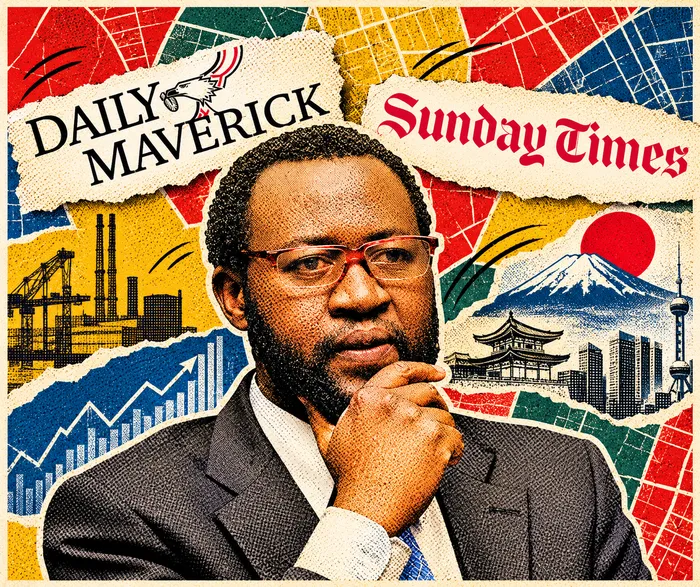
William Gumede has discovered a remarkably versatile explanation for South Africa’s economic troubles: the ideology of African liberation movements. In his latest Daily Maverick article, the ANC’s failures supposedly demonstrate that state-led development is bankrupt, that land reform undermines prosperity, and that those who question his prescriptions suffer from economic illiteracy. Gumede’s certainty is exceeded only by his disregard for inconvenient history. The real problem is not that Gumede has an ideological position. It is that he repeatedly presents his preferences as though they were the settled verdict of economic history.
Let us dispense with the predictable diversion. In a News24 article published on 15 November, I criticised the ANC’s economic choices during the Mandela and Mbeki presidencies, its concessions to corporate power and the corruption and institutional decay that followed. The collapse of municipal services, the enrichment of politically connected elites and the destruction of public capacity are indefensible. Yet an incompetent government is not evidence that a developmental state is an economic impossibility. Gumede’s argument depends on pretending otherwise.
The ANC’s record and selective memory
The first glaring omission is the ANC’s actual economic record. The ANC adopted the Growth, Employment and Redistribution strategy (GEAR) in 1996. GEAR embraced fiscal restraint, trade liberalisation, financial openness and the restructuring of state assets—precisely the market-oriented measures associated with the Washington Consensus. Growth was the first word in the policy’s title. Yet Gumede portrays the ANC’s economic thinking as fundamentally hostile to growth-oriented policy. How does he reconcile that sweeping characterisation with GEAR, one of the most consequential economic programmes adopted by an ANC government? His account simply ignores the contradiction.
Nor did the ANC simply repel international capital. Between 1997 and 2000, several of South Africa’s largest companies obtained permission to shift their primary listings to London. The South African Reserve Bank’s own study records those offshore listings and their consequences for ownership and dividend flows. Trade barriers were lowered dramatically, exposing labour-intensive manufacturers to global competition before the country had overcome apartheid’s immense inequalities in skills and productive capacity. One may defend those decisions, criticise them or distinguish their effects. What Gumede cannot do is erase them and claim that South Africa’s entire post-apartheid economic record represents the rejection of markets.
What East Asia and Europe actually show
Gumede invokes Japan as an example of successful growth-oriented development while ignoring the substantial role of the Japanese state in achieving it. Japan’s Ministry of International Trade and Industry helped guide industrial policy, while public financial institutions supported strategic investment and industrial upgrading. Japan’s own Research Institute of Economy, Trade and Industry documents those interventions and debates their effectiveness. That debate is legitimate. To invoke Japan as a model of economic success while disregarding the extensive role of the state in achieving it is not serious economic analysis; it is distortion masquerading as scholarship.
South Korea makes the point more sharply. Government-directed credit, industrial targeting and export discipline helped build major manufacturing firms and international competitiveness. A World Bank study of Korean industrialisation describes the role of selective intervention, while also recognising its costs and risks. Hyundai and Samsung did not spring fully formed from a seminar on deregulation. They developed within an industrial system in which government and business were deeply entangled, and in which public support was frequently tied to performance.
Singapore is another awkward example for Gumede. Its government established the Economic Development Board in 1961 to direct industrialisation and investment promotion, as Singapore’s official economic history explains. China combined market opening with state banks, public infrastructure, state enterprises and industrial strategy—a combination the World Bank describes as markets and state ownership operating alongside one another. Foreign investment mattered enormously in these economies, but foreign capital operated within national development strategies; it did not substitute for them.
Europe tells much the same story, although Gumede seems uninterested in that chapter. Postwar France nationalised major banks and industries, including electricity and gas, as the French government’s own historical account records. Germany established the publicly backed KfW development bank in 1948 to finance reconstruction. Across Europe, public investment, education and social protection accompanied private enterprise. None of this proves that every state intervention works, but it does prove that the opposition between government action and economic success is a fiction.
Land reform, industrial policy and BEE
Gumede’s treatment of land reform is equally misleading. Japan, South Korea and Taiwan undertook major redistributive land reforms around the time of their postwar economic transformations. The Food and Agriculture Organization identifies the institutional conditions that helped those reforms succeed. Secure property rights and redistribution are not necessarily enemies; South Africa’s own section 25 protects property while recognising the public interest in land reform. The issue is how to correct inherited dispossession without destroying production, not whether property relations inherited from apartheid must be treated as sacred.
His dismissal of “big factories” is particularly peculiar from someone celebrating Asian industrialisation. South Korean semiconductors, Japanese automobiles and German machinery require substantial factories, advanced technology and dense networks of smaller suppliers. Small and medium enterprises are vital, and the ANC has failed many of them. Yet small businesses cannot flourish without reliable electricity, affordable credit, functioning transport infrastructure and skilled workers. These are not conditions that individual entrepreneurs can create on their own. The serious question is how a competent state can help small firms become productive participants in a wider industrial economy.
Gumede’s criticism of black economic empowerment has merit. Politically connected enrichment has too often displaced genuine enterprise formation, investment and employment. Yet this is not an argument for ignoring concentrated economic ownership or the barriers confronting black entrepreneurs. Nor should established corporate beneficiaries of convenient empowerment deals escape scrutiny. The answer to elite capture is real broad-based opportunity, not an amnesty for inherited economic privilege.
His attempt to characterise the proposed basic income grant as BEE for the poor is a particularly revealing example of ideological prejudice masquerading as economic analysis. European welfare states expanded public pensions, healthcare and income support alongside industrial capitalism. The ANC’s profound failure is that too few South Africans can secure dignified employment, not that the unemployed and impoverished receive basic assistance. Productive employment and social protection are complementary obligations, not rival ideologies.
Selective facts and editorial responsibility
There are also factual assertions that would not withstand the scrutiny expected of an undergraduate essay, much less the work of an academic. Gumede asserts that nationalisation and expropriation collapsed the economies of Zimbabwe, Algeria and Tanzania. Zimbabwe suffered a devastating economic breakdown, whereas Algeria and Tanzania have followed distinct and far more complicated paths. The IMF estimated Algeria’s growth at 3.9% in 2025, and the World Bank reported Tanzanian growth of 5.9%. Neither figure excuses poor policy or establishes long-term success, but these countries have followed markedly different economic trajectories, and Gumede provides no serious historical analysis to justify treating them as indistinguishable economic catastrophes.
This is not an isolated excursion. In a May 2025 Sunday Times article, Gumede similarly invoked Japan, South Korea and Singapore as models of economic development, largely overlooking the state interventions that underpinned their industrialisation. He returned to substantially the same arguments in a March 2026 article and again in his 2 November Sunday Times column. The refrain remains remarkably consistent: liberation politics explains economic failure, while contrary arguments are attributed to indoctrination or ignorance. Repetition does not transform ideological conviction into historical fact.
Gumede is entitled to his ideological convictions, however misguided they may be. He is not entitled to invent an alternative factual record to sustain them. When an author repeatedly makes assertions contradicted by readily verifiable evidence, the issue ceases to be merely one of competing opinions. The Sunday Times and Daily Maverick also bear an editorial responsibility. Their editors should be considerably more circumspect about repeatedly providing a platform for demonstrably inaccurate assertions dressed up as economic expertise. Freedom of opinion does not confer freedom from factual scrutiny. An opinion page is not a sanctuary for falsehoods, nor should it become a laundering service for ideological propaganda.
South Africa needs private investment, competitive markets and a ruthless reckoning with ANC corruption. It also needs functioning public institutions, industrial capability, infrastructure and redress for the economic structures apartheid left intact. Those objectives are not mutually exclusive, and the histories of East Asia and Europe do not make them so. Gumede is free to advocate his economic creed. Yet repeatedly omitting or distorting inconvenient facts and passing the resulting account off as scholarship is not economic analysis—it is either profound ignorance or intellectual dishonesty.

Image: Supplied