
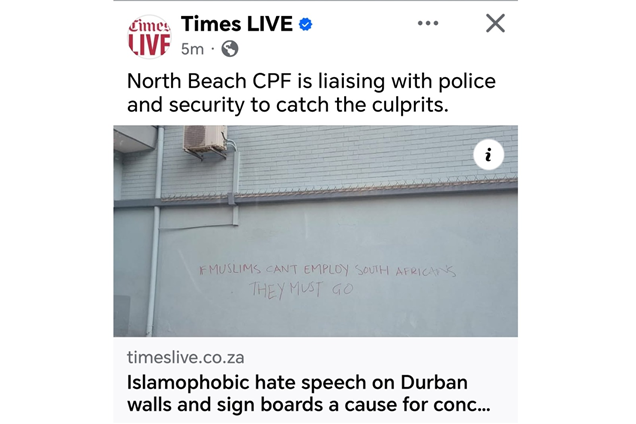
By Iqbal Jassat
Following a recent grotesque post on Facebook which by depicting the Prophet Muhammad (pbuh) in the most vile and hateful manner, the Film and Publication Board (FPB) swiftly intervened.
In response to the outrage, the FPB raised serious concern by correctly describing the post as hatred against Islam and warned it could incite harm.
It said that both the creation and sharing of such material may amount to advocacy of hatred based on religion, which is an identifiable group characteristic.
The intervention sought by the FPB was to engage Meta Platforms to secure the removal of the publication from Facebook, as well as to ensure that the relevant authorities initiate steps against those responsible for originating and disseminating the content.
This case highlights the presence of Islamophobia across social media platforms and the danger it poses in fuelling bigotry and hatred against Muslims and Islam.
In the current climate of frenzy against migrants in South Africa, questions abound whether Islamophobia has arisen amidst emotionally charged rhetoric bordering on intolerance and discrimination.
South Africa has since the dawn of democracy post-1994, held a unique position in opposition to racism and bigotry, unlike the levels of Anti-Muslim hate during the era of apartheid.
Human dignity became a cornerstone of the Constitution and the Bill of Rights. And as integral components of South Africa’s diverse population, many Muslims were entrenched within the various flanks of the liberation movement.
The freedom struggle against white supremacism embodied in Apartheid, saw Muslims in the same trenches alongside liberation veterans fighting oppression; detained; tortured and killed.
Today an active and vibrant collective of Muslim civil society organisations are engaged in a wide range of activities ranging from humanitarian to social justice issues; and from education to media and much more.
The scourge of Islamophobia and how it manifests to fuel fear and hatred for Muslims and Islam, remains a challenge.
I recall the profound observation made by the President of the General Industries Workers Union of South Africa (GIWUSA), Mametlwe Sebei, who said the struggle against apartheid “cemented the unity of a culture of tolerance which is part of the Constitution and part of the post-apartheid consciousness, especially across the working class and the poor”.
From our experience at Media Review Network, we are aware that Islamophobia is socially engineered for a number of reasons. And many factors have contributed to the phenomenon of irrational alarm, mistrust and hate. Stereotypical media portrayals across a range of online platforms, remain regular purveyors.
Though 9/11 occurred a quarter of a century ago, vestiges of neoconservatives and neocolonialism have not dimmed. We recall reports in its aftermath adopted unprecedented bigotry through biased accounts against Muslims portrayed as “extremists, radicals, fundamentalists and terrorists”, among a range of despicable adjectives.
So-called “think tanks” and “research institutions” emerged back then and have since multiplied, feeding untested fabricated myths to media and academia. Many of them are Israeli-allied and funded to bolster Zionism’s malicious agenda. Used as a political tool to discredit Palestine’s freedom struggle, the settler-colonial regime has spared no effort in funding and spearheading Islamophobes.
To naively believe that South Africa is immune from deliberate and calculated fuelling of hate, suspicion and mistrust by Israel and its army of well-resourced propagandists, would be misplaced. A Christian-Zionist group known as PJTN – “Proclaiming Justice to the Nations” headed by an ardent supporter of Israel, Laurie Cardoza-Moore known for her incendiary Islamophobic rhetoric established a footprint here.
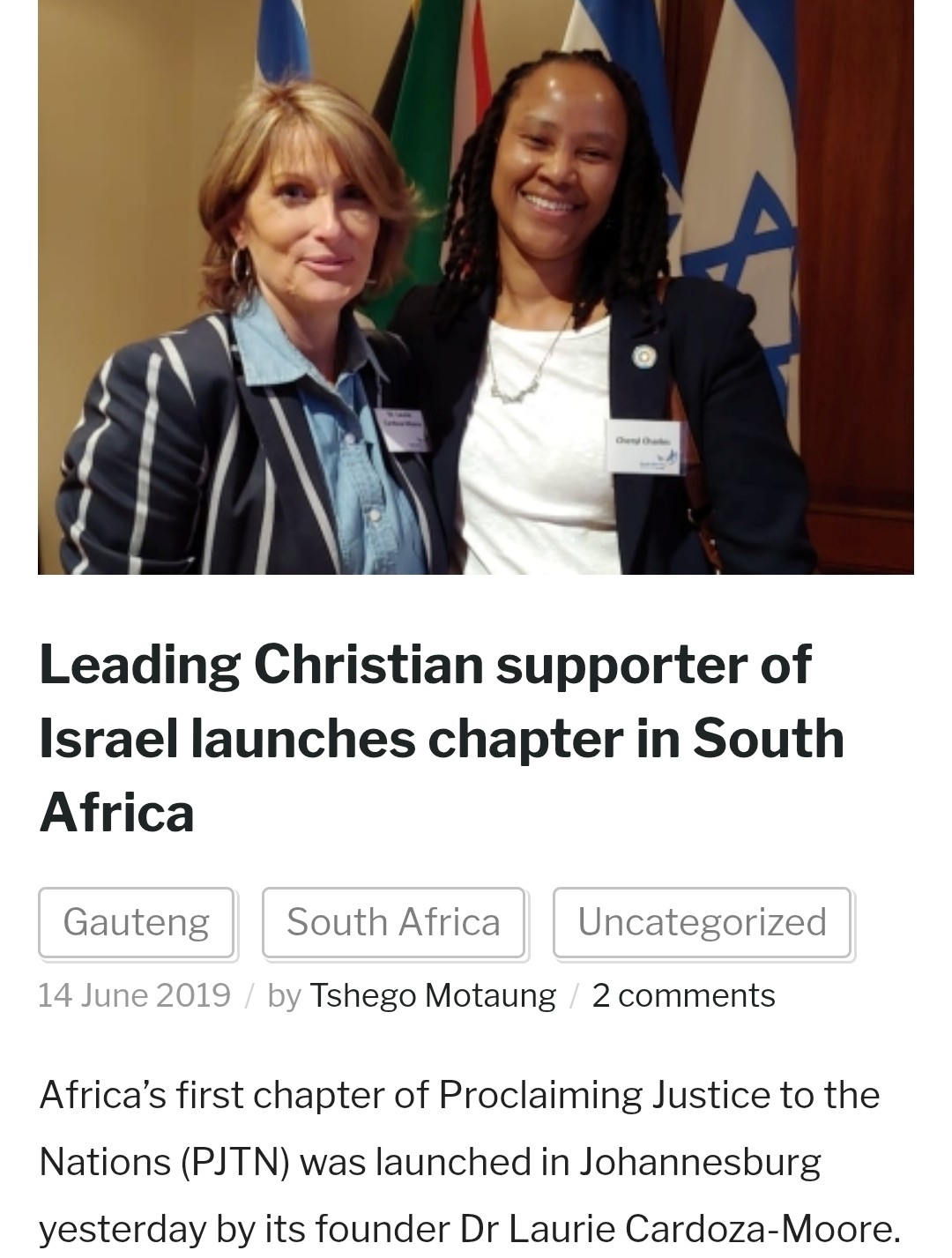
Pic & Extract: Gateway News
Recently a study conducted by attorney Sozarn Barday published in M&G, revealed shocking details about the Foundation for Defence of Democracies (FDD) urging the US government to impose “diplomatic pressure and targeted sanctions that would restrict the operations of key Hamas supporters in South Africa” and to lobby the Financial Action Task Force to keep South Africa on its grey list.
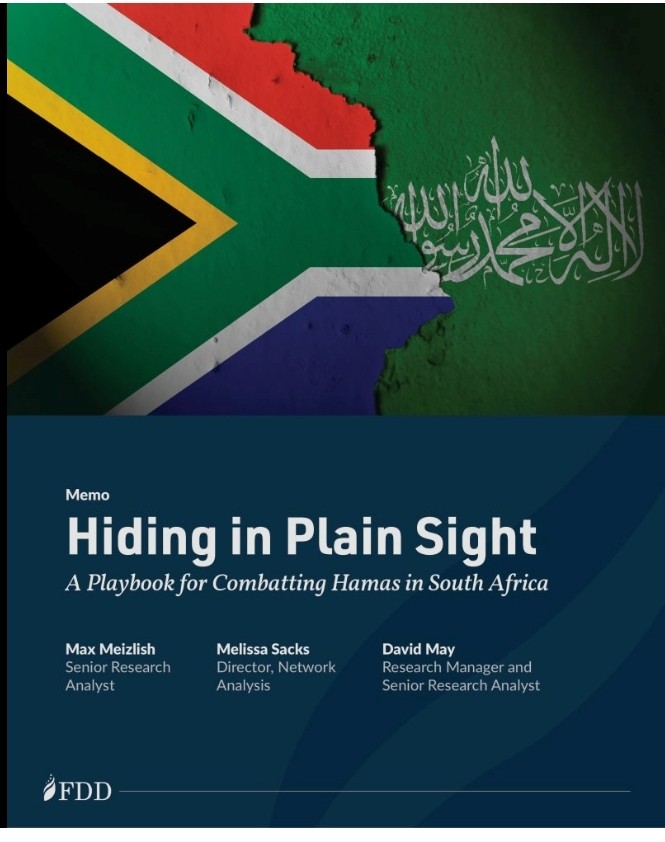
Source: LinkedIn
In a classic case of Islamophobia given that Israel and its American ally has demonised and proscribed Hamas as a “radical Islamist terrorist organisation”, the Washington-based Zionist think tank, claimed that the ANC maintains close ties with the “terrorist group” Hamas, accusing the party of providing political and diplomatic cover.
It further alleges — without evidence — that this relationship allows Hamas “to raise funds and advance its ideology in Africa and beyond”, linking it to the “systemic corruption plaguing South Africa”.
We learn from the various manifestations of Islamophobia – from plain ignorance to sophisticated political bigotry – that to ignore it is not a choice.
Iqbal Jassat
Executive Member
Media Review Network
Johannesburg
South Africa