
Why Memory is Our Ultimate Shield Against Erasure
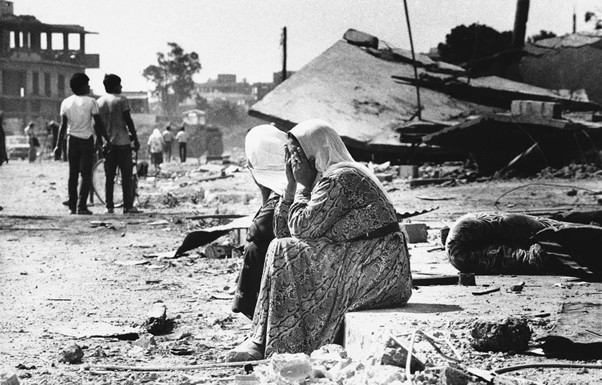
From 16 to 18 September 1982, the Sabra neighbourhood and the adjacent Shatila refugee camp in West Beirut became the site of one of the most savage atrocities in modern Middle Eastern history.
Following the assassination of Lebanese President-elect Bashir Gemayel, the Israeli military, under the direct command of Defense Minister Ariel Sharon, completely encircled and blockaded the camps.
Sharon’s forces then facilitated the entry of the right-wing Lebanese Christian Phalangist militia into the camps. Over a harrowing 40-to-43-hour period, while Israeli troops sealed all exit routes and fired illumination flares into the night sky to light the alleyways for the killers, the militia executed a systematic slaughter of between 700 and 3,500 unarmed Palestinian refugees and Lebanese civilians.
The violence inflicted upon the trapped population was marked by unimaginable cruelty. Militiamen moved from house to house, breaking down doors to wipe out entire families at their dinner tables or in their beds.
The slaughter was entirely indiscriminate, targeting infants, children, pregnant women, and the elderly. Survivors and later observers recounted horrific scenes of victims being hacked to death with axes, women subjected to gang rapes before being executed, and bodies being systematically mutilated.
To hide the scale of the carnage from the outside world, bulldozers were deployed to demolish homes over the bodies of the dead and pack victims into mass graves.
The legendary British foreign correspondent Robert Fisk was one of the very first journalists to gain access to the camps on the morning of September 19, just as the killers departed.
In his visceral reporting later compiled in his landmark book, Pity the Nation, Fisk documented the sheer scale of the human wreckage, classifying the assault as a profound war crime.
He later reflected on the indelible trauma of the event, writing in The Independent that “massacres are difficult to forget when you’ve seen the corpses.”
The renowned Palestinian intellectual and cultural critic Edward Said viewed the horrors of Sabra and Shatila as the devastating culmination of a deliberate political effort to erase Palestinian identity rather than an isolated event.
Said analysed the suffering as the ultimate vulnerability of a displaced people abandoned to occupiers and proxy forces, famously emphasizing regarding ongoing injustice: “You cannot continue to victimize someone else just because you yourself were a victim once—there has to be a limit.”
My Recollection
Twenty-one years after those blood-soaked days, in 2003, I found myself standing on that very same ground. Traveling to Lebanon along with my colleagues from the Media Review Network to attend the 21st anniversary commemoration of the massacre, I was invited to address a large, solemn gathering of human rights activists and grieving families who still carried the unhealed wounds of 1982.
Standing in the narrow, crowded alleyways of the Shatila camp, looking into the eyes of survivors who had witnessed their children, parents, and neighbours butchered under the glow of Israeli military flares, the historical descriptions faded into a devastating, living reality.
The families did not just share testimonies; they shared an ongoing nightmare of displacement, survival, and a absolute lack of legal accountability.
Ariel Sharon, the man who held command responsibility for the slaughter, went on to become Prime Minister of Israel rather than facing a war crimes tribunal.
To look upon the mass graves and speak to the mothers who survived that night was a profound, shattering privilege.
The experience solidified my commitment at the Media Review Network to ensure these stories are never erased.
Decades may pass, but for those of us who have walked through Shatila and stood with its people, the “stench of injustice” remains entirely palpable.
The international community still owes a moral debt to the victims, and our collective memory remains the ultimate shield against the deliberate erasure of their history.
Today, as the international community witnesses the catastrophic devastation and ongoing genocide in Gaza, alongside relentless ethnic cleansing across the Occupied West Bank, the horrific lessons of 1982 echo louder than ever.
Iqbal Jassat
Executive Member
Media Review Network
Johannesburg
South Africa